
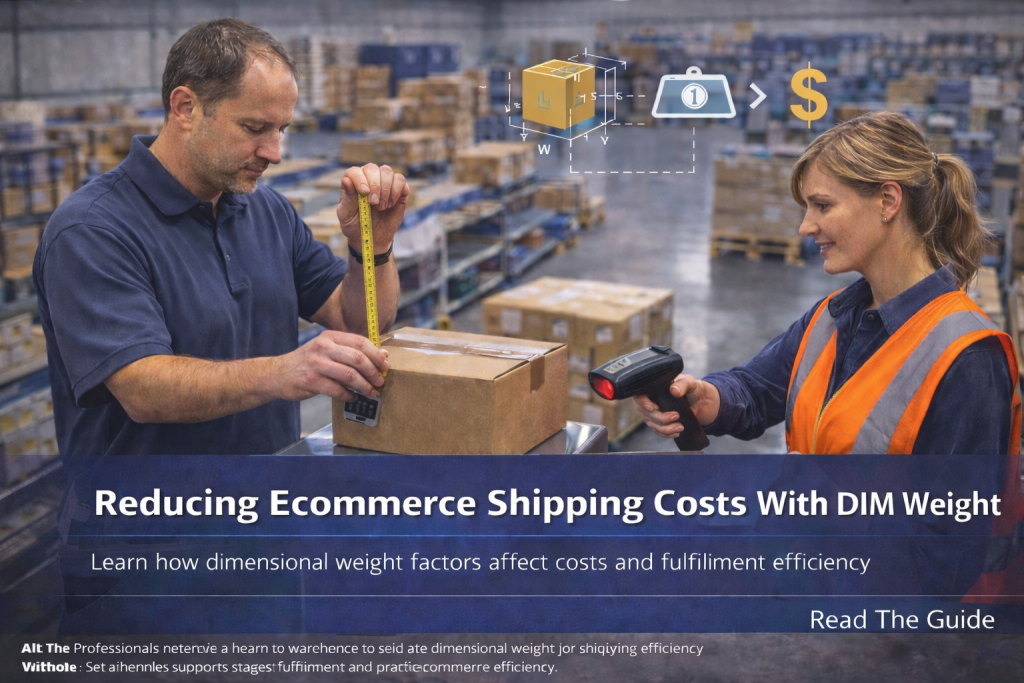
Author: Jason Martin
Last updated: February 6, 2026
Executive TLDR
Dimensional weight (DIM weight) charges shipments based on package size, not just actual weight. Oversized boxes, even with light products, can increase shipping costs.
Ecommerce brands often face margin erosion when shipping small, bulky items without optimizing cartons.
Working with a 3PL like PFS helps brands reduce DIM weight impact through smart packaging, carton optimization, and operational efficiency.
If you want to reduce DIM weight costs and improve fulfillment efficiency, you can start here,
Contact Product Fulfillment Solutions.
Table of contents
- What Is Dimensional Weight?
- Why Carriers Use Dimensional Weight Pricing
- How Dimensional Weight Is Calculated
- Dimensional Weight vs Actual Weight
- How DIM Weight Impacts Ecommerce Brands
- Common Dimensional Weight Mistakes
- How a 3PL Helps Reduce Dimensional Weight Costs
- Real-World Example
- Dimensional Weight FAQs
What Is Dimensional Weight?
Dimensional weight is a shipping pricing method that accounts for the space a package takes in transit rather than just its actual weight. Carriers calculate a package’s “dimensional” or “DIM” weight, then charge whichever is higher: the actual weight or the DIM weight.
Why Carriers Use Dimensional Weight Pricing
Carriers like UPS, FedEx, and USPS price based on DIM weight because truck and plane space is limited. Large, lightweight packages occupy space that could carry more densely packed parcels, so pricing by volume ensures fair cost allocation.
How Dimensional Weight Is Calculated
The typical calculation is:
Length × Width × Height ÷ DIM Factor
The carrier’s DIM factor reflects density assumptions for the service. The higher of actual weight or DIM weight is used as the billable weight.
Dimensional Weight vs Actual Weight
Examples:
- Dense product in a small box → billable weight = actual weight
- Lightweight product in a large box → billable weight = DIM weight
How DIM Weight Impacts Ecommerce Brands
DIM weight affects:
- Shipping margins
- Free shipping thresholds
- International costs
- Subscription profitability
Light, bulky items are particularly vulnerable. Without proper fulfillment planning, costs escalate quickly.
Common Dimensional Weight Mistakes
- Using the same box for all SKUs
- Ignoring void fill optimization
- Failing to audit carton assignments
- Prioritizing speed over packaging efficiency
- Not using real-time DIM data in the warehouse
How a 3PL Helps Reduce Dimensional Weight Costs
PFS helps brands manage DIM weight through:
- Carton right-sizing logic
- SKU-specific packaging rules
- Multi-SKU order consolidation
- WMS cartonization optimization
- Ongoing cost audits
Our warehousing and storage solutions and centralized Cincinnati, Ohio fulfillment center help reduce transit risk and shipping expenses.
Talk to an ExpertReal-World Example
A wellness brand shipping lightweight supplements was paying high shipping costs. After switching to PFS:
- Boxes were right-sized per SKU and order
- Void fill was optimized
- Carton assignment was automated at pick/pack
Result: Shipping costs dropped while maintaining delivery speed.
Dimensional Weight FAQs
Does dimensional weight apply to all shipments?
Most domestic and international shipments, especially air services, are subject to DIM pricing.
Is dimensional weight avoidable?
No, but it can be minimized through proper packaging and fulfillment design.
Does dimensional weight affect international shipping more?
Yes. Air freight and cross-border shipments magnify DIM weight costs.
Should I involve a 3PL in managing DIM weight?
Yes. A 3PL ensures packages are prepared and sized to reduce unnecessary dimensional weight charges.
Talk to an Expert