
Reviewed by: Chief Operations Officer, Product Fulfillment Solutions
Last updated: February 20, 2026
Executive TLDR
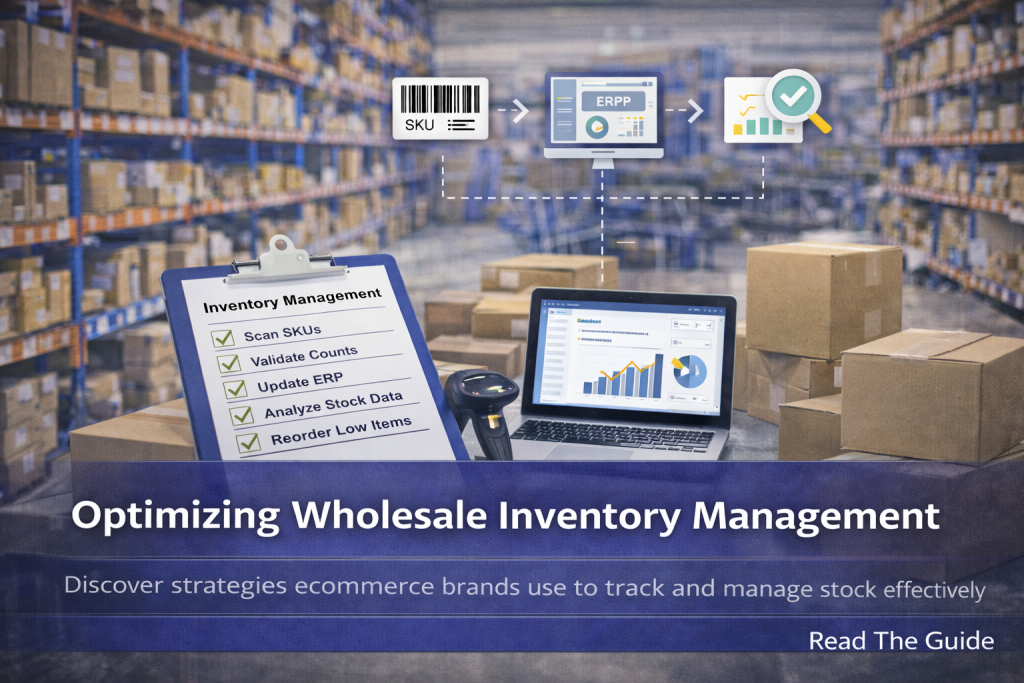
Managing wholesale inventory is more than tracking stock. For ecommerce brands, it means ensuring products are available, orders are fulfilled accurately, and chargebacks are avoided. Without effective systems, brands risk overselling, stockouts, and operational inefficiencies.
In this post, we break down actionable steps for wholesale inventory management, from accurate inventory counts to forecasting demand and integrating tech systems. You’ll learn how a centralized fulfillment center and a responsive 3PL partner like PFS can streamline your operations.
- Track and monitor SKUs to prevent stockouts and overstock.
- Centralize order and inventory information for clarity across sales channels.
- Use automation for accuracy and efficiency in reorder alerts and reporting.
- Leverage data-driven forecasts to plan procurement and inventory replenishment.
- Adopt a strong 3PL partner to simplify multichannel wholesale operations.
If you already know you need a steadier fulfillment program, you can start the conversation here,
Contact Product Fulfillment Solutions.
Table of contents
- When wholesale inventory issues start to hurt your business
- Story: How BrandX improved operations with a 3PL
- Key practices for efficient wholesale inventory management
- Choosing the right inventory management system
- Leveraging data to forecast demand and replenish stock
- Centralizing multichannel order visibility
- Automation for accuracy and efficiency
- Wholesale inventory management FAQs
When wholesale inventory issues start to hurt your business
For growing ecommerce brands, wholesale inventory problems often surface when stockouts or overselling start affecting order fulfillment. Missing SKUs can create customer dissatisfaction, late shipments, and costly chargebacks. Without consistent counts and real-time visibility, your operations become reactive rather than proactive.
Brands with recurring stockouts or inaccurate reorder points notice slowed growth and strained partnerships with B2B customers. This is when investing in a robust inventory management framework and partnering with a competent 3PL becomes critical.
Story: How BrandX improved operations with a 3PL
Before
BrandX, a health supplement brand, managed wholesale inventory across multiple warehouses with spreadsheets. They struggled with backorders and stock discrepancies, which delayed shipments and frustrated wholesale partners.
Pain points
- Overstocking on some SKUs and stockouts on others
- Manual order tracking created errors and inefficiencies
- Inability to forecast demand accurately across seasonal trends
The shift
After integrating with PFS, BrandX centralized inventory, automated reorder alerts, and gained real-time visibility across all SKUs. They cut stockouts, reduced operational errors, and improved delivery accuracy, leading to higher partner satisfaction and repeat business.
Key practices for efficient wholesale inventory management
- Conduct regular SKU-level counts to maintain stock accuracy.
- Define reorder points and optimal order quantities per product.
- Document and track every inbound shipment from manufacturers.
- Perform periodic audits to validate system data against physical inventory.
- Segment SKUs by demand velocity to prioritize replenishment.
- Maintain clear communication between sales, warehouse, and fulfillment teams.
Choosing the right inventory management system
A modern IMS helps consolidate multichannel wholesale operations. Key features to look for include real-time inventory tracking, automatic reorder notifications, multichannel integration, and forecasting tools. A strong 3PL partner like PFS enhances these capabilities by providing centralized fulfillment, kitting, and detailed reporting.
Leveraging data to forecast demand and replenish stock
Accurate demand forecasting requires historical sales data, seasonal patterns, and SKU-level turnover rates. By analyzing trends, brands can plan procurement in advance, reduce stockouts, and avoid unnecessary inventory holding costs. Automating these insights ensures timely reorders and consistent availability for B2B customers.
Centralizing multichannel order visibility
Multichannel sales amplify the need for synchronized inventory information. Centralizing order data ensures that all channels pull from the same stock levels, preventing overselling and missed shipments. Real-time dashboards and reporting help operations teams make informed decisions and maintain fulfillment SLAs.
Automation for accuracy and efficiency
Automation reduces manual errors and saves time. IMS features such as automatic stock adjustments, integrated reorder alerts, and synchronized multichannel updates ensure inventory is always accurate. Combined with PFS’s fulfillment services, automation enables consistent order fulfillment, improved operational efficiency, and fewer chargebacks.
Wholesale inventory management FAQs
What is wholesale inventory management?
It is the process of purchasing, storing, and tracking products intended for sale to other businesses, ensuring stock levels are accurate and orders are fulfilled efficiently.
Why is it important for ecommerce brands?
Accurate wholesale inventory management prevents stockouts, overselling, shipping delays, and chargebacks, keeping your supply chain smooth and reliable.
How do I forecast demand effectively?
Analyze historical sales data, track seasonal trends, and monitor SKU-level turnover to predict future demand and plan replenishment accordingly.
What should I look for in an IMS?
Key features include multichannel integration, real-time tracking, automatic reorder notifications, and robust forecasting capabilities to streamline operations.
How can a 3PL partner help?
A 3PL like PFS centralizes inventory, manages fulfillment, automates reorder alerts, and provides detailed reporting to reduce errors and improve delivery accuracy.
What are common mistakes to avoid?
Relying on spreadsheets alone, failing to perform regular audits, ignoring reorder points, and not integrating multichannel data are common mistakes that lead to inefficiency.
Talk to an Expert