Reviewed by: Product Fulfillment Solutions Operations Team
Last updated: March 20, 2026
Executive TLDR
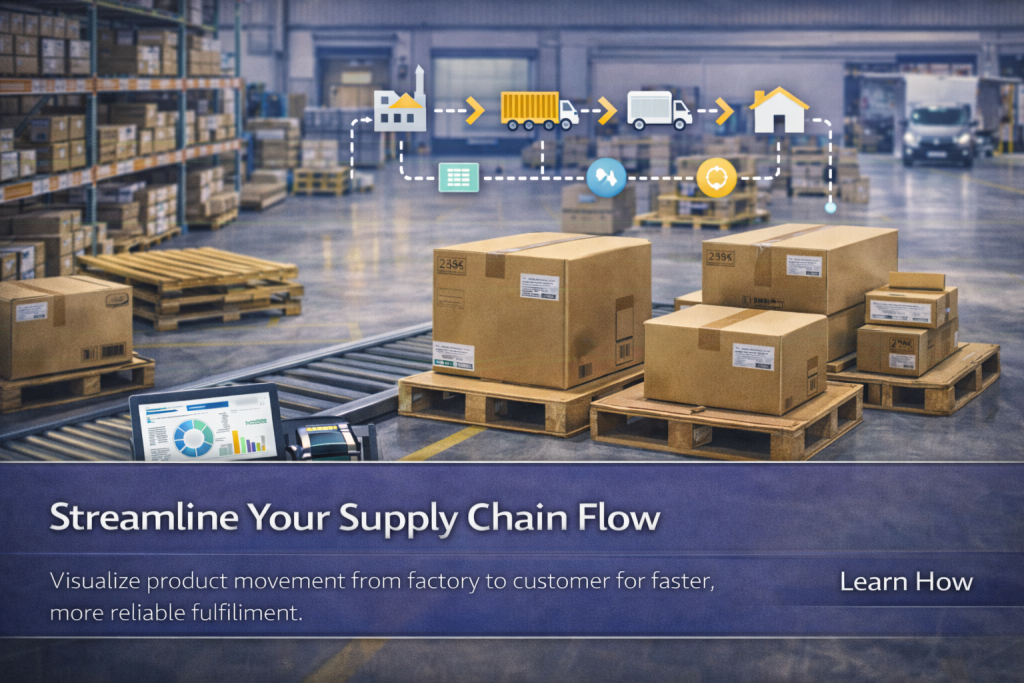
Supply chain flow describes the movement of products, information, and finances through every stage of a company’s logistics operation—from raw materials to the final customer delivery.
For ecommerce brands, understanding supply chain flow is essential for maintaining inventory availability, preventing delays, and scaling operations without creating fulfillment bottlenecks.
In this guide, we break down how supply chain flow works, the stages involved, common problems growing ecommerce brands face, and how efficient fulfillment operations help keep everything moving smoothly.
If you’re looking to optimize your logistics operations, you can start here:
Talk to Product Fulfillment Solutions
Table of Contents
- What is supply chain flow?
- Story: How a fast-growing brand improved its supply chain flow
- The five stages of supply chain flow
- Why supply chain flow matters for ecommerce brands
- Common supply chain flow problems
- How fulfillment partners improve supply chain flow
- Supply chain flow FAQs
What is supply chain flow?
Supply chain flow refers to the coordinated movement of goods, data, and payments through the supply chain network.
It connects every stage of operations, including:
- Raw material sourcing
- Product manufacturing
- Inventory storage
- Order fulfillment
- Transportation and delivery
- Customer returns
When supply chain flow works efficiently, products move quickly from production to customers while maintaining inventory accuracy and predictable delivery times.
When it breaks down, brands experience stockouts, delayed orders, and frustrated customers.
Story: How a growing ecommerce brand fixed its supply chain flow
Before
A skincare brand called Lumera Organics began selling online and quickly grew through influencer marketing and marketplace sales.
As order volume increased, their logistics systems struggled to keep up.
The challenge
- Inventory arrived late from overseas manufacturers
- Warehouse receiving processes were slow
- Order fulfillment delays caused customer complaints
- Inventory levels became unpredictable
The brand realized their supply chain flow lacked coordination between suppliers, transportation, warehousing, and fulfillment.
The improvement
By restructuring their logistics process and partnering with Product Fulfillment Solutions, Lumera improved inventory visibility, accelerated receiving processes, and created a smoother flow from inbound shipments to customer orders.
The result was faster delivery times and more consistent customer experiences.
The five stages of supply chain flow
Supply chain flow typically includes five interconnected stages.
1. Procurement and sourcing
This stage involves sourcing raw materials or finished products from suppliers. Ecommerce brands often rely on domestic manufacturers or overseas factories.
2. Manufacturing and production
Products are manufactured, assembled, and packaged. Production timelines must align with inventory forecasts to avoid shortages.
3. Inbound transportation
Goods move from suppliers or factories to warehouses through freight transportation such as ocean shipping, air freight, or trucking.
4. Warehousing and fulfillment
Once inventory arrives at a fulfillment center, it is received, stored, and prepared for order processing.
Key processes include:
- Inventory receiving
- Putaway and storage
- Order picking
- Packing
- Shipping label generation
5. Delivery and last-mile shipping
Customer orders move through parcel carriers until they reach the customer’s doorstep.
Efficient last-mile delivery is critical for meeting customer expectations around fast shipping.
Why supply chain flow matters for ecommerce brands
Supply chain flow impacts nearly every operational metric that ecommerce brands care about.
When logistics processes are well coordinated, companies experience:
- Higher order fulfillment accuracy
- Faster shipping times
- Better inventory availability
- Lower operational costs
- Improved customer satisfaction
Conversely, poor supply chain flow creates operational friction and limits a brand’s ability to scale.
Common supply chain flow problems
Growing ecommerce companies frequently encounter supply chain disruptions.
Some of the most common issues include:
Inventory visibility gaps
Without real-time inventory data, brands struggle to predict stock levels or reorder products efficiently.
Transportation delays
Shipping disruptions can cause inventory shortages and delay order fulfillment.
Warehouse bottlenecks
Slow receiving, inefficient picking paths, or limited storage capacity can disrupt fulfillment operations.
Demand volatility
Marketing campaigns or seasonal demand spikes can overwhelm logistics infrastructure.
Addressing these challenges requires coordination across the entire supply chain.
How fulfillment partners improve supply chain flow
Third-party logistics providers play a major role in optimizing supply chain flow for ecommerce brands.
Product Fulfillment Solutions helps businesses streamline operations through:
- Efficient inbound inventory receiving
- Organized warehouse storage systems
- Real-time inventory tracking
- Accurate order picking and packing
- Multi-carrier shipping optimization
These processes ensure inventory moves quickly from inbound shipments to outbound customer orders.
By reducing operational friction, brands can scale their ecommerce operations with greater confidence.
Need help improving your logistics infrastructure?
Talk to Product Fulfillment Solutions
Supply Chain Flow FAQs
What does supply chain flow mean?
Supply chain flow refers to the movement of products, information, and payments across every stage of the supply chain, from suppliers to customers.
Why is supply chain flow important?
Efficient supply chain flow ensures products move quickly through logistics operations, helping brands avoid delays and maintain customer satisfaction.
What are the stages of supply chain flow?
The five main stages include procurement, manufacturing, inbound transportation, warehousing and fulfillment, and final delivery.
How can ecommerce brands improve supply chain flow?
Brands improve supply chain flow by strengthening supplier coordination, improving inventory visibility, and working with experienced fulfillment partners.
How does PFS help improve supply chain flow?
Product Fulfillment Solutions helps ecommerce brands manage receiving, storage, order fulfillment, and shipping processes that keep inventory moving efficiently through the supply chain.