
Reviewed by: Chief Operations Officer, Product Fulfillment Solutions
Last updated: June 08, 2026
Executive TLDR
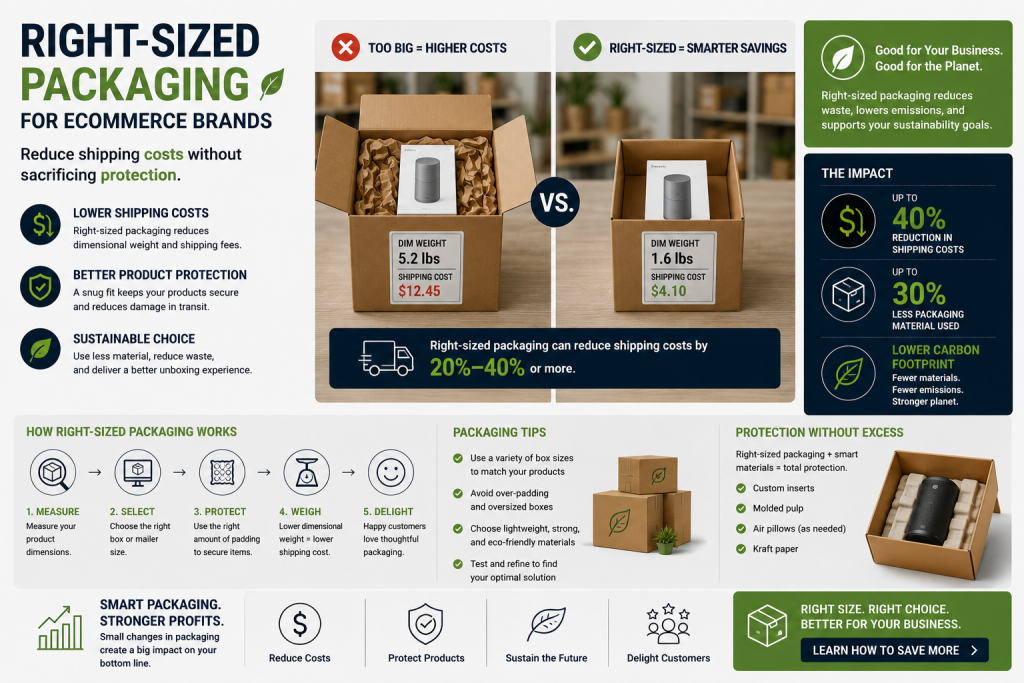
Many ecommerce brands focus heavily on shipping rates while overlooking one of the biggest drivers of fulfillment costs: packaging. Using boxes that are too large can increase dimensional weight charges, waste packaging materials, slow fulfillment operations, and create a poor customer experience.
Right-sized packaging helps ecommerce companies reduce shipping expenses, improve warehouse efficiency, protect products during transit, and support sustainability initiatives without compromising delivery performance.
For brands selling supplements, cosmetics, wellness products, snacks, subscription boxes, and other small consumer goods, packaging optimization often creates immediate cost savings while improving operational consistency.
- Reduce dimensional weight charges
- Lower packaging material costs
- Improve fulfillment efficiency
- Protect products during shipping
- Create a better customer experience
If you already know you need a steadier fulfillment program, you can start the conversation here,
Contact Product Fulfillment Solutions.
Table of contents
- When packaging starts impacting profitability
- Story: How VitalPath Nutrition reduced shipping costs
- What right-sized packaging actually means
- How carriers calculate package costs
- Common packaging mistakes ecommerce brands make
- Right-Sized Packaging FAQs
When Packaging Starts Impacting Profitability
Packaging decisions often seem minor when order volume is low. A slightly oversized box may only add a small amount to shipping expenses on a single shipment.
As order volume grows, however, those small inefficiencies multiply across thousands of shipments.
Many brands discover that oversized packaging contributes to:
- Higher dimensional weight charges
- Increased material expenses
- Higher labor requirements
- More void fill usage
- Reduced warehouse efficiency
- Lower shipping profitability
These costs often remain hidden because they are spread across multiple operational areas.
Brands using professional ecommerce fulfillment services frequently uncover packaging inefficiencies that were previously overlooked.
Story: How VitalPath Nutrition Reduced Shipping Costs
Before
VitalPath Nutrition sold vitamins, hydration powders, and subscription wellness kits nationwide. Order volume was growing steadily, but shipping expenses continued increasing faster than revenue.
Leadership initially blamed carrier rate increases.
Pain Points
After reviewing fulfillment data, the company discovered many shipments were being packed into boxes significantly larger than necessary.
Products remained secure during transit, but the company was paying higher dimensional weight charges while consuming excess packaging materials.
Warehouse teams also spent additional time assembling larger boxes and adding protective fillers.
The Shift
VitalPath reviewed packaging sizes across its product catalog and introduced packaging standards based on order profiles.
The company also worked with fulfillment specialists offering pick and pack services to improve packaging consistency.
Within months, shipping costs declined, fulfillment productivity improved, and customer satisfaction remained strong.
What Right-Sized Packaging Actually Means
Right-sized packaging means selecting packaging that appropriately fits the products being shipped while providing sufficient protection throughout the delivery process.
The goal is to eliminate unnecessary empty space without creating damage risks.
Effective right-sized packaging balances several objectives:
- Product protection
- Shipping cost control
- Packaging efficiency
- Warehouse productivity
- Customer experience
- Sustainability goals
Packaging that is too small can increase product damage. Packaging that is too large often increases shipping costs and operational inefficiencies.
The most effective packaging strategy focuses on finding the optimal balance between protection and cost.
How Carriers Calculate Package Costs
Many ecommerce brands focus exclusively on shipment weight when estimating shipping expenses. In reality, carriers often evaluate both actual weight and dimensional weight.
Dimensional weight reflects the amount of space a package occupies during transportation.
Large boxes with relatively light products may generate higher shipping costs because carriers allocate transportation capacity based on package size as well as weight.
When packaging is oversized, businesses may pay:
- Higher parcel rates
- Additional dimensional charges
- Increased packaging material costs
- Higher storage expenses
- Greater transportation inefficiencies
Many brands reduce these costs through packaging optimization and access to discounted shipping rates that support more cost-effective parcel shipping.
Talk to an Expert
“`