
Author:Jason Martin
Last updated: January 30, 2026
Executive TLDR
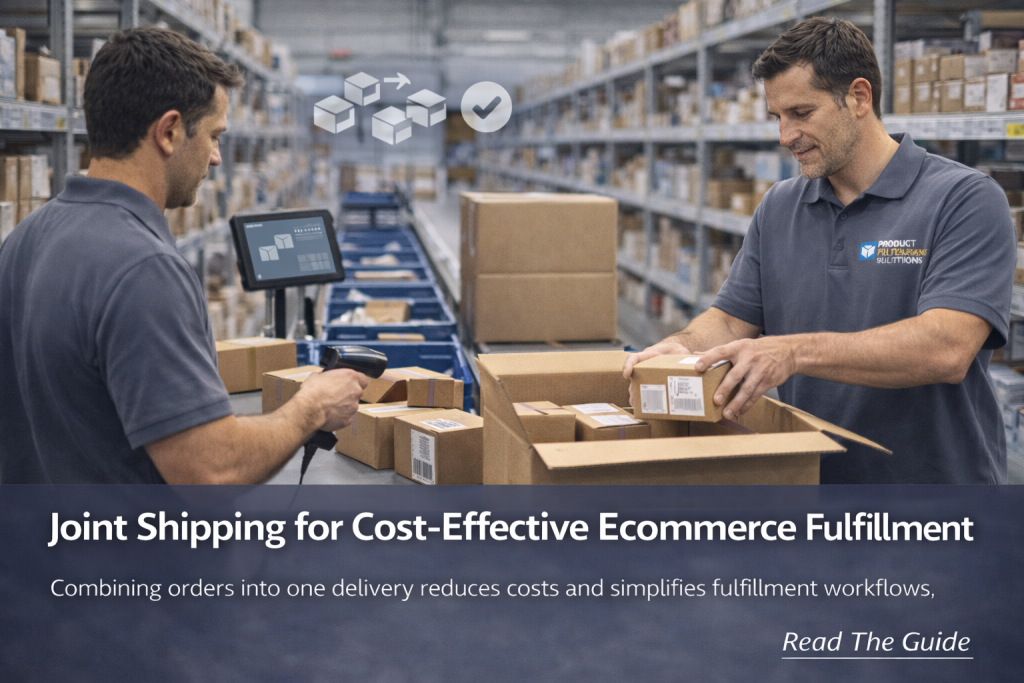
Joint shipment consolidates multiple orders or products into a single shipment to reduce shipping costs, improve transit times, and streamline fulfillment.
This article explains how joint shipment works, its benefits, and how a 3PL like PFS can implement it effectively.
If your shipping costs are high or fulfillment is slow,
Contact Product Fulfillment Solutions.
Table of contents
- When Joint Shipments Matter
- Story: How Vita Organics Reduced Shipping Costs
- What Is Joint Shipment?
- Benefits of Joint Shipments
- Implementing Joint Shipment Strategies
- Joint Shipment FAQs
When Joint Shipments Matter
Joint shipments are valuable when brands ship multiple orders to the same region or customer. Without consolidation, businesses incur higher carrier fees, use more packaging, and increase handling time.
Typical scenarios include:
- Multiple orders to nearby addresses
- Brands shipping bulk or subscription products
- Ecommerce businesses looking to reduce per-order shipping cost
Story: How Vita Organics Reduced Shipping Costs
Before
Vita Organics, a health supplement brand, shipped orders individually and saw high shipping costs and slower delivery during peak season.
Pain points
- High shipping and packaging costs
- Increased handling for each order
- Complex tracking across multiple shipments
The shift
Partnering with PFS, Vita Organics consolidated orders through joint shipment. By bundling orders going to the same regions, transit times improved, costs dropped, and customer satisfaction increased.
What Is Joint Shipment?
A joint shipment combines multiple orders or products into a single shipment. Key aspects:
- Orders to the same area or customer are bundled
- Reduces handling, packaging, and shipping fees
- Can be applied locally or internationally
Joint shipment differs from split shipment, where a single order is shipped in multiple packages.
Benefits of Joint Shipments
1. Cost savings
Consolidating shipments lowers shipping rates, reduces packaging, and decreases handling fees.
2. Faster fulfillment
Efficient consolidation and strategic inventory placement across fulfillment centers can speed delivery times.
3. Sustainability
Fewer shipments mean lower carbon emissions and reduced packaging waste, aligning with eco-friendly initiatives.
4. Peak season efficiency
Joint shipments help manage high volumes without overloading fulfillment operations, keeping costs and schedules predictable.
Talk to an Expert
Implementing Joint Shipment Strategies
Steps for ecommerce brands:
- Analyze shipping data to find opportunities for order consolidation
- Optimize warehouse layouts and picking routes for efficient bundling
- Use WMS technology to automate grouping, route planning, and real-time inventory tracking
- Coordinate across fulfillment centers to maximize regional efficiency
Joint Shipment FAQs
Is joint shipment only for large volumes?
No. Any brand with recurring orders to similar regions can benefit.
Will joint shipment slow delivery?
If implemented correctly, it can improve overall transit times while reducing handling.
How does a 3PL help with joint shipment?
A 3PL like PFS provides optimized routing, consolidation strategies, and WMS integration for efficient execution.
Is joint shipment environmentally friendly?
Yes. Fewer shipments and less packaging reduce carbon footprint and packaging waste.