
Reviewed by: Chief Operations Officer, Product Fulfillment Solutions
Last updated: March 18, 2026
Executive TLDR
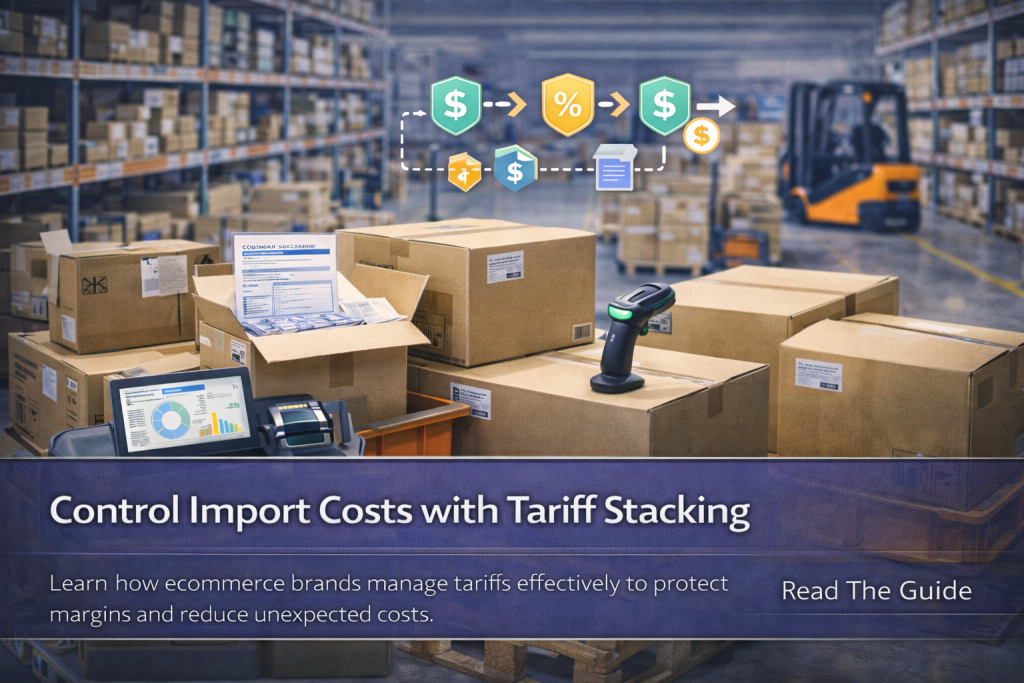
Tariff stacking occurs when multiple tariffs, duties, or trade penalties apply to the same imported product. Instead of paying one import fee, businesses may be subject to several overlapping charges based on the product classification, country of origin, and trade policies.
For ecommerce brands that rely on overseas manufacturing, tariff stacking can dramatically increase landed costs and reduce profit margins. Understanding how tariffs accumulate — and how to plan around them — is critical for maintaining pricing stability.
This guide explains how tariff stacking works, why it affects ecommerce supply chains, and how fulfillment partners like Product Fulfillment Solutions (PFS) help brands manage inventory flow once goods enter the United States.
If you are evaluating logistics partners that support cost control and inventory visibility, you can start the conversation here:
Contact Product Fulfillment Solutions
Table of Contents
- What is tariff stacking?
- Story: How an ecommerce brand discovered tariff stacking
- Why tariff stacking happens in global trade
- How tariffs and duties are calculated
- How tariff stacking impacts ecommerce brands
- Strategies to reduce tariff exposure
- Tariff stacking FAQs
What is tariff stacking?
Tariff stacking refers to a situation where multiple import tariffs apply to the same product during customs processing.
Instead of paying a single duty rate, importers may face several layers of charges, including:
- Standard import duties
- Trade war tariffs
- Anti-dumping duties
- Countervailing duties
- Special trade policy tariffs
Each tariff is applied sequentially, which can significantly increase the total cost of bringing goods into the country.
For ecommerce brands importing high-volume consumer goods, even small percentage increases can translate into large operational expenses.
Story: How an ecommerce brand discovered tariff stacking
Before
PureEdge Fitness, a fast-growing ecommerce brand selling resistance bands and workout accessories, manufactured products overseas to keep production costs competitive.
When the company launched a new product line, leadership expected predictable import duties based on their historical tariff classifications.
The problem
After the first shipment cleared customs, the finance team noticed landed costs were significantly higher than expected.
The products were subject to multiple tariffs due to trade policy changes affecting their product category and country of origin.
Instead of paying one duty rate, several tariffs were applied simultaneously — creating unexpected cost pressure.
The adjustment
By reassessing supplier sourcing, product classification, and shipment planning, the company improved cost predictability. Once inventory reached the United States, partnering with Product Fulfillment Solutions helped streamline distribution and reduce additional logistics costs.
Why tariff stacking happens in global trade
Tariff stacking occurs when different trade regulations overlap. Governments may impose additional tariffs for economic protection, trade disputes, or anti-dumping enforcement.
Common causes include:
- Trade disputes between countries
- Anti-dumping regulations on certain industries
- Countervailing duties designed to offset subsidies
- Protective tariffs for domestic manufacturing
- Changes in trade agreements
Because these policies are often implemented independently, multiple tariffs may apply to the same product.
How tariffs and duties are calculated
Tariffs are usually based on the product’s Harmonized System (HS) classification and the declared value of goods.
The calculation process typically includes:
- Determining the correct HS code for the product
- Identifying the base duty rate
- Checking for additional tariffs tied to trade policy
- Applying anti-dumping or countervailing duties if applicable
Because each tariff layer may apply separately, the total landed cost can rise significantly.
How tariff stacking impacts ecommerce brands
For ecommerce companies importing consumer goods, tariff stacking can influence several areas of the business.
- Higher landed product costs
- Reduced profit margins
- Pricing pressure in competitive markets
- Supply chain uncertainty
- Inventory planning challenges
Brands that ignore tariff exposure often discover margin issues only after products reach warehouses.
Proactive planning helps reduce this risk.
Strategies to reduce tariff exposure
While tariffs cannot always be avoided, several strategies help ecommerce brands minimize their impact.
Review product classification
Accurate HS classification ensures that products are not mistakenly assigned higher duty categories.
Diversify sourcing locations
Manufacturing in different regions may reduce exposure to specific trade tariffs.
Monitor trade policy updates
Tariff rules change regularly, especially during international trade disputes.
Improve landed cost planning
Understanding total landed costs allows brands to adjust pricing, margins, or sourcing strategies early.
Optimize domestic fulfillment
Once goods arrive in the United States, efficient fulfillment operations help control remaining logistics costs.
Product Fulfillment Solutions supports brands with real-time inventory visibility, efficient pick-and-pack processes, and scalable distribution operations.
Talk to an ExpertTariff Stacking FAQs
What is tariff stacking?
Tariff stacking occurs when multiple tariffs or duties apply to the same imported product, increasing the total import cost.
Why do multiple tariffs apply to one product?
Products may be affected by standard duties, trade policy tariffs, anti-dumping measures, or countervailing duties at the same time.
How does tariff stacking affect ecommerce businesses?
It raises landed costs, which can reduce profit margins and force brands to adjust pricing or sourcing strategies.
Can businesses avoid tariff stacking?
Not always, but companies can reduce exposure by reviewing product classifications, sourcing locations, and trade policies.
How does PFS help ecommerce brands manage supply chain costs?
PFS supports efficient inventory management, real-time fulfillment visibility, and scalable logistics operations once imported goods enter the domestic distribution network.
Talk to an Expert