Author: Jason Martin
Last updated: February 10, 2026
Executive TLDR
Supply chain integration connects systems, partners, and data so inventory, orders, and shipments move without friction.
Disconnected tools and handoffs slow fulfillment, increase errors, and limit scalability.
Ecommerce brands that integrate suppliers, 3PLs, and sales channels gain speed, visibility, and cost control.
If fragmented operations are holding you back,
Contact Product Fulfillment Solutions.
Table of contents
- What Is Supply Chain Integration?
- When Supply Chain Integration Starts to Matter
- Story: How Integrated Operations Changed Fulfillment
- Types of Supply Chain Integration
- Benefits of Supply Chain Integration
- How to Integrate Your Supply Chain
- How a 3PL Enables Supply Chain Integration
- Supply Chain Integration FAQs
What Is Supply Chain Integration?
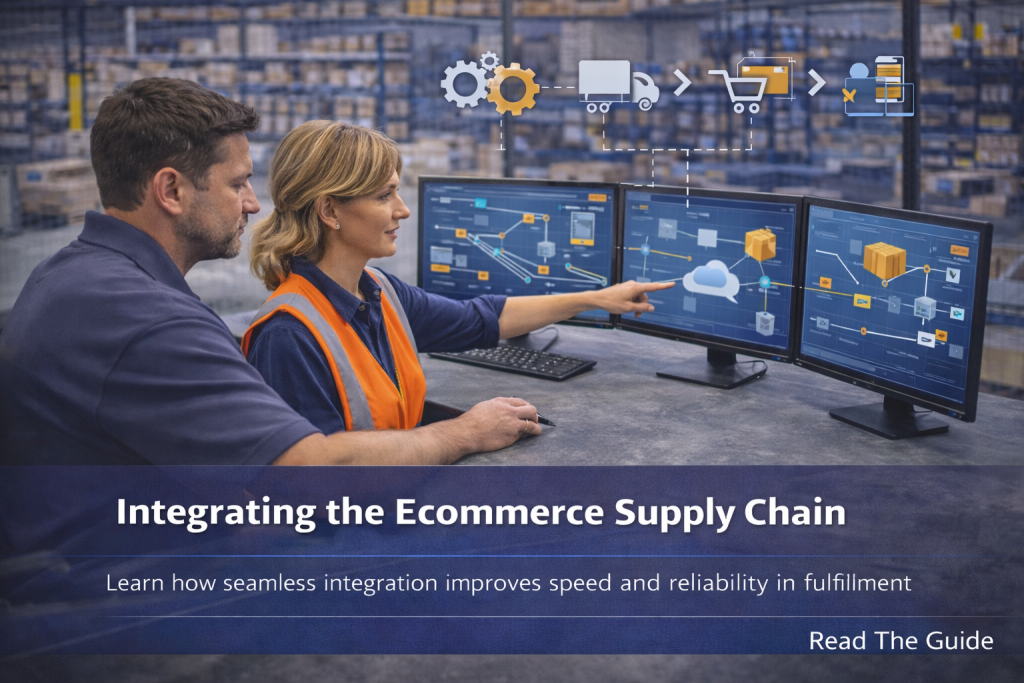
Supply chain integration is the process of aligning suppliers, inventory, fulfillment, transportation, and data systems so they operate as one connected workflow.
Instead of manual handoffs and siloed tools, integrated supply chains rely on shared data, automated updates, and standardized processes.
When Supply Chain Integration Starts to Matter
Integration becomes critical when ecommerce brands:
- Scale order volume across multiple sales channels
- Manage inventory across suppliers and warehouses
- Promise faster delivery windows
- Expand internationally
- Operate with lean internal teams
Without integration, growth creates friction instead of leverage.
Story: How Integrated Operations Changed Fulfillment
Before Integration
A growing health and wellness brand relied on spreadsheets, manual inventory updates, and delayed order syncing between systems.
Pain Points
- Inventory mismatches
- Order delays
- Limited visibility
- Customer service escalations
The Shift
After moving fulfillment to an integrated 3PL environment, inventory, orders, and shipping data updated automatically across platforms.
Result: Faster fulfillment, fewer errors, and predictable operations.
Types of Supply Chain Integration
Internal Integration
Aligning inventory, order management, and finance systems within the business.
Supplier Integration
Connecting production schedules, inbound shipments, and lead times.
Logistics Integration
Synchronizing warehouse operations, carriers, and delivery tracking.
Technology Integration
Ensuring ecommerce platforms, WMS, and reporting tools share real-time data.
Benefits of Supply Chain Integration
- Improved order accuracy
- Faster fulfillment
- Lower operational costs
- Better inventory planning
- Improved customer experience
How to Integrate Your Supply Chain
- Standardize data flows
- Eliminate manual inventory updates
- Centralize fulfillment operations
- Use real-time reporting
- Work with partners that support integrations
How a 3PL Enables Supply Chain Integration
Product Fulfillment Solutions enables integration through:
- Direct ecommerce platform connections
- Real-time inventory reporting
- Automated order syncing
- Centralized fulfillment from our
Cincinnati, Ohio fulfillment center
Our
ecommerce fulfillment services
and
real-time information
help brands scale without operational chaos.
Supply Chain Integration FAQs
What is supply chain integration?
It is the alignment of systems, partners, and data across the supply chain to enable efficient operations.
Why is supply chain integration important?
It reduces errors, improves visibility, and supports scalable fulfillment.
Does supply chain integration require new software?
Not always. Often it involves better use of existing systems and the right partners.
Can a 3PL support supply chain integration?
Yes. A modern 3PL provides technology and processes that connect inventory, orders, and shipping.
Talk to an Expert