
Reviewed by: Chief Operations Officer, Product Fulfillment Solutions
Last updated: February 24, 2026
Executive TLDR
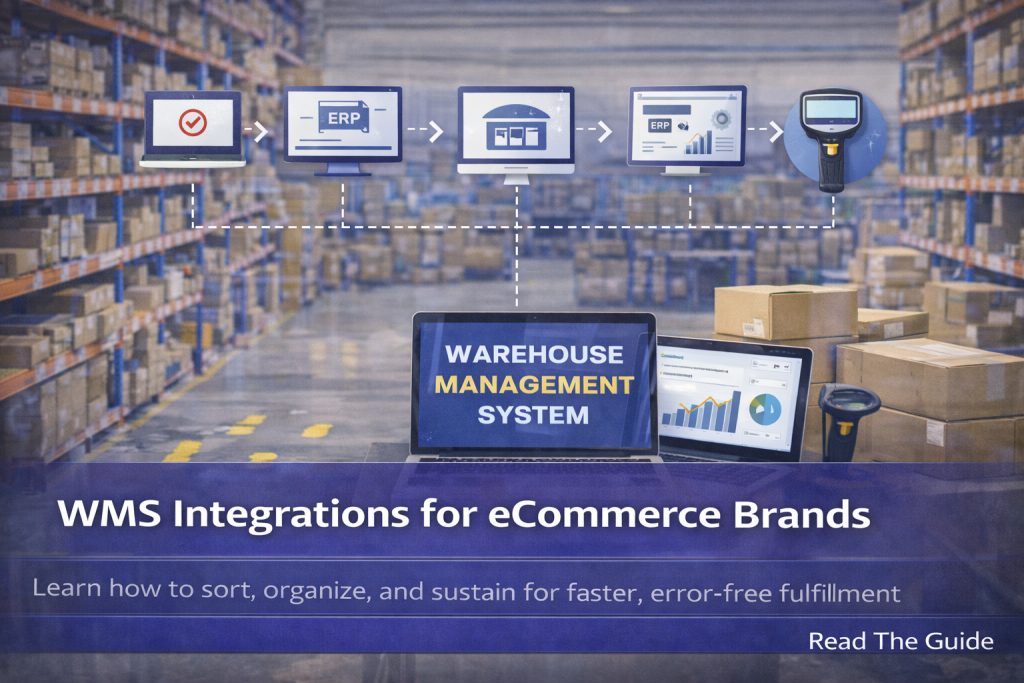
WMS integrations connect your warehouse management system to ecommerce platforms, marketplaces, ERPs, shipping carriers, and retail partners. When integrations are tight and accurate, orders flow automatically, inventory updates in real time, and reporting becomes reliable.
When integrations are weak or manual, you see overselling, inventory mismatches, missed SLAs, and expensive chargebacks. Growing brands feel this pain quickly as order volume increases.
- Eliminate manual order entry and reduce data errors
- Sync inventory across Shopify, Amazon, and retail channels
- Automate shipping label creation and tracking updates
- Support EDI compliance for wholesale partners
- Gain real time reporting for smarter forecasting
If you are evaluating a new 3PL or upgrading your tech stack, you can start the conversation here,
Contact Product Fulfillment Solutions.
Table of Contents
- Why WMS Integrations Matter for Growing Brands
- Story: How Integration Stabilized a Supplement Brand
- Core Systems Your WMS Should Connect To
- EDI and Retail Compliance Requirements
- Operational Metrics to Track After Integration
- Common WMS Integration Mistakes
- WMS Integrations FAQs
Why WMS Integrations Matter for Growing Brands
At low order volume, teams can manually manage exports, upload tracking numbers, and reconcile inventory in spreadsheets. As volume increases, those manual steps create friction. Orders get delayed, inventory lags behind reality, and finance teams struggle with reconciliation.
Strong WMS integrations allow your ecommerce fulfillment services provider to automatically receive orders, allocate inventory, generate pick tickets, create labels, and push tracking back to your storefront without human intervention.
The result is simple but powerful. Faster processing, fewer errors, and predictable scalability.
Story: How Integration Stabilized a Supplement Brand
Before
A fast growing health and wellness brand selling on Shopify and Amazon was manually exporting orders daily. Inventory was updated only once every 24 hours. During promotions, overselling became common.
Pain points
- Oversold SKUs during peak campaigns
- Late tracking uploads to marketplaces
- Manual data entry errors
- Chargebacks from wholesale accounts
The shift
After moving to PFS and implementing direct API integrations, orders flowed automatically into the warehouse. Inventory synchronized in near real time. Tracking numbers pushed back instantly once labels were generated.
Stock accuracy improved, chargebacks dropped, and customer service tickets decreased significantly.
Schedule a Fulfillment Review
Core Systems Your WMS Should Connect To
Ecommerce Platforms
Shopify, BigCommerce, WooCommerce, and similar platforms should connect directly to your WMS. Orders import automatically, cancellations sync instantly, and fulfillment status updates in real time.
Marketplaces
Amazon, Walmart, and other marketplaces require tight tracking compliance. Automated pushback of tracking and shipping confirmations protects seller ratings and performance metrics.
ERP or Accounting Systems
Financial reconciliation becomes smoother when shipment confirmations, inventory adjustments, and returns data sync directly to your ERP.
Shipping Carriers
Integrated carrier systems allow automated rate shopping, label creation, and tracking visibility. This ties directly into discounted shipping rates and optimized parcel strategies.
Inventory and Reporting Tools
Brands should have access to real time information dashboards that reflect live inventory counts, order statuses, and SKU performance.
EDI and Retail Compliance Requirements
If you sell wholesale into major retailers, WMS integrations must support EDI transactions. That includes purchase orders, advance ship notices, and invoice transmissions.
Without proper EDI integration, you risk missed routing guides, labeling violations, and chargebacks. PFS supports EDI solutions and connections to ensure retail compliance and protect margins.
For brands shipping from our Cincinnati, Ohio fulfillment center, this centralized infrastructure ensures consistent labeling, routing, and documentation across accounts.
Operational Metrics to Track After Integration
Once integrations are live, measure performance improvements. Do not assume technology alone fixes problems. Track results.
- Order processing time from import to shipment
- Inventory accuracy percentage
- Oversell rate by SKU
- On time shipment rate
- Chargeback frequency for retail orders
Improvements in these metrics indicate that your pick and pack services operation is supported by strong system connectivity, not manual workarounds.
Common WMS Integration Mistakes
- Relying on batch uploads instead of real time API connections
- Failing to test edge cases like partial shipments and returns
- Not mapping SKU aliases correctly across systems
- Ignoring peak season stress testing
- Overlooking EDI routing guide requirements
Integrations are not a one time event. They require validation, monitoring, and occasional updates as platforms evolve.
WMS Integrations FAQs
What is a WMS integration?
A WMS integration connects your warehouse management system to ecommerce platforms, marketplaces, ERPs, carriers, and retail systems so data flows automatically.
Why are WMS integrations important for ecommerce brands?
They eliminate manual data entry, reduce errors, synchronize inventory, and ensure tracking updates are transmitted instantly.
Do I need EDI integration for wholesale?
If you sell into major retailers, yes. EDI ensures compliant transmission of purchase orders, advance ship notices, and invoices.
How long does integration take?
Simple API integrations can take days to weeks. Complex ERP and EDI integrations may require structured onboarding and testing.
Can integrations prevent overselling?
Yes. Real time inventory synchronization reduces the risk of selling units that are no longer available.
Does PFS support custom integrations?
PFS supports standard platform integrations as well as customized configurations depending on your system architecture and growth goals.
Talk to an Integration Specialist