
Reviewed by: Chief Operations Officer, Product Fulfillment Solutions
Last updated: March 3, 2026
Executive TLDR
Stock checking and stocktaking are often used interchangeably, but they serve different purposes in warehouse operations. For ecommerce brands, understanding the difference can directly impact inventory accuracy, fulfillment speed, and chargeback risk.
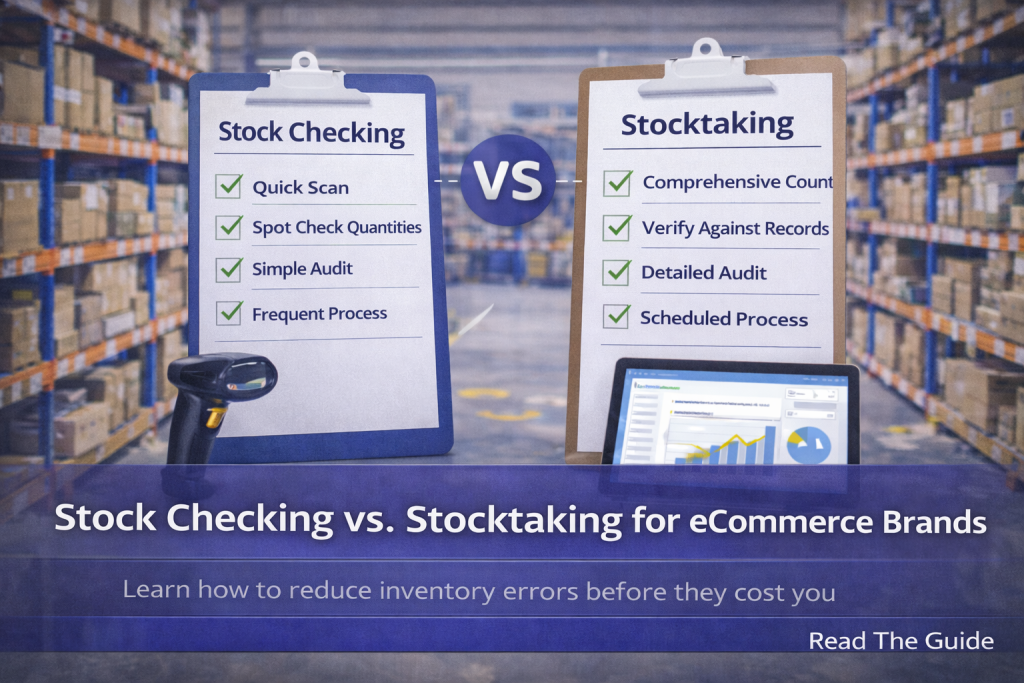
Stock checking refers to ongoing, smaller inventory validations such as cycle counts. Stocktaking is a full physical count of all inventory, typically performed periodically for financial and compliance purposes.
- Stock checking is frequent and targeted
- Stocktaking is comprehensive and scheduled
- Both protect against shrinkage and fulfillment errors
- High SKU ecommerce brands need a structured approach to both
- Strong 3PL partners build these processes into daily operations
If you suspect your inventory records are not matching physical stock, you can start the conversation here,
Contact Product Fulfillment Solutions.
Table of Contents
- Why the Difference Between Stock Checking and Stocktaking Matters
- Story: How Cycle Counts Prevented a Major Stockout
- What Is Stock Checking?
- What Is Stocktaking?
- When to Use Each Approach in Ecommerce Fulfillment
- Operational Metrics That Improve With Accurate Counts
- Stock Checking vs Stocktaking FAQs
Why the Difference Between Stock Checking and Stocktaking Matters
As order volume grows, small inventory discrepancies compound quickly. A five unit mismatch on a fast moving SKU can create overselling on your storefront, backorders for wholesale partners, and delayed shipments.
Without structured inventory controls inside your warehousing and storage solutions, fulfillment accuracy suffers. The key is using the right tool for the right purpose.
Stock checking protects daily operational accuracy. Stocktaking validates your entire inventory for accounting, audits, and long term planning.
Story: How Cycle Counts Prevented a Major Stockout
Before
A fast growing cosmetics brand relied on quarterly stocktaking only. Between full counts, discrepancies went unnoticed. During a seasonal promotion, the system showed 2,000 units available of a best seller. In reality, only 1,400 were physically in the building.
Pain points
- Oversold inventory during a peak campaign
- Backorders and delayed shipments
- Increased customer service tickets
- Retail partner frustration
The shift
After implementing routine cycle based stock checking with PFS, high velocity SKUs were counted weekly. Discrepancies were corrected quickly. The next campaign ran without overselling, and inventory accuracy remained above 99 percent.
Review Your Inventory Controls
What Is Stock Checking?
Stock checking refers to targeted inventory validation conducted throughout normal warehouse operations. It is typically done through cycle counting, where specific SKUs, zones, or product categories are counted on a rotating schedule.
In ecommerce fulfillment, this often means:
- Counting high velocity SKUs weekly
- Counting medium velocity SKUs monthly
- Verifying quantities after large inbound receipts
- Investigating discrepancies triggered by system alerts
Integrated with real time information dashboards, stock checking allows discrepancies to be corrected before they affect orders.
The benefit is operational stability. You maintain confidence that the quantity shown in your system matches what is physically on the shelf.
What Is Stocktaking?
Stocktaking is a full physical count of all inventory in the warehouse. It is typically conducted annually or quarterly, often tied to financial reporting or audit requirements.
During stocktaking:
- All SKUs are counted, regardless of velocity
- Warehouse activity may pause or slow down
- Counts are reconciled against system data
- Adjustments are documented for accounting accuracy
Stocktaking validates your broader financial picture. However, relying on it alone is risky in high volume ecommerce environments.
When to Use Each Approach in Ecommerce Fulfillment
For brands using ecommerce fulfillment services, the best practice is combining both methods strategically.
Use stock checking when:
- SKU count is high and turnover is frequent
- Running promotions or seasonal campaigns
- Managing subscription or replenishment products
- Monitoring shrinkage risk
Use stocktaking when:
- Closing financial periods
- Preparing for audits
- Evaluating annual performance
- Resetting system baselines
At PFS, stock checking is embedded into daily pick and pack services workflows. This ensures inventory accuracy supports operational performance, not just accounting compliance.
Operational Metrics That Improve With Accurate Counts
Inventory accuracy directly influences performance across your fulfillment operation. When stock checking and stocktaking are structured correctly, brands see measurable improvement in:
- Inventory accuracy percentage
- Oversell rate per SKU
- Order fulfillment speed
- Chargeback frequency
- Customer satisfaction and repeat purchase rates
These improvements are especially critical for brands shipping from a centralized facility such as our Cincinnati, Ohio fulfillment center, where precision and consistency drive scalable growth.
Stock Checking vs Stocktaking FAQs
Is stock checking the same as stocktaking?
No. Stock checking refers to targeted, routine counts such as cycle counts. Stocktaking is a full inventory count conducted periodically.
How often should ecommerce brands perform stock checking?
High velocity SKUs should be checked weekly. Medium and low velocity SKUs can be checked monthly or quarterly, depending on turnover and risk.
Do I still need stocktaking if I cycle count?
Yes. Stocktaking supports financial validation and audit compliance, even if routine cycle counting maintains daily accuracy.
What happens if inventory accuracy drops below 98 percent?
You may experience overselling, delayed shipments, increased returns, and potential retail chargebacks. Immediate corrective counting is recommended.
Can a 3PL manage both stock checking and stocktaking?
Yes. A disciplined 3PL integrates routine cycle counts into operations and coordinates structured stocktaking aligned with financial reporting needs.
Strengthen Your Inventory Accuracy