
Reviewed by: Chief Operations Officer, Product Fulfillment Solutions
Last updated: February 26, 2026
Executive TLDR
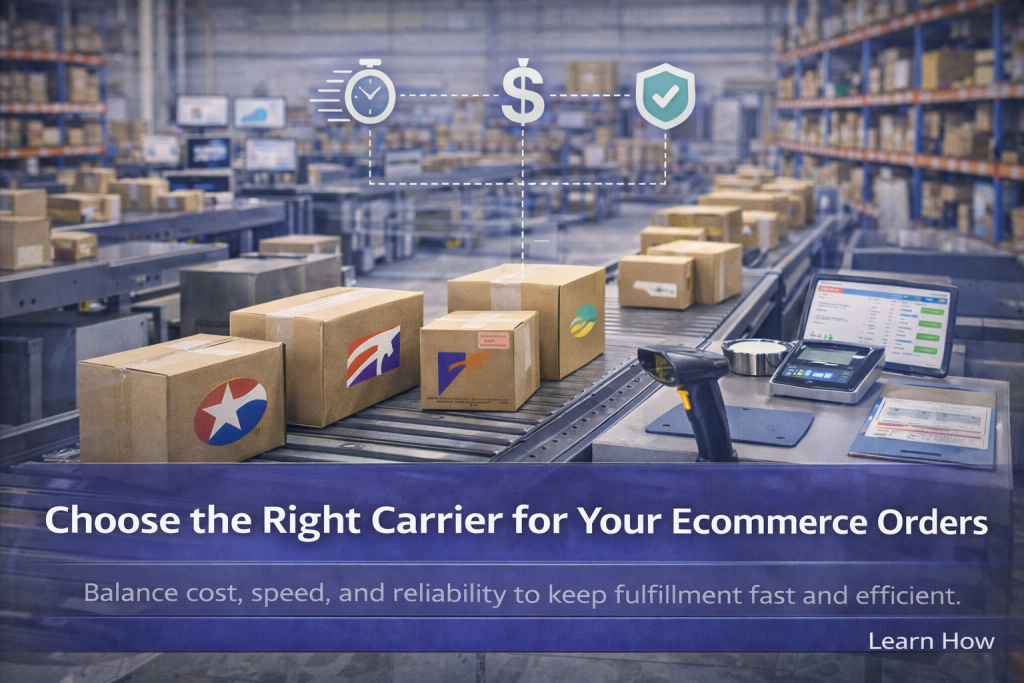
Choosing the right shipping carrier is one of the most critical decisions for ecommerce brands. Poor carrier selection can increase costs, delay deliveries, and harm your customer experience. This article breaks down the factors ecommerce leaders should consider to optimize their carrier strategy while keeping operations lean and predictable.
We’ll explore the pros and cons of major carriers, how to evaluate costs beyond headline rates, and how to match carrier performance to your order volume, product type, and customer expectations.
Practical tips and checklists will help you avoid common mistakes like overpaying for speed, underestimating weight-based costs, or relying on a single carrier that fails during peak seasons.
If you already know you need a steadier fulfillment program, you can start the conversation here,
Contact Product Fulfillment Solutions.
Table of contents
- When Carrier Selection Starts to Matter
- Story: How Lunara Beauty Optimized Carrier Choice
- Evaluating Carrier Costs and Fees
- Balancing Speed and Reliability
- Leveraging Multi-Carrier Strategies
- Technology and Integration Tools
- Monitoring Performance and Adjusting
- Carrier Selection FAQs
When Carrier Selection Starts to Matter
Carrier selection becomes critical as your ecommerce brand grows beyond the early stages. When order volumes increase, shipping costs multiply, and delivery reliability directly impacts customer satisfaction. Brands often realize too late that a single carrier, chosen for convenience, may not support peak periods, international orders, or time-sensitive promotions.
Key operational pain points include:
- Late deliveries during peak seasons causing increased support tickets
- Unexpected fees such as dimensional weight adjustments, fuel surcharges, and residential delivery fees
- Lack of coverage in certain regions, slowing shipping times
- Poor tracking visibility, increasing customer inquiries and complaints
Story: How Lunara Beauty Optimized Carrier Choice
Before
Lunara Beauty, a growing DTC cosmetics brand, relied exclusively on one national carrier. Their early orders shipped on time, but during holiday promotions and flash sales, packages started arriving late, customers complained, and support tickets spiked. Hidden surcharges and missed delivery windows were cutting into margins.
Pain Points
- High costs during peak seasons due to single-carrier dependency
- Customer dissatisfaction and repeat order delays
- Lack of granular reporting to monitor individual shipment performance
The Shift
Lunara Beauty partnered with a 3PL experienced in multi-carrier logistics, using real-time dashboards to allocate orders to carriers based on cost, speed, and reliability. They implemented carrier performance tracking and established fallback options for peak periods.
The result was fewer delayed shipments, reduced shipping costs, and a more predictable fulfillment operation. By strategically combining carriers, Lunara could meet delivery promises without overpaying.
Evaluating Carrier Costs and Fees
When comparing carriers, consider more than just headline rates. Key factors include:
- Base rates per weight and zone
- Dimensional weight pricing and handling fees
- Residential delivery surcharges
- Insurance and declared value costs
- Additional costs for weekend or guaranteed delivery
Tip: Build a simple cost matrix comparing typical order profiles across multiple carriers. This provides visibility into which carrier is most cost-effective for different order types.
Internal link: Check our discounted shipping rates to see how leveraging a 3PL can reduce costs further.
Balancing Speed and Reliability
Fast shipping is attractive to customers, but unreliable carriers can damage your brand. To balance speed and reliability:
- Segment orders by delivery priority: standard vs expedited
- Choose carriers with proven service in each region
- Consider transit guarantees for time-sensitive promotions
- Regularly review carrier performance metrics and customer feedback
Reliable delivery builds trust and repeat business, often more valuable than marginal speed improvements.
Leveraging Multi-Carrier Strategies
Relying on a single carrier exposes your brand to delays and surcharges. Multi-carrier strategies include:
- Primary/secondary carrier allocation based on price, speed, or region
- Peak season planning with backup carriers
- Automated carrier selection through fulfillment technology
- Balancing domestic and international shipping partners
Internal link: Learn how our ecommerce fulfillment services manage carrier allocations to optimize both cost and speed.
Talk to an Expert
Technology and Integration Tools
Shipping software and integrations allow you to:
- Automatically route orders to the optimal carrier
- Provide real-time tracking to customers
- Monitor carrier performance dashboards
- Integrate with WMS, OMS, and ecommerce platforms
Internal link: Discover how our real time information dashboards improve decision-making.
Monitoring Performance and Adjusting
Even after implementing a multi-carrier strategy, continuous monitoring is essential:
- Track on-time delivery percentages and exceptions
- Evaluate cost per shipment against targets
- Adjust carrier allocation seasonally and for promotions
- Review customer feedback for recurring issues
This ongoing approach ensures your shipping network remains efficient, cost-effective, and aligned with customer expectations.
Carrier Selection FAQs
How do I choose the right carrier for my ecommerce brand?
Evaluate costs, speed, reliability, coverage, and integration options. Prioritize carriers that align with your order volume, product type, and customer expectations.
Should I use multiple carriers?
Yes, a multi-carrier strategy mitigates risks, provides flexibility, and can reduce costs while maintaining delivery promises.
What are hidden shipping costs to watch for?
Common hidden costs include dimensional weight charges, residential surcharges, fuel fees, and weekend delivery premiums.
How can technology improve carrier selection?
Software integrations allow automated routing, real-time tracking, and performance monitoring, helping you make data-driven carrier decisions.
When should I review carrier performance?
Regularly review at least quarterly and adjust for peak seasons, promotions, and shifts in order volume or geography to maintain efficiency.
Talk to an Expert