
Reviewed by: Chief Operations Officer, Product Fulfillment Solutions
Last updated: April 17, 2026
Executive TLDR
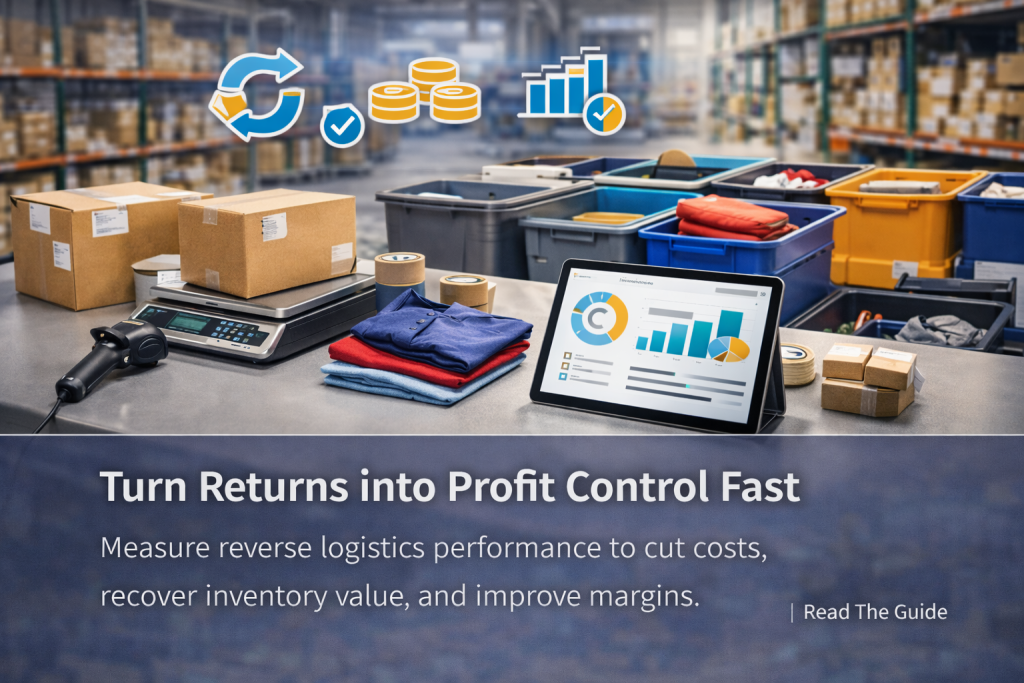
Returns are no longer a side issue for ecommerce brands. For many operators, reverse logistics now directly impacts margin, customer retention, and warehouse capacity. The problem is not just handling returns, it is knowing what to measure and how to act on it.
This guide breaks down the key reverse logistics metrics that actually matter, how to interpret them, and how to turn returns data into operational decisions instead of noise.
You will also see how a structured fulfillment partner and a centralized Cincinnati operation can reduce return chaos while improving recovery value.
If you already know you need a steadier fulfillment program, you can start the conversation here, Contact Product Fulfillment Solutions.
Table of contents
- When reverse logistics starts to hurt or help
- Story: how a supplement brand recovered control
- Core metrics that define returns performance
- Return speed and processing efficiency
- Financial impact metrics that actually matter
- Operational controls that reduce return volume
- How fulfillment infrastructure changes the equation
- Building a daily returns dashboard
- Reverse logistics FAQs
When reverse logistics starts to hurt or help
Reverse logistics becomes a real operational constraint when return volume grows faster than your ability to process, restock, and analyze it. At low volume, returns feel manageable. At scale, they quietly consume labor, warehouse space, and cash flow.
For ecommerce brands selling supplements, cosmetics, or small consumer goods, returns often spike during promotions, subscription cycles, or seasonal peaks. The challenge is not just volume, but variability.
Common triggers include
- High subscription churn or taste based products
- Retail expansion with looser return policies
- Inconsistent picking or packing accuracy
- Customer expectation gaps in shipping speed
Without metrics, returns stay reactive. With metrics, they become manageable and even strategic.
Story: how a supplement brand recovered control
Before
A mid sized supplement brand scaled quickly through paid ads and subscription bundles. Orders grew, but so did returns. The team tracked only total return volume, not why returns were happening or how long processing took.
Pain points
Returned inventory piled up in staging areas. Refunds lagged behind customer expectations. Some sellable items were never restocked in time, leading to lost revenue and inventory distortion.
The shift
Once they introduced structured reverse logistics metrics and centralized processing through a Cincinnati based fulfillment model, returns became a controlled workflow instead of an overflow problem. Processing time dropped, and recovery rate improved significantly.
Talk to an Expert
Core metrics that define returns performance
Most brands track returns at a surface level. High performing operators go deeper and segment return performance into operational and financial layers.
Return rate by product category
This shows where product or expectation issues exist. A 3 percent return rate overall may hide a 10 percent return rate in one SKU group.
Return reason distribution
Understanding whether returns come from damage, dissatisfaction, or ordering errors helps isolate root causes instead of treating all returns equally.
Return to restock rate
This measures how much returned inventory is actually sellable again. It directly affects margin recovery and purchasing decisions.
Cycle time from return to disposition
Speed matters. The longer inventory sits in limbo, the more value it loses through missed sales opportunities or spoilage in certain categories.
Return speed and processing efficiency
Speed is one of the most under measured parts of reverse logistics. Many brands assume returns are “being handled” without tracking how long each step takes.
Key processing stages to measure
- Time from carrier receipt to warehouse intake
- Time from intake to inspection
- Time from inspection to restock or disposal
When these stages are not tracked, bottlenecks hide in plain sight. A strong warehousing and storage solutions setup helps separate return flow from outbound congestion, which reduces delays across both sides of the operation.
Centralized processing at a Cincinnati, Ohio fulfillment center allows teams to standardize inspection and restock workflows instead of improvising across multiple nodes.
Financial impact metrics that actually matter
Returns are not just an operations issue. They directly affect revenue recognition, cash flow timing, and inventory valuation.
Cost per return
Includes labor, shipping, inspection, and write offs. This metric often surprises brands when fully calculated.
Recovery rate
The percentage of returned goods that reenter sellable inventory. Higher recovery rates directly improve margin stability.
Net refund impact
Tracks total refund value minus recovered inventory value. This is the true cost of returns to the business.
Using structured real time information systems allows operators to see these financial metrics without waiting for month end reporting cycles.
Talk to an Expert
Operational controls that reduce return volume
The best reverse logistics strategy is not just faster returns processing. It is fewer preventable returns in the first place.
Packaging accuracy controls
Small mistakes in picking or packing create a disproportionate share of avoidable returns.
Product expectation alignment
Clear descriptions and fulfillment consistency reduce “not as expected” returns.
SKU rationalization
Too many similar SKUs increases picking errors and customer confusion.
Structured pick and pack services reduce variability at the warehouse level, which directly lowers avoidable return volume over time.
How fulfillment infrastructure changes the equation
Reverse logistics performance is heavily influenced by warehouse design, staffing consistency, and system integration. Brands operating without centralized control often struggle with inconsistent returns handling.
When fulfillment is unified through a single operational hub, returns become part of a predictable workflow instead of an exception process.
Pairing returns processing with ecommerce fulfillment services ensures both outbound and inbound flows share data, labor planning, and inventory logic.
This is where operational maturity shows up. Not in the absence of returns, but in how quickly and cleanly they are absorbed back into inventory or dispositioned correctly.
Building a daily returns dashboard
A useful returns dashboard should be simple enough to read daily, but detailed enough to guide weekly decisions.
Core daily metrics
- Total returns received
- Return reasons by category
- Items restocked vs pending inspection
- Estimated recovery value
Weekly review metrics
- Return rate by SKU
- Processing cycle time trends
- Top recurring return drivers
When this dashboard is paired with discounted shipping rates and optimized fulfillment routing, the total cost of returns becomes more predictable and easier to control.
Reverse logistics FAQs
What is the most important reverse logistics metric to track?
Recovery rate is often the most important because it directly reflects how much returned inventory can be reused. It connects operational efficiency with financial outcome.
How can brands reduce return processing time?
Standardized intake, dedicated return zones, and clear inspection rules reduce delays. Centralized fulfillment also eliminates variation across multiple locations.
Why do return reasons matter so much?
Return reasons reveal whether the issue is product, expectation, or operational error. Without this data, teams cannot fix root causes.
What is a healthy return rate for ecommerce?
It varies by category, but consistency matters more than the number itself. Sudden spikes usually indicate a process or expectation breakdown.
How does fulfillment design impact returns?
Better picking accuracy, packaging consistency, and system integration reduce preventable returns and improve downstream processing speed.
What should be tracked daily in returns operations?
Total returns, reason codes, inspection backlog, and restock rate provide a clear snapshot of operational health and bottlenecks.