
Reviewed by: Director of Fulfillment Strategy, Product Fulfillment Solutions
Last updated: May 5, 2026
Executive TLDR
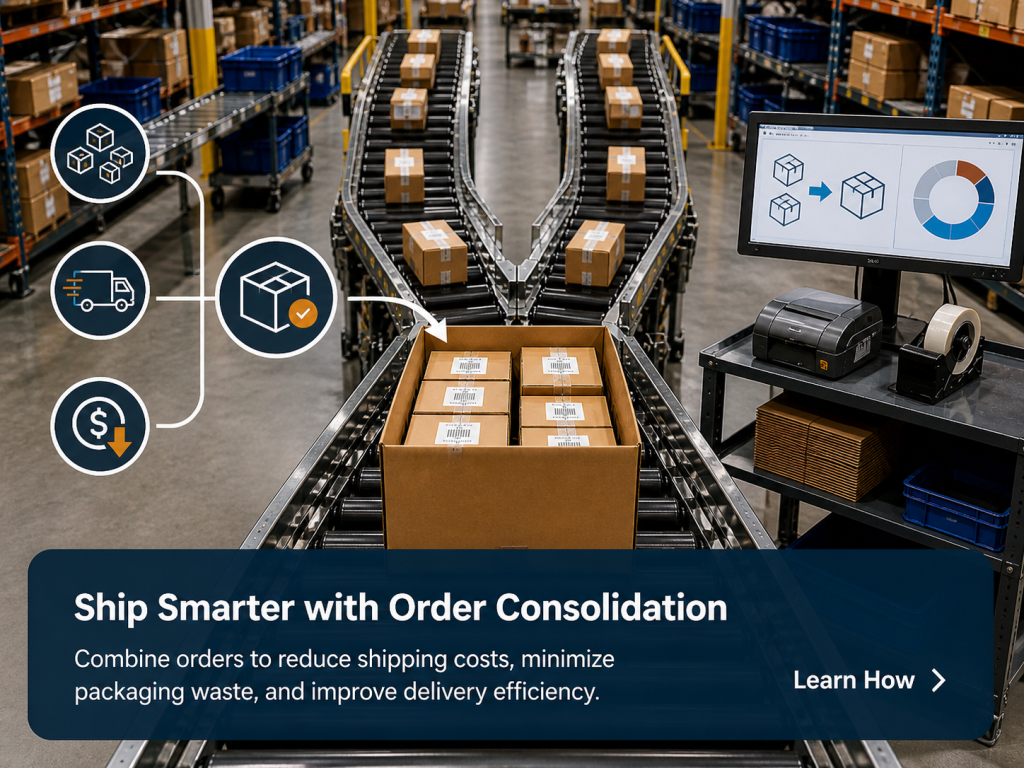
Order consolidation is the process of combining multiple items or shipments into a single optimized fulfillment flow to reduce cost and improve efficiency. It plays a major role in reducing unnecessary shipping events and improving warehouse performance.
Without consolidation, ecommerce brands often ship fragmented orders that increase shipping costs, slow down fulfillment, and create unnecessary carrier volume.
This guide explains how order consolidation works, where it creates value, and how structured fulfillment systems use it to improve both cost efficiency and delivery speed.
If you already know you need a steadier fulfillment program, you can start the conversation here,
Contact Product Fulfillment Solutions.
Table of contents
- When order consolidation becomes important
- Story: a brand losing money on fragmented shipments
- What order consolidation actually means
- How consolidation reduces shipping costs
- Warehouse logic behind consolidation
- Impact on speed and SLA performance
- When consolidation can backfire
- Final takeaway on fulfillment efficiency
When order consolidation becomes important
Order consolidation becomes important when order volume increases and brands start shipping multiple items separately instead of efficiently grouping them into optimized shipments.
At small scale, inefficiencies are invisible. At scale, they become a major cost driver in shipping and warehouse labor.
This is where structured ecommerce fulfillment services create measurable savings through better order grouping logic.
Story: a brand losing money on fragmented shipments
Before
A subscription box brand expanded its product line and began shipping add-on items separately instead of combining them into a single shipment.
Pain points
Shipping costs increased sharply. Customers received multiple packages for a single order. Carrier expenses became unpredictable and difficult to control.
The shift
Once consolidation rules were implemented in the fulfillment process, shipments were grouped more efficiently and shipping costs stabilized.
Talk to an Expert
What order consolidation actually means
Order consolidation is the process of combining items or shipments into the most efficient fulfillment structure possible. This can happen at the order level, shipment level, or warehouse staging level.
It is not just bundling. It is optimizing how orders move through the fulfillment system.
How consolidation reduces shipping costs
Shipping carriers charge based on weight, dimensions, and shipment count. Consolidating orders reduces the number of shipments and often improves dimensional efficiency.
Cost benefits
- Fewer individual shipping labels
- Lower total dimensional weight charges
- Reduced labor per order
Access to discounted shipping rates amplifies these savings further at scale.
Warehouse logic behind consolidation
Effective consolidation depends on how orders are staged and picked inside the warehouse. If items are picked separately without coordination, consolidation opportunities are lost.
Structured pick and pack services ensure items are grouped efficiently before final packing.
Impact on speed and SLA performance
When done correctly, order consolidation improves speed by reducing redundant processing steps. However, poor execution can introduce delays if workflows are not properly designed.
The goal is to consolidate without slowing down order throughput.
Talk to an Expert
When consolidation can backfire
Consolidation can create delays if it is applied without clear rules. Holding orders too long in staging or waiting for unnecessary grouping can hurt delivery performance.
Common mistakes
- Over-batching orders beyond cutoff windows
- Delaying shipments for minor consolidation gains
- Lack of SKU-level consolidation logic
Final takeaway on fulfillment efficiency
Order consolidation is a structural efficiency tool, not just a cost-saving tactic. When designed correctly, it reduces shipping waste and improves operational flow without sacrificing delivery speed.
Brands that scale successfully use consolidation as part of a broader fulfillment strategy, not an isolated tactic.
Order Consolidation FAQs
What is order consolidation in ecommerce?
Order consolidation is the process of combining items or shipments into a more efficient fulfillment flow to reduce cost and improve efficiency.
How does order consolidation reduce shipping costs?
It reduces the number of shipments and improves packaging efficiency, which lowers carrier fees and labor costs.
Can order consolidation slow down fulfillment?
Yes, if poorly implemented, but structured systems balance consolidation benefits with shipping speed requirements.
Is consolidation useful for small ecommerce brands?
Yes, even small brands benefit from reduced shipping waste and improved order efficiency.
What is the risk of over-consolidation?
Over-consolidation can delay shipments and negatively impact customer delivery expectations.
How do 3PLs handle order consolidation?
3PLs use warehouse logic and batching systems to group orders efficiently while maintaining SLA performance.
Talk to an Expert