
Reviewed by: Chief Operations Officer, Product Fulfillment Solutions
Last updated: June 09, 2026
Executive TLDR
Most ecommerce brands focus heavily on generating orders, increasing website traffic, and improving conversion rates. While these metrics matter, long-term growth often depends on what happens after a customer clicks the buy button.
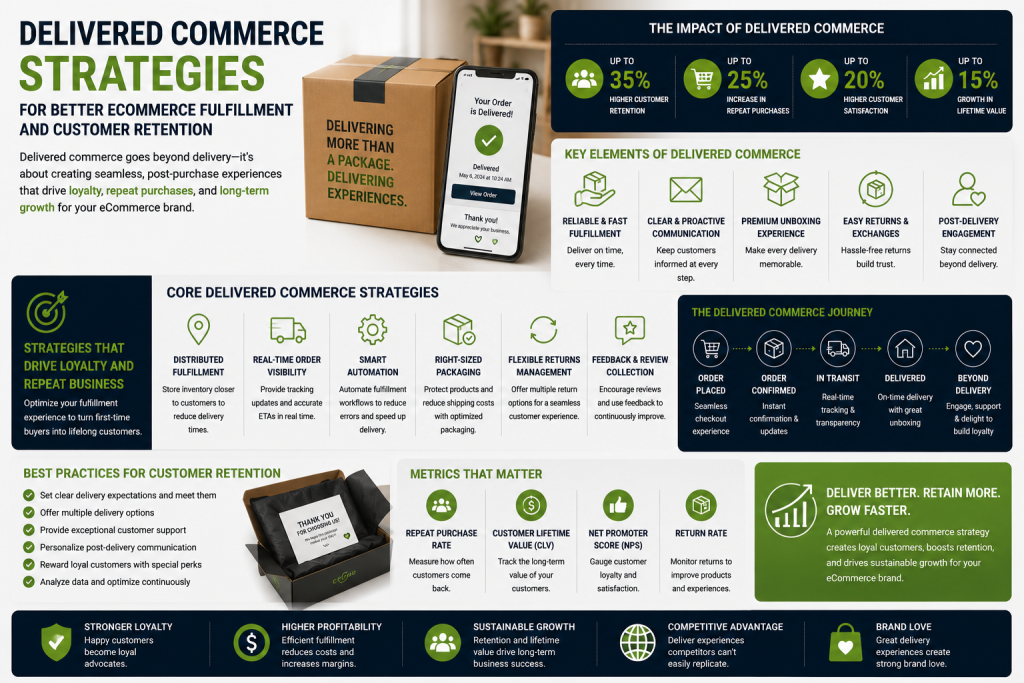
Delivered commerce is the concept of treating fulfillment, shipping, delivery, and post-purchase experiences as strategic growth drivers rather than operational necessities. Customers remember whether orders arrive quickly, accurately, and consistently.
For brands selling supplements, cosmetics, wellness products, snacks, subscription boxes, and other frequently reordered products, the delivery experience can significantly influence retention, reviews, referrals, and repeat purchases.
- Improve customer retention
- Strengthen delivery performance
- Reduce fulfillment friction
- Increase repeat purchase rates
- Create scalable ecommerce growth
If you already know you need a steadier fulfillment program, you can start the conversation here,
Contact Product Fulfillment Solutions.
Table of contents
- Why delivered commerce matters
- Story: How Wellness Edge improved customer retention
- What delivered commerce actually means
- How delivery experiences influence growth
- Common barriers to delivered commerce success
- Delivered Commerce FAQs
Why Delivered Commerce Matters
Many ecommerce brands invest substantial resources into customer acquisition but underestimate the impact fulfillment performance has on customer retention.
Customers rarely separate the product from the delivery experience. A great product that arrives late, damaged, or inaccurately packed can create a negative impression that affects future purchasing decisions.
Delivered commerce focuses on the complete customer journey after checkout.
Brands that prioritize delivered commerce often benefit from:
- Higher repeat purchase rates
- Improved customer satisfaction
- Stronger customer loyalty
- Fewer support tickets
- More positive reviews
- Increased customer lifetime value
Professional ecommerce fulfillment services play a critical role in creating consistent post-purchase experiences that support long-term growth.
Story: How Wellness Edge Improved Customer Retention
Before
Wellness Edge sold nutritional supplements and subscription wellness products through a direct-to-consumer ecommerce channel.
The company had strong customer acquisition performance and healthy conversion rates, yet repeat purchases remained below expectations.
Pain Points
Customer feedback revealed recurring delivery frustrations. Orders occasionally shipped late during promotions, tracking information was inconsistent, and some customers experienced delays during peak periods.
Although product quality remained high, fulfillment inconsistencies weakened the overall customer experience.
The Shift
Leadership shifted focus from simply generating orders to improving the entire post-purchase journey.
The company partnered with a fulfillment provider offering scalable pick and pack services, improved inventory visibility, and stronger operational reporting.
Within months, delivery consistency improved, support tickets declined, and repeat purchase rates increased significantly.
What Delivered Commerce Actually Means
Delivered commerce is the practice of treating fulfillment and delivery as core components of the customer experience rather than back-office operational functions.
It recognizes that customer satisfaction extends beyond product quality and website experience.
Key elements of delivered commerce include:
- Inventory availability
- Order accuracy
- Fulfillment speed
- Shipping visibility
- Delivery reliability
- Returns management
- Post-purchase communication
Every one of these elements contributes to how customers perceive a brand after placing an order.
How Delivery Experiences Influence Growth
Customer acquisition costs continue rising across most ecommerce categories. As a result, retaining existing customers has become increasingly important.
Delivery experiences often influence whether customers return for future purchases.
Positive delivery experiences can lead to:
- Higher retention rates
- Increased customer lifetime value
- Stronger referral activity
- Better online reviews
- More predictable revenue growth
Negative delivery experiences can create the opposite effect, even when products meet expectations.
Access to real time information allows brands to monitor fulfillment performance and proactively address issues before they affect customer satisfaction.
Talk to an Expert
“`