
Reviewed by: Chief Operations Officer, Product Fulfillment Solutions
Last Updated: June 22, 2026
Executive TLDR
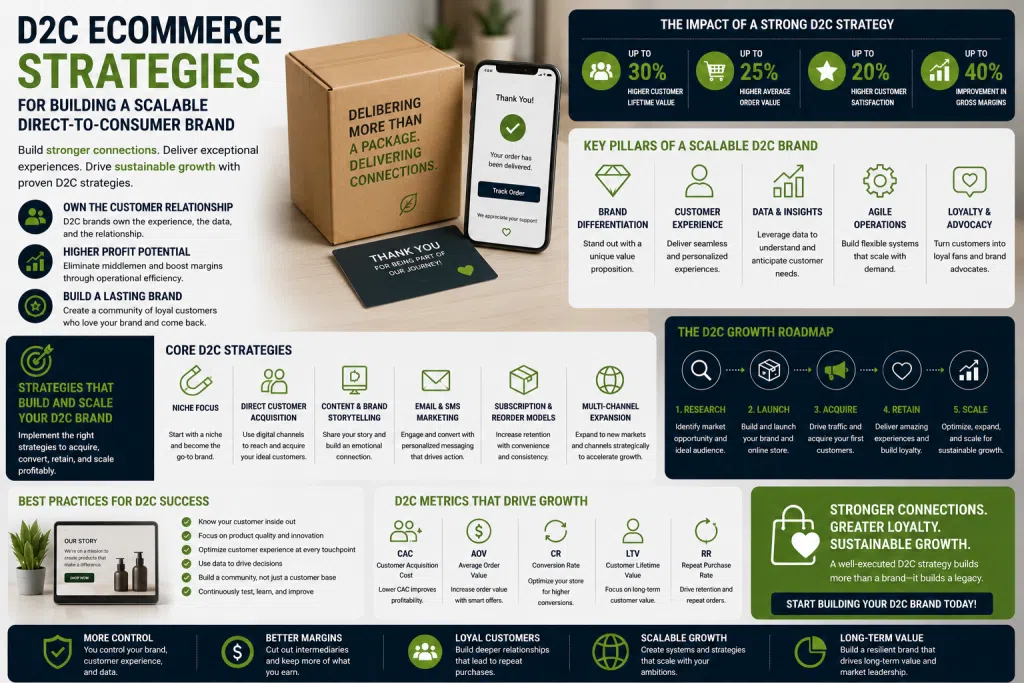
D2C ecommerce has transformed how brands connect with consumers. Instead of relying entirely on retailers, distributors, and marketplaces, direct-to-consumer brands sell products directly to customers while maintaining control over marketing, customer relationships, fulfillment experiences, and long-term brand growth.
While the D2C model creates significant opportunities, it also places greater responsibility on ecommerce businesses. Inventory management, fulfillment performance, shipping speed, customer service, and post-purchase experiences become critical drivers of success.
For brands selling supplements, cosmetics, health and wellness products, snacks, subscription boxes, and other frequently reordered products, scalable fulfillment operations often determine whether growth remains profitable.
- Strengthen customer relationships
- Improve fulfillment performance
- Increase customer lifetime value
- Reduce operational bottlenecks
- Create sustainable ecommerce growth
If you already know you need a steadier fulfillment program, you can start the conversation here,
Contact Product Fulfillment Solutions.
Table of Contents
- Why D2C ecommerce continues to grow
- Story: How VitalFuel scaled a D2C brand
- What is D2C ecommerce?
- Advantages of the D2C model
- Common D2C growth challenges
- Why fulfillment drives D2C success
- D2C Ecommerce FAQs
Why D2C Ecommerce Continues to Grow
Over the past decade, ecommerce has shifted dramatically. Consumers increasingly expect personalized experiences, direct engagement with brands, and seamless online purchasing experiences. These expectations have fueled the rapid growth of direct-to-consumer business models.
Instead of relying solely on retailers or marketplaces to reach customers, brands can now establish direct relationships that create stronger customer loyalty and greater control over the buying journey.
D2C ecommerce allows businesses to:
- Control brand messaging
- Build direct customer relationships
- Capture valuable customer insights
- Improve profit margins
- Launch products faster
- Create subscription and loyalty programs
As customer acquisition channels evolve, D2C brands gain flexibility to adapt more quickly than traditional retail-focused organizations.
Many growing businesses leverage professional ecommerce fulfillment services to ensure operational execution keeps pace with customer demand.
Story: How VitalFuel Scaled a D2C Brand
Before
VitalFuel launched a line of wellness supplements designed for active consumers seeking convenient daily nutrition products. Through influencer partnerships and targeted digital marketing campaigns, the company quickly generated significant online demand.
Orders increased steadily, and leadership was optimistic about future growth.
Pain Points
While sales continued rising, operational challenges began appearing behind the scenes.
Inventory reporting lacked visibility, fulfillment processes became strained during promotional periods, and customer support inquiries regarding shipment status increased dramatically.
Customer acquisition remained strong, but the overall customer experience became inconsistent.
The leadership team realized growth alone was not enough. Sustainable growth required operational excellence.
The Shift
VitalFuel invested in scalable fulfillment systems, inventory visibility tools, and warehouse process improvements.
The company partnered with specialists offering pick and pack services to improve order accuracy and delivery consistency.
Within months, fulfillment performance improved significantly. Customer complaints declined, repeat purchase rates increased, and operational efficiency improved across the business.
What Is D2C Ecommerce?
D2C ecommerce, or direct-to-consumer ecommerce, is a business model where manufacturers and brands sell directly to end customers through their own sales channels.
Rather than depending entirely on wholesalers, distributors, or retail stores, brands control the customer experience from product discovery through delivery and post-purchase engagement.
The D2C model typically includes:
- Online storefronts
- Digital marketing campaigns
- Inventory management systems
- Order fulfillment operations
- Shipping and logistics management
- Customer support functions
- Retention and loyalty programs
This direct relationship provides valuable opportunities to improve customer satisfaction and maximize long-term customer value.
Advantages of the D2C Model
The popularity of D2C ecommerce continues growing because the model offers several compelling advantages.
Brands operating direct-to-consumer channels often benefit from:
- Stronger customer relationships
- Higher profit margins
- Improved customer data access
- Greater brand control
- Faster product feedback loops
- More personalized customer experiences
These benefits create opportunities for sustainable growth while helping brands differentiate themselves in competitive markets.
However, these advantages only materialize when operational execution supports the customer experience.
Common D2C Growth Challenges
While D2C ecommerce creates exciting opportunities, growth often introduces new operational challenges.
Many brands experience:
- Inventory shortages
- Shipping delays
- Warehouse bottlenecks
- Demand forecasting difficulties
- Rising customer acquisition costs
- Returns management complexity
- Customer service workload increases
Without scalable fulfillment systems, growth can create customer experience problems that undermine long-term success.
Access to real time information enables brands to identify issues early and make proactive operational decisions.
Talk to an Expert
“`