
Reviewed by: Chief Operations Officer, Product Fulfillment Solutions
Last Updated: July 2, 2026
Executive TLDR
Consumers expect faster deliveries than ever before, prompting ecommerce businesses to rethink how inventory is stored and shipped. One strategy gaining attention is the use of micro fulfillment centers (MFCs), which place inventory closer to customers to reduce delivery times.
While micro fulfillment centers can improve speed for certain business models, they also introduce added inventory complexity and operational costs. For many growing brands, partnering with a strategically located fulfillment provider offers similar delivery advantages without the expense of managing multiple small facilities.
Understanding when micro fulfillment centers make sense—and when centralized fulfillment is the better option—can help ecommerce businesses make smarter logistics decisions.
- Understand micro fulfillment centers
- Improve delivery speed
- Optimize inventory placement
- Reduce fulfillment costs
- Support scalable ecommerce growth
If you’re looking for a fulfillment strategy that balances speed, efficiency, and scalability, contact Product Fulfillment Solutions to discuss your operational goals.
Table of Contents
- What is a micro fulfillment center?
- Story: How FreshFuel improved delivery times
- How micro fulfillment centers work
- Benefits of micro fulfillment centers
- Potential challenges
- Micro Fulfillment Center FAQs
What Is a Micro Fulfillment Center?
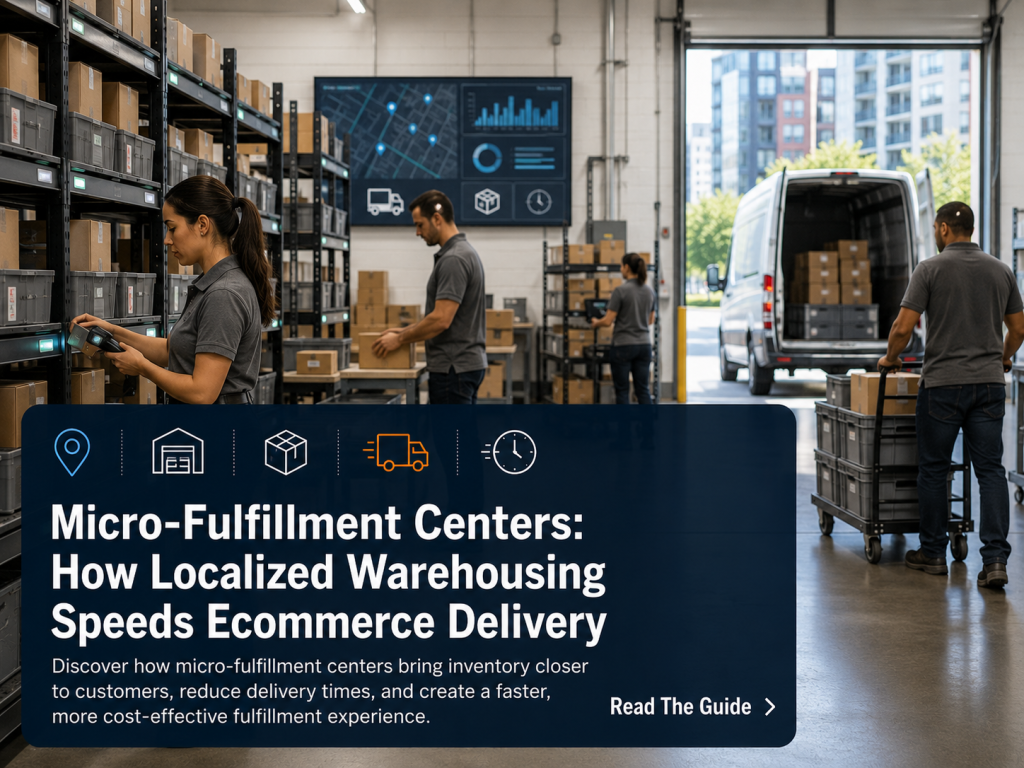
A micro fulfillment center (MFC) is a small warehouse or storage facility positioned close to customers to shorten delivery distances and improve shipping speed.
Unlike traditional regional distribution centers, MFCs typically serve a limited geographic area while storing fast-moving inventory for rapid order fulfillment.
Businesses commonly use micro fulfillment centers to:
- Support same-day delivery
- Reduce last-mile transportation time
- Improve local inventory availability
- Accelerate order fulfillment
- Enhance customer satisfaction
Many ecommerce companies combine localized inventory strategies with professional ecommerce fulfillment services to create flexible fulfillment networks.
Story: How FreshFuel Improved Delivery Times
Before
FreshFuel sold nutritional snacks and wellness products nationwide from a single warehouse. While most deliveries arrived within several business days, customers in major metropolitan areas increasingly expected faster shipping options.
Pain Points
Leadership explored opening several small storage locations near high-demand markets. However, managing inventory across multiple sites introduced concerns about stock allocation, forecasting, and replenishment.
The Shift
Instead of operating several independent warehouses, FreshFuel partnered with a fulfillment provider offering strategically located distribution capabilities and optimized shipping workflows.
By improving inventory placement and leveraging pick and pack services, the company shortened delivery times while maintaining centralized inventory visibility.
How Micro Fulfillment Centers Work
Micro fulfillment centers operate by positioning inventory closer to areas with high customer demand. Orders placed by nearby customers are fulfilled from the closest available inventory rather than a distant distribution center.
This approach can reduce transit times while lowering transportation costs for qualifying shipments.
Micro fulfillment centers often rely on:
- Demand forecasting
- Inventory allocation
- Warehouse automation
- Real-time inventory tracking
- Integrated order management systems
Success depends on maintaining accurate inventory visibility across all fulfillment locations.
Benefits of Micro Fulfillment Centers
When implemented effectively, micro fulfillment centers can provide several operational advantages.
- Faster customer deliveries
- Reduced last-mile shipping distances
- Improved customer satisfaction
- Greater inventory responsiveness
- Support for same-day or next-day delivery
- Competitive shipping options
These benefits are especially valuable for businesses with concentrated customer demand in specific metropolitan regions.
Potential Challenges
While micro fulfillment centers improve delivery speed, they also introduce additional operational complexity.
Common challenges include:
- Higher inventory carrying costs
- Inventory balancing across locations
- Increased replenishment requirements
- Facility management expenses
- Technology integration complexity
- Demand forecasting accuracy
Businesses using real time information can better monitor inventory movement and maintain visibility across fulfillment operations.
Talk to an Expert