
Author: Jason Martin
Reviewed by: Chief Operations Officer, Product Fulfillment Solutions
Executive TLDR
Efficient logistics is about more than moving products from one location to another. Today’s ecommerce businesses must continuously improve workflows, eliminate unnecessary costs, and deliver products quickly without sacrificing quality. Lean logistics provides a structured approach for achieving those goals.
By applying lean principles to warehousing, inventory management, transportation, and fulfillment, businesses can reduce waste while improving customer satisfaction and profitability.
For ecommerce brands selling supplements, cosmetics, health and wellness products, snacks, subscription boxes, and other consumer goods, lean logistics supports sustainable growth through smarter operational processes.
- Reduce operational waste
- Improve fulfillment efficiency
- Lower logistics costs
- Increase inventory visibility
- Create scalable supply chain operations
If you’re looking to improve logistics performance with a scalable fulfillment strategy, Contact Product Fulfillment Solutions to discuss your business goals.
Table of Contents
- What is lean logistics?
- Story: How VitalBlend reduced operational waste
- Core principles of lean logistics
- Benefits for ecommerce businesses
- Common lean logistics challenges
- Lean Logistics FAQs
What Is Lean Logistics?
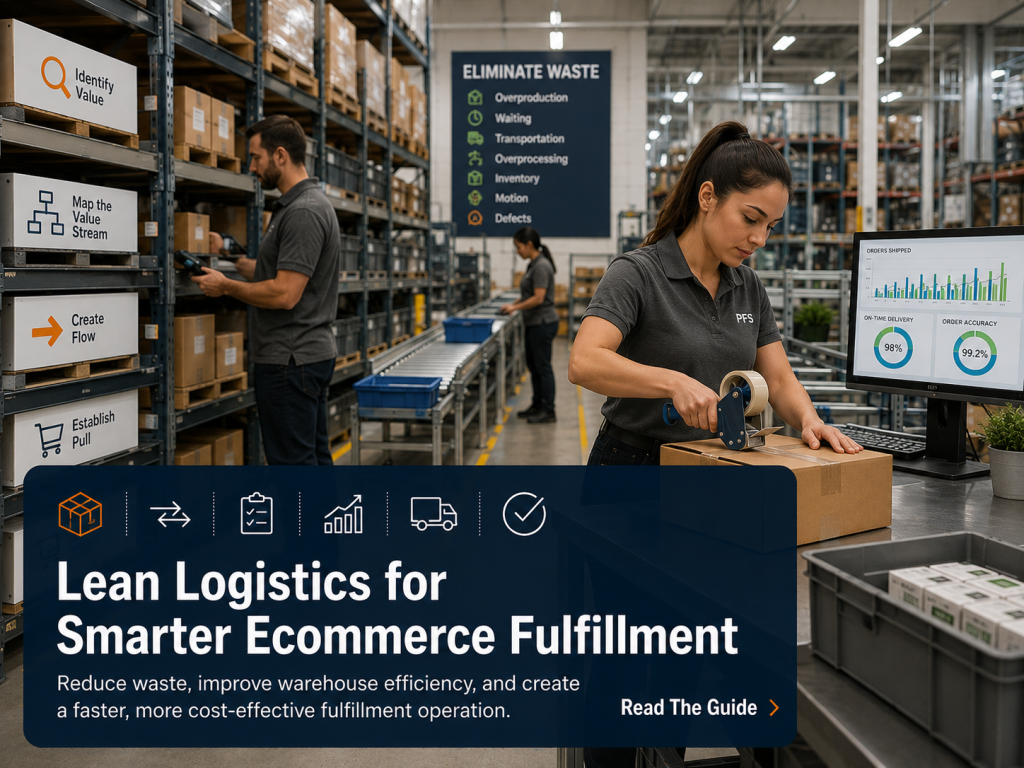
Lean logistics is the practice of eliminating unnecessary activities throughout the supply chain while improving efficiency, reducing costs, and delivering greater value to customers.
Originally adapted from lean manufacturing principles, lean logistics focuses on removing waste from transportation, warehousing, inventory management, and fulfillment operations.
Examples of waste include:
- Excess inventory
- Unnecessary handling
- Waiting time between processes
- Inefficient warehouse layouts
- Redundant transportation
- Manual administrative tasks
Many growing businesses implement lean practices alongside professional ecommerce fulfillment services to improve operational performance while supporting growth.
Story: How VitalBlend Reduced Operational Waste
Before
VitalBlend sold nutritional supplements through multiple ecommerce channels. As demand increased, warehouse operations became more complex and fulfillment costs steadily climbed.
Although order volume was growing, profitability was not improving at the same pace.
Pain Points
Warehouse employees spent excessive time walking between storage locations, inventory replenishment was inconsistent, and duplicate handling increased labor costs.
These inefficiencies slowed fulfillment while increasing operating expenses.
The Shift
Leadership evaluated warehouse workflows and implemented lean logistics practices focused on reducing unnecessary movement, improving inventory organization, and streamlining order processing.
The company also partnered with specialists providing pick and pack services to support standardized fulfillment procedures.
As processes improved, order accuracy increased, fulfillment times decreased, and warehouse productivity improved significantly.
Core Principles of Lean Logistics
Lean logistics focuses on creating efficient workflows that maximize customer value while minimizing waste.
Core principles include:
- Continuous process improvement
- Waste elimination
- Inventory optimization
- Standardized operating procedures
- Employee involvement
- Data-driven decision making
Rather than making isolated improvements, lean logistics encourages organizations to continuously evaluate every step within the fulfillment process.
Benefits for Ecommerce Businesses
Applying lean logistics principles can improve both operational performance and customer satisfaction.
Potential benefits include:
- Lower operating costs
- Faster order fulfillment
- Higher inventory accuracy
- Reduced shipping delays
- Improved warehouse productivity
- Greater customer satisfaction
These improvements become increasingly valuable as ecommerce businesses scale their operations.
Common Lean Logistics Challenges
Although lean logistics delivers measurable benefits, implementation requires planning and organizational commitment.
Common challenges include:
- Resistance to operational change
- Limited process visibility
- Outdated technology systems
- Inconsistent employee training
- Difficulty measuring waste
- Maintaining continuous improvement efforts
Businesses using real time information gain greater visibility into warehouse performance, inventory movement, and fulfillment metrics, making continuous improvement easier to sustain.
Talk to an Expert