
Reviewed by: Chief Operations Officer, Product Fulfillment Solutions
Last updated: March 24, 2026
Executive TLDR
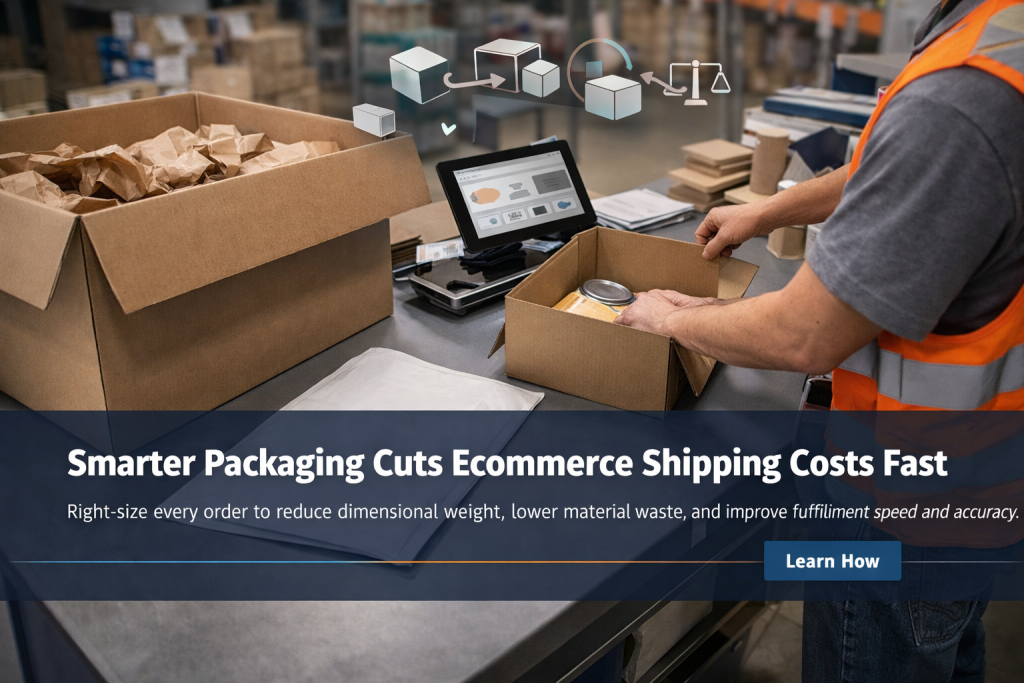
Cartonization sounds technical, but the impact is simple. The way orders are packed into boxes directly affects shipping costs, warehouse speed, and customer satisfaction. Many ecommerce brands unknowingly overspend because cartons are chosen manually or inconsistently inside the fulfillment process.
As order volume grows, inefficient packaging decisions compound. Oversized boxes increase dimensional weight charges, while too many carton sizes slow pick and pack operations. The result is higher freight bills, slower fulfillment, and more operational friction during peak periods.
This guide explains how cartonization works, when it becomes critical for ecommerce brands, and how a structured fulfillment environment turns packaging decisions into measurable savings and operational stability.
- Why carton decisions drive shipping cost more than carrier rates
- How warehouse workflows depend on packaging logic
- Practical steps brands can implement this quarter
- How centralized fulfillment improves packaging consistency
If you already know you need a steadier fulfillment program, you can start the conversation here,
Contact Product Fulfillment Solutions.
Table of contents
- When cartonization starts impacting operations
- Story: How Lumera Beauty reduced shipping costs
- What cartonization actually means in fulfillment
- Why packaging decisions affect carrier pricing
- How carton strategy improves warehouse speed
- Building a practical cartonization framework
- How a 3PL makes cartonization scalable
- Cartonization FAQs
When cartonization starts impacting operations
Early-stage ecommerce brands rarely think about packaging logic. Orders are packed manually, teams grab whatever box feels right, and shipping costs appear manageable. The problem emerges when order volume increases and inconsistency multiplies across thousands of shipments.
At scale, cartonization becomes an operational lever instead of a packing detail. Slight differences in box size can change dimensional weight calculations, which carriers use to price shipments. Two identical orders shipped in different cartons can generate completely different costs.
Brands typically notice cartonization issues when:
- Shipping spend rises faster than order growth
- Warehouse teams debate which box to use
- Packing stations slow during peak demand
- Damage rates increase due to poor fit
- Carrier invoices become unpredictable month to month
A structured fulfillment environment supported by strong pick and pack services removes guesswork by standardizing packaging decisions before orders reach the packing table.
Story: How Lumera Beauty reduced shipping costs
Before
Lumera Beauty, a growing skincare subscription brand, shipped lightweight products nationwide. Orders averaged three items, but packers selected cartons manually from more than twelve box sizes. Shipping costs steadily climbed even though product weights stayed the same.
Pain points
- Oversized cartons triggered dimensional pricing
- Packers hesitated when choosing packaging
- Inventory forecasting ignored packaging needs
- Peak season packing speed dropped significantly
The shift
After moving fulfillment into a structured environment supported by ecommerce fulfillment services, Lumera reduced carton options, aligned box sizes with order profiles, and introduced standardized packing logic. Within two months, shipping cost per order stabilized while packing speed improved.
The change was not dramatic technology. It was disciplined operational design.
What cartonization actually means in fulfillment
Cartonization is the process of determining the best box size and packaging configuration for an order before packing begins. Instead of relying on human judgment each time, fulfillment systems or workflows apply rules that balance protection, efficiency, and cost.
Effective cartonization considers:
- Product dimensions and weight
- Order combinations and line counts
- Void fill requirements
- Carrier pricing structures
- Warehouse handling efficiency
When integrated into warehousing and storage solutions, cartonization connects inventory data with packing execution. This alignment ensures consistency across thousands of orders instead of relying on individual decisions.
The goal is not simply smaller boxes. The goal is predictable, repeatable packaging outcomes.
Why packaging decisions affect carrier pricing
Modern parcel carriers price shipments using dimensional weight. This means the space a package occupies often matters more than actual weight. Even lightweight products can become expensive if packed inefficiently.
Common cartonization mistakes include:
- Using oversized cartons for convenience
- Too many carton SKUs causing inconsistency
- Lack of alignment between packaging and order data
- Ignoring regional shipping zone impacts
Strategic packaging paired with discounted shipping rates compounds savings. Lower dimensional weight combined with optimized carrier programs creates meaningful cost reduction without changing products or pricing.
How carton strategy improves warehouse speed
Cartonization is equally a warehouse efficiency tool. Packing stations operate faster when decisions are predefined. Standard carton flows reduce hesitation, simplify training, and allow teams to maintain accuracy during high-volume periods.
Operational benefits include:
- Faster packing throughput
- Reduced training time for new staff
- Lower packing error rates
- Improved workstation organization
- More predictable labor planning
Facilities operating from a centrally located hub like a Cincinnati, Ohio fulfillment center gain additional advantages by pairing packaging consistency with optimized national transit coverage.
Efficiency compounds when geography and packaging strategy align.
Building a practical cartonization framework
Brands do not need complex automation to improve cartonization. Most gains come from structured analysis and disciplined execution.
Step 1: Analyze order profiles
Review historical orders to identify common item combinations and dimensional patterns.
Step 2: Reduce carton variety
Limit packaging to a small set of optimized box sizes aligned with real order behavior.
Step 3: Align packing rules
Create clear guidelines so packers follow consistent logic instead of personal preference.
Step 4: Monitor performance
Use fulfillment reporting tools and real time information to track shipping cost trends and packing outcomes.
Talk to an Expert
How a 3PL makes cartonization scalable
Carton optimization becomes difficult when brands manage fulfillment internally. Packaging decisions compete with hiring, inventory planning, and customer service priorities. A specialized 3PL introduces structure, measurement, and operational consistency.
At scale, cartonization succeeds because:
- Packaging workflows are standardized
- Inventory data integrates with fulfillment execution
- Shipping analytics guide adjustments
- Warehouse layouts support repeatable processes
Strong kitting and assembly solutions further improve results when bundles or subscription orders require predictable packaging configurations.
The outcome is not just cheaper shipping. It is operational calm during growth.
Cartonization FAQs
What is cartonization in ecommerce fulfillment?
Cartonization is the process of selecting the most efficient box size and packaging setup for each order based on dimensions, weight, and shipping cost considerations. It ensures consistent packing decisions and reduces unnecessary shipping expenses.
How does cartonization reduce shipping costs?
By matching orders to appropriately sized cartons, businesses reduce dimensional weight charges. Smaller, properly fitted packages take up less carrier space, which directly lowers parcel pricing.
Do small ecommerce brands need cartonization?
Yes. Even moderate order volumes benefit from standardized packaging decisions. Implementing cartonization early prevents cost inefficiencies from scaling alongside growth.
How many box sizes should a warehouse use?
Most operations perform best with a limited set of carton sizes aligned to real order patterns. Too many options slow packing and create inconsistent shipping costs.
Is cartonization software required?
Software can help at higher volumes, but many improvements come from operational discipline, packaging analysis, and structured fulfillment workflows.
Can a 3PL help optimize packaging strategy?
Yes. Experienced fulfillment partners analyze shipping data, standardize packaging workflows, and continuously refine carton usage to balance cost, protection, and efficiency.
Talk to an Expert