
Reviewed by: Director of Fulfillment Operations, Product Fulfillment Solutions
Last updated: May 22, 2026
Executive TLDR
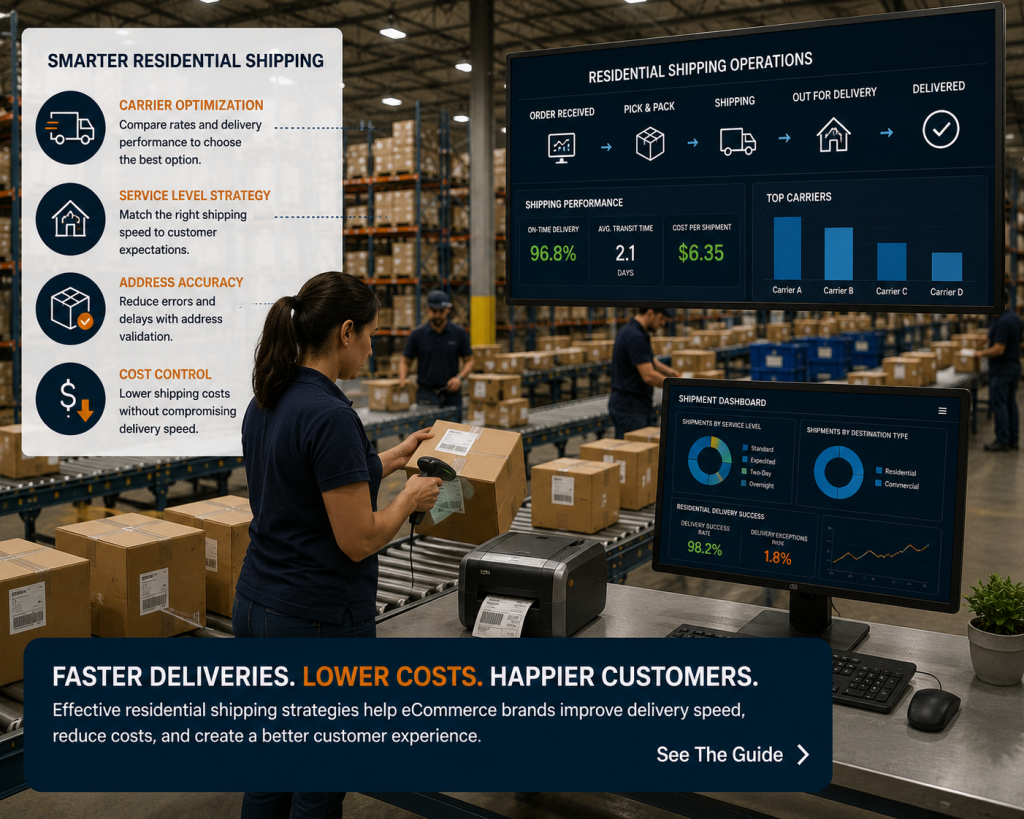
Residential shipping is one of the most important and expensive parts of ecommerce fulfillment. Most direct-to-consumer brands rely heavily on residential parcel delivery to reach customers consistently and profitably.
As shipping volume increases, residential surcharges, address issues, carrier delays, and packaging inefficiencies can significantly reduce margins. Many brands underestimate how quickly residential shipping costs scale.
This article explains how residential shipping works, where ecommerce brands lose money, and how fulfillment strategy helps improve delivery performance while controlling transportation costs.
Operational consistency, packaging optimization, and carrier management all play a major role in maintaining healthy residential shipping performance.
If you already know you need a steadier fulfillment program, you can start the conversation here,
Contact Product Fulfillment Solutions.
Table of contents
- When residential shipping costs grow
- Story: How PureWellness improved residential delivery efficiency
- What residential shipping means for ecommerce brands
- Common residential delivery challenges
- How packaging affects residential shipping costs
- Carrier strategy and delivery performance
- How 3PLs improve residential shipping operations
- Residential Shipping FAQs
When residential shipping costs grow
Residential shipping costs usually increase gradually before becoming a major operational issue.
Early-stage ecommerce brands often focus primarily on customer acquisition and sales growth. As order volume scales, transportation costs begin consuming a larger percentage of margin.
Residential deliveries create unique challenges compared to retail or wholesale freight shipping.
Common pressure points include:
- Residential surcharges
- Dimensional weight pricing
- Address correction fees
- Delivery delays
- Missed carrier cutoffs
- Rising reshipment costs
Brands shipping supplements, cosmetics, snacks, subscription products, and small consumer goods depend heavily on efficient parcel delivery systems.
Reliable discounted shipping rates and structured fulfillment workflows help stabilize transportation costs as shipping volume grows.
Story: How PureWellness improved residential delivery efficiency
Before
PureWellness sold vitamins and wellness products through its Shopify store and subscription program. Customer demand increased rapidly during seasonal promotions.
Pain points
Shipping expenses rose significantly as monthly order volume increased. The company also experienced more customer complaints related to delayed tracking updates and damaged shipments.
The operations team discovered inconsistent packaging decisions and manual carrier selection were creating unnecessary transportation costs.
Residential surcharges and oversized packaging also reduced profitability across smaller orders.
The shift
After transitioning into a more structured fulfillment environment, the company improved packaging consistency, carrier coordination, and outbound shipping visibility.
Using organized pick and pack services, the brand reduced shipping variability while improving delivery reliability.
What residential shipping means for ecommerce brands
Residential shipping refers to parcel deliveries sent directly to customer homes instead of commercial or retail addresses.
This type of shipping dominates direct-to-consumer ecommerce operations.
Residential delivery networks require:
- Parcel carrier coordination
- Address validation systems
- Packaging optimization
- Transit visibility
- Delivery tracking support
- Shipping cost management
Because residential shipments are smaller and more frequent, fulfillment efficiency becomes extremely important.
Even small operational inefficiencies can create major cost increases at scale.
Common residential delivery challenges
Residential delivery introduces operational complexity that many brands underestimate during early growth stages.
Common residential shipping issues include:
- Incorrect customer addresses
- Delivery exceptions
- High parcel shipping costs
- Inconsistent packaging
- Carrier delays during peak periods
- Poor tracking visibility
These problems often create both operational costs and customer experience issues simultaneously.
Integrated real time information systems help brands monitor shipping performance and identify delivery problems faster.
Talk to an Expert
How packaging affects residential shipping costs
Packaging decisions directly impact residential shipping expenses.
Many ecommerce brands use oversized cartons that increase dimensional weight charges unnecessarily. Others use inconsistent packaging materials that reduce operational efficiency.
Packaging optimization helps improve:
- Shipping cost control
- Parcel protection
- Warehouse efficiency
- Carrier compatibility
- Packing speed
- Customer presentation
Brands managing subscription boxes or multi-item orders often benefit from structured kitting and assembly solutions that improve packaging consistency.
Carrier strategy and delivery performance
Carrier strategy plays a major role in residential shipping performance.
Relying on a single parcel carrier may limit flexibility during peak seasons or regional disruptions.
Strong carrier management includes:
- Multi-carrier flexibility
- Rate optimization
- Transit monitoring
- Delivery exception visibility
- Regional carrier analysis
- Shipping cutoff coordination
Operating through a centrally located Cincinnati, Ohio fulfillment center can also improve transit reach across major US delivery zones.
How 3PLs improve residential shipping operations
Experienced 3PL providers help ecommerce brands improve residential shipping efficiency through structured fulfillment systems and transportation coordination.
This often includes:
- Packaging optimization
- Carrier management support
- Rate negotiation
- Shipping workflow standardization
- Operational reporting visibility
- Address verification systems
As ecommerce brands grow, fulfillment infrastructure becomes increasingly important for maintaining shipping consistency and customer satisfaction.
Integrated ecommerce fulfillment services help brands scale residential delivery operations more efficiently.
Talk to an Expert
Residential Shipping FAQs
What is residential shipping?
Residential shipping refers to parcel deliveries sent directly to customer homes instead of business or retail addresses.
Why is residential shipping expensive?
Residential deliveries often include surcharges, smaller shipment sizes, longer delivery routes, and higher operational handling requirements.
How can ecommerce brands reduce residential shipping costs?
Brands can improve packaging efficiency, optimize carrier strategies, reduce dimensional weight charges, and centralize fulfillment operations.
What causes residential delivery delays?
Common causes include address errors, weather disruptions, carrier capacity issues, missed cutoffs, and peak shipping volume.
How does packaging impact residential shipping?
Packaging size and consistency directly affect shipping costs, parcel protection, and operational efficiency.
Can a 3PL improve residential shipping performance?
Yes. 3PL providers help coordinate fulfillment workflows, carrier management, packaging systems, and transportation visibility.