
Reviewed by: Chief Operations Officer, Product Fulfillment Solutions
Last updated: March 2, 2026
Executive TLDR
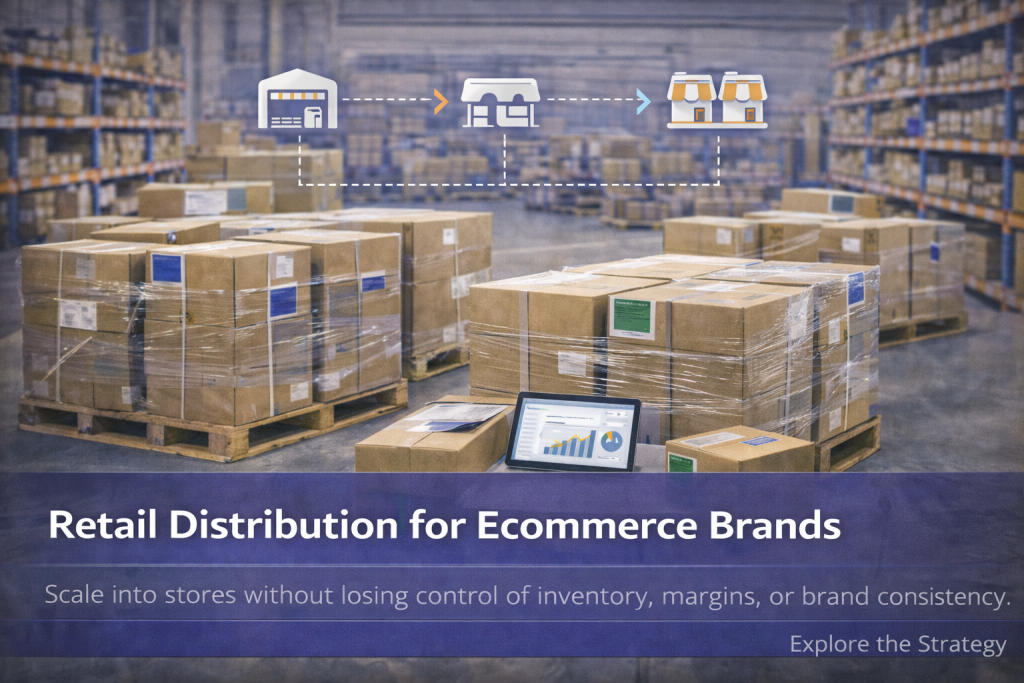
Retail distribution opens the door to significant revenue growth for ecommerce brands — but it also introduces complexity. Moving from direct-to-consumer fulfillment into wholesale and retail channels means stricter compliance requirements, tighter delivery windows, routing guides, labeling standards, and the risk of chargebacks.
This guide breaks down how ecommerce brands can expand into retail distribution without disrupting their existing operations. We’ll cover EDI requirements, retailer compliance, inventory allocation strategies, and how the right 3PL partner prevents costly mistakes.
If you’re preparing for retail expansion or already dealing with retailer penalties, you can start the conversation here:
Contact Product Fulfillment Solutions.
Table of Contents
- What Is Retail Distribution?
- Story: How Aurora Glow Expanded Into Retail
- Retail vs. DTC Fulfillment: Key Differences
- Retailer Compliance and EDI Requirements
- Inventory Allocation Strategies
- Avoiding Chargebacks and Penalties
- Scaling Retail Without Breaking Operations
- Retail Distribution FAQs
What Is Retail Distribution?
Retail distribution refers to the process of shipping bulk inventory from a brand to retail stores, distribution centers, or major retailers. Unlike DTC fulfillment, retail distribution often requires:
- Case-packed or palletized shipments
- Strict routing guide compliance
- Advanced Ship Notices (ASNs)
- Barcode labeling and carton marking
- Scheduled delivery windows
- Electronic Data Interchange (EDI)
Retailers operate on precision. Missing a label, shipping late, or violating routing guidelines can result in chargebacks that erode margins quickly.
Story: How Aurora Glow Expanded Into Retail
Before Retail
Aurora Glow was a fast-growing cosmetics brand thriving in the DTC space. Orders were flowing through Shopify, and fulfillment was streamlined for individual consumer shipments.
The Retail Opportunity
After landing a contract with a national beauty retailer, Aurora Glow suddenly needed to ship palletized inventory to multiple distribution centers — all with specific labeling and compliance requirements.
The Pain Points
- Missed labeling specifications
- Incorrect carton quantities
- Chargebacks for routing guide violations
- Inventory confusion between DTC and wholesale channels
The Shift
By working with PFS, Aurora Glow implemented structured retail workflows: EDI integration, pallet configuration standards, inventory allocation controls, and compliance checks before shipment.
The result: reduced chargebacks, smoother retailer relationships, and the confidence to pursue additional retail partnerships.
Retail vs. DTC Fulfillment: Key Differences
| DTC Fulfillment | Retail Distribution |
|---|---|
| Single-unit orders | Case-packed or palletized shipments |
| Customer-focused shipping speed | Compliance-focused accuracy |
| Flexible packaging | Strict labeling & carton requirements |
| Simple shipping documentation | ASNs, EDI, routing guides |
The operational mindset must shift from “ship fast” to “ship precisely.”
Retailer Compliance and EDI Requirements
Retailers require electronic communication systems to automate order processing and shipment notifications.
Core components include:
- Purchase Order (PO) processing
- Advanced Ship Notices (ASNs)
- Carton and pallet labeling standards
- GS1-compliant barcodes
- Routing guide adherence
Without integrated systems, manual entry increases errors and risk.
Internal link: Learn how our real time information tools improve visibility and compliance.
Inventory Allocation Strategies
Retail expansion often causes inventory tension between DTC and wholesale channels.
Best practices include:
- Separating retail-dedicated inventory pools
- Forecasting retail demand independently
- Monitoring sell-through rates
- Maintaining buffer stock for promotions
Failing to allocate correctly leads to stockouts in one channel and overstock in another.
Avoiding Chargebacks and Penalties
Chargebacks are one of the biggest hidden risks in retail distribution.
Common causes include:
- Late shipments
- Incorrect carton quantities
- Improper labeling
- Missing ASNs
- Routing guide violations
Preventative strategies:
- Pre-shipment compliance audits
- Retail-specific SOPs
- Dedicated compliance staff or 3PL oversight
- Automated EDI validation
Scaling Retail Without Breaking Operations
Retail should accelerate growth — not overwhelm your warehouse.
To scale effectively:
- Standardize pallet builds and case quantities
- Automate documentation workflows
- Integrate inventory systems across channels
- Use a 3PL experienced in both DTC and retail distribution
Internal link: Explore our ecommerce fulfillment services designed to support multi-channel brands.
Talk to an ExpertRetail Distribution FAQs
What is retail distribution in ecommerce?
Retail distribution involves shipping bulk inventory to retailers or distribution centers while complying with strict routing and labeling requirements.
What is an ASN?
An Advanced Ship Notice (ASN) is an electronic notification sent to a retailer before goods arrive, detailing shipment contents.
Why do retailers issue chargebacks?
Chargebacks occur when brands fail to comply with retailer requirements such as labeling, routing, documentation, or delivery timelines.
Can a 3PL manage both DTC and retail distribution?
Yes. An experienced 3PL can handle multi-channel fulfillment, ensuring retail compliance without disrupting DTC operations.
When should a brand prepare for retail expansion?
Before signing retail agreements, brands should ensure operational readiness, inventory visibility, and compliance processes are in place.
Talk to an Expert