
Author:Jason Martin
Reviewed by:Chief Operations Officer, Product Fulfillment Solutions
Executive TLDR
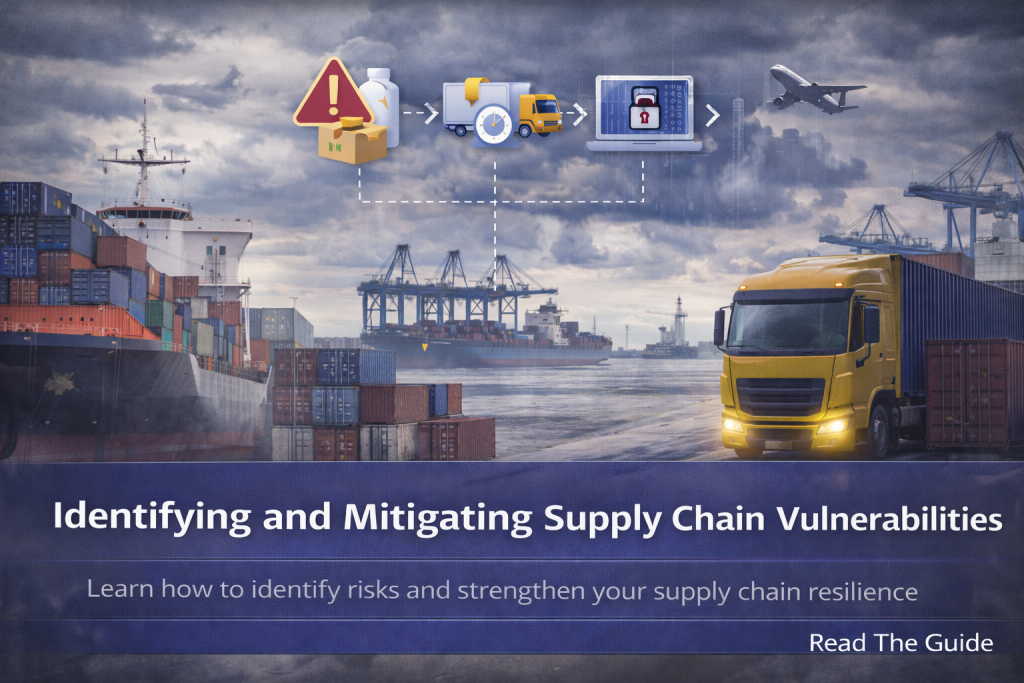
Supply chain vulnerability refers to weaknesses that can disrupt sourcing, inventory, transportation, or fulfillment.
Common risks include supplier concentration, transportation delays, geopolitical instability, and inventory mismanagement.
Diversified sourcing, distributed inventory, and strong 3PL partnerships reduce exposure.
If supply chain instability is threatening your growth,
contact Product Fulfillment Solutions to strengthen your fulfillment strategy.
Table of contents
- What Is Supply Chain Vulnerability?
- Common Causes of Supply Chain Risk
- Impact of Supply Chain Disruptions
- Strategies to Reduce Supply Chain Vulnerability
- The Role of a 3PL in Risk Mitigation
- Supply Chain Vulnerability FAQs
What Is Supply Chain Vulnerability?
Supply chain vulnerability refers to exposure to disruptions that can interrupt the flow of goods from suppliers to end customers. These weaknesses may exist in sourcing, production, warehousing, transportation, or distribution processes.
As ecommerce and global trade expand, supply chains become more interconnected — and more sensitive to disruption.
Common Causes of Supply Chain Risk
Supplier Concentration
Relying heavily on a single supplier or region increases risk if that source experiences delays or shutdowns.
Transportation Disruptions
Port congestion, carrier shortages, weather events, and fuel cost volatility can delay shipments.
Geopolitical Instability
Trade restrictions, tariffs, or regional conflicts can restrict product flow.
Poor Inventory Planning
Inaccurate forecasting and lack of safety stock can lead to stockouts during demand spikes.
Lack of Visibility
Without real-time data, businesses cannot respond quickly to disruptions.
Impact of Supply Chain Disruptions
- Stockouts and lost sales
- Increased freight costs
- Delayed customer deliveries
- Damaged brand reputation
- Reduced customer loyalty
The larger your order volume, the more expensive disruptions become.
Strategies to Reduce Supply Chain Vulnerability
Diversify Suppliers
Source products from multiple vendors or regions to reduce dependency.
Maintain Safety Stock
Strategic buffer inventory helps absorb demand fluctuations and transit delays.
Use Distributed Fulfillment
Position inventory closer to customers to minimize shipping disruptions and reduce transit time.
Improve Forecasting Accuracy
Leverage historical sales data and demand planning tools to anticipate growth.
Invest in Technology
Real-time reporting systems increase supply chain visibility and agility.
The Role of a 3PL in Risk Mitigation
A professional 3PL reduces supply chain vulnerability by strengthening fulfillment infrastructure.
- Strategic inventory storage and management
- Optimized carrier partnerships
- Real-time reporting and tracking
- Scalable capacity during demand surges
- Contingency planning for disruptions
From our
Cincinnati, Ohio fulfillment center,
Product Fulfillment Solutions supports ecommerce and B2B brands with reliable, transparent fulfillment operations.
Our
discounted shipping rates
and
real-time information systems
help businesses adapt quickly when disruptions occur.
If your supply chain feels fragile, that’s a warning sign. Build resilience before the next disruption hits.
Talk to an ExpertSupply Chain Vulnerability FAQs
What is supply chain vulnerability?
It refers to weaknesses in sourcing, inventory, or transportation that increase the risk of operational disruption.
What causes supply chain disruptions?
Common causes include supplier concentration, transportation delays, geopolitical issues, and poor inventory forecasting.
How can companies reduce supply chain risk?
By diversifying suppliers, maintaining safety stock, using distributed fulfillment, and investing in real-time reporting systems.
How does a 3PL reduce supply chain vulnerability?
A 3PL strengthens fulfillment infrastructure, improves inventory management, and provides scalable shipping solutions during disruptions.
Talk to an Expert