
Reviewed by: Director of Ecommerce Operations, Product Fulfillment Solutions
Last updated: May 25, 2026
Executive TLDR
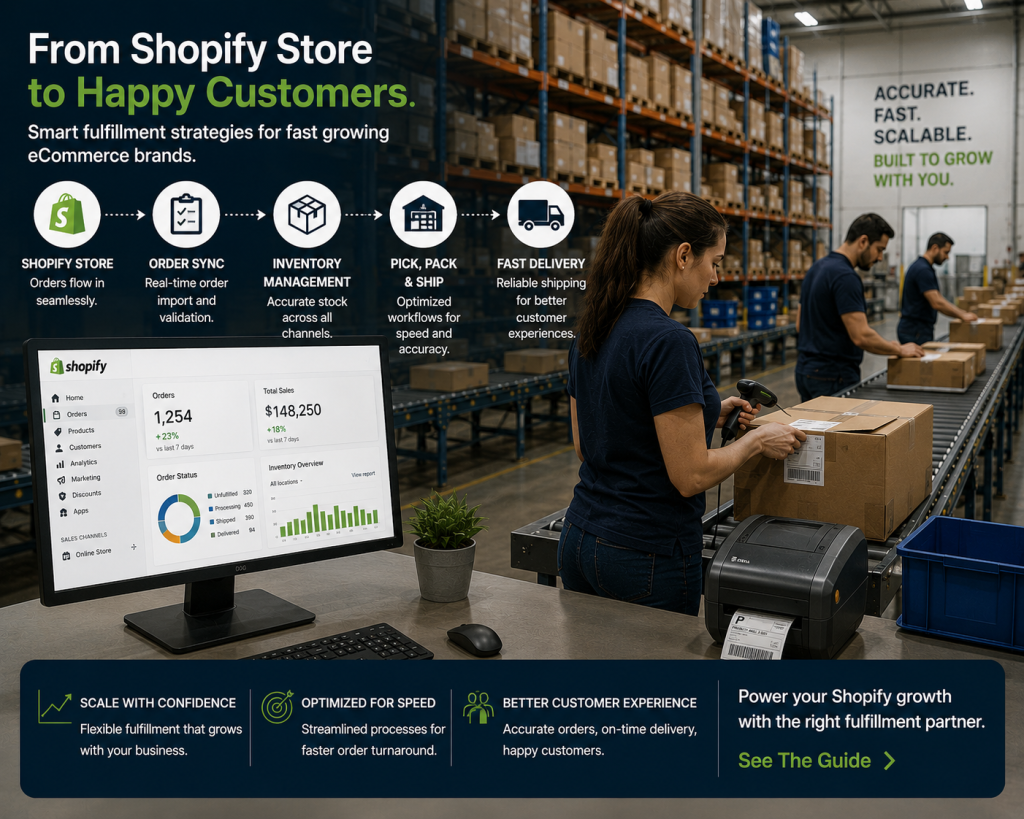
Launching a Shopify website is relatively simple. Building fulfillment operations that can support long term growth is much harder. Many ecommerce brands focus heavily on storefront design and customer acquisition while underestimating how quickly fulfillment complexity grows behind the scenes.
As order volume increases, operational issues like inventory accuracy, shipping delays, warehouse bottlenecks, and customer support tickets can slow growth and damage customer experience.
This article explains how Shopify brands can build fulfillment systems that support scaling ecommerce operations, improve shipping consistency, and create a stronger post-purchase experience.
Brands selling supplements, cosmetics, wellness products, snacks, subscription boxes, and small consumer goods often benefit from centralized fulfillment operations designed specifically for high volume parcel shipping.
If you already know you need a steadier fulfillment program, you can start the conversation here,
Contact Product Fulfillment Solutions.
Table of contents
- When Shopify growth starts creating warehouse pressure
- Story: How Radiant Nutrition stabilized fulfillment growth
- Why Shopify success depends on operations
- Common Shopify fulfillment mistakes
- Inventory and shipping visibility matters
- How centralized fulfillment supports growth
- How 3PLs support Shopify brands
- Shopify Website Fulfillment FAQs
When Shopify growth starts creating warehouse pressure
Most ecommerce brands experience a major operational shift once daily order volume becomes less predictable.
What initially feels manageable with a small in-house operation often becomes unstable during promotional spikes, subscription growth, influencer campaigns, or seasonal demand increases.
Warehouse pressure usually appears through:
- Delayed shipping times
- Inventory discrepancies
- Picking mistakes
- Customer service escalations
- Manual order processing bottlenecks
- Packaging inconsistency
Brands using Shopify frequently focus on front-end growth while fulfillment workflows remain reactive behind the scenes.
Structured ecommerce fulfillment services help growing brands stabilize fulfillment before operational problems begin affecting customer retention.
Story: How Radiant Nutrition stabilized fulfillment growth
Before
Radiant Nutrition launched a Shopify website selling wellness supplements and hydration products. Early growth came quickly through paid advertising and subscription sales.
Pain points
As order volume increased, fulfillment operations became inconsistent. Inventory counts no longer matched the Shopify storefront, while customer service tickets increased because tracking updates were delayed.
The warehouse team struggled during promotions because picking workflows changed daily based on incoming order volume.
Packaging inconsistencies also increased shipping costs and damaged customer experience.
The shift
The company transitioned into a more structured fulfillment environment with standardized workflows, inventory visibility, and scalable parcel shipping coordination.
Using organized pick and pack services, the brand improved shipping consistency while reducing operational stress during promotions.
Why Shopify success depends on operations
Shopify growth is closely tied to operational execution.
Customer acquisition can generate demand, but fulfillment operations determine whether customers reorder and remain loyal long term.
Strong ecommerce operations help improve:
- Shipping speed
- Inventory accuracy
- Order visibility
- Customer communication
- Return management
- Subscription reliability
Operational reliability becomes especially important for brands with recurring customers and high reorder frequency.
Consistent fulfillment creates a better post-purchase experience that supports retention and long term profitability.
Common Shopify fulfillment mistakes
Many Shopify brands wait too long before improving operational infrastructure.
Common fulfillment problems include:
- Manual inventory tracking
- Disorganized SKU storage
- Inconsistent shipping workflows
- Oversized packaging
- Poor warehouse slotting
- Limited reporting visibility
These issues often remain manageable at smaller volumes before becoming major operational bottlenecks later.
Brands scaling quickly benefit from organized warehousing and storage solutions designed for parcel fulfillment efficiency.
Talk to an Expert
Inventory and shipping visibility matters
Visibility is one of the biggest operational advantages for growing ecommerce brands.
Without accurate reporting, teams spend more time reacting to problems instead of improving operations proactively.
Strong visibility systems help brands monitor:
- Inventory movement
- Order status
- Shipping performance
- Warehouse productivity
- Carrier exceptions
- Backorder risks
Integrated real time information systems help improve decision making across fulfillment and customer support teams.
How centralized fulfillment supports growth
Centralized fulfillment operations help Shopify brands simplify inventory management and reduce shipping variability.
Operating through a centrally located warehouse improves national parcel reach while reducing operational fragmentation.
Centralized fulfillment often improves:
- Transit consistency
- Inventory coordination
- Labor efficiency
- Carrier management
- Packaging standardization
- Warehouse scalability
Many brands benefit from operating through a strategically positioned Cincinnati, Ohio fulfillment center that supports efficient parcel delivery across major US regions.
How 3PLs support Shopify brands
Experienced 3PL providers help Shopify brands improve operational consistency while supporting scalable growth.
Support often includes:
- Inventory management coordination
- Shipping optimization
- Subscription fulfillment workflows
- Returns management
- Packaging standardization
- Operational reporting visibility
As ecommerce brands scale, fulfillment flexibility becomes increasingly important for maintaining customer satisfaction and operational stability.
Structured discounted shipping rates also help brands manage rising transportation costs more effectively.
Talk to an Expert
Shopify Website Fulfillment FAQs
Why is fulfillment important for Shopify brands?
Fulfillment directly impacts shipping speed, customer satisfaction, inventory accuracy, and long term customer retention.
When should a Shopify brand consider outsourcing fulfillment?
Brands often consider outsourcing once order volume becomes difficult to manage consistently with internal warehouse resources.
What operational problems slow Shopify growth?
Inventory inaccuracies, shipping delays, warehouse inefficiencies, and inconsistent customer communication commonly create growth challenges.
How does centralized fulfillment improve ecommerce operations?
Centralized fulfillment improves inventory visibility, shipping coordination, warehouse efficiency, and operational scalability.
Can a 3PL integrate with Shopify?
Yes. Many 3PL providers support Shopify integrations that improve inventory synchronization and order processing visibility.
What products work well with parcel fulfillment operations?
Supplements, cosmetics, snacks, wellness products, subscription boxes, and small consumer goods often fit well within parcel fulfillment environments.