
Reviewed by: Director of Warehouse Systems and Operations, Product Fulfillment Solutions
Last updated: May 27, 2026
Executive TLDR
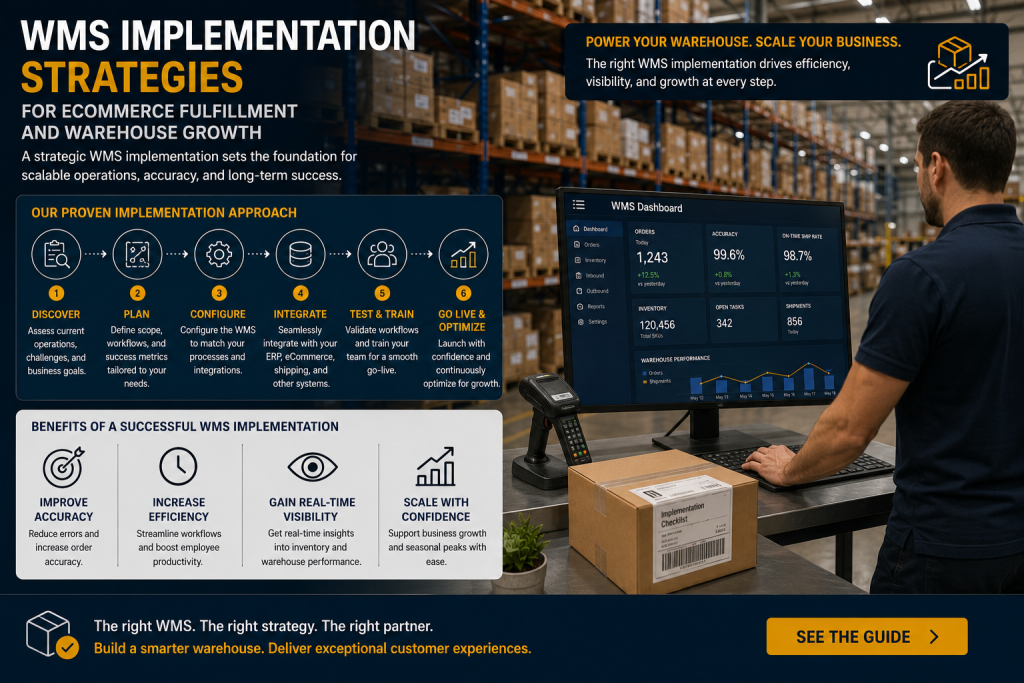
Warehouse management systems can dramatically improve fulfillment operations, but implementation mistakes create expensive operational disruption for growing ecommerce brands. Many companies underestimate how much preparation, workflow planning, and operational discipline are required before a WMS rollout succeeds.
As ecommerce order volume increases, manual inventory tracking and disconnected warehouse workflows often create bottlenecks that slow shipping performance and reduce inventory accuracy.
This article explains how ecommerce brands should approach WMS implementation, common mistakes to avoid, and how operational alignment matters more than software alone.
Brands selling supplements, cosmetics, snacks, wellness products, subscription boxes, and small consumer goods often benefit most from systems that support high-volume parcel fulfillment and accurate inventory visibility.
If you already know you need a steadier fulfillment program, you can start the conversation here,
Contact Product Fulfillment Solutions.
Table of contents
- When manual warehouse processes start failing
- Story: How VitalPeak Wellness stabilized warehouse growth
- What a WMS actually solves
- Common WMS implementation mistakes
- Why workflow planning matters before software
- Inventory visibility and system accuracy
- How 3PLs support WMS-driven operations
- WMS Implementation FAQs
When manual warehouse processes start failing
Many ecommerce brands rely on spreadsheets, disconnected software tools, and manual warehouse processes during early growth stages.
Those systems may feel manageable while order volume remains small, but operational problems usually appear quickly as SKU counts, daily shipments, and inventory movement increase.
Warehouse instability often appears through:
- Inventory discrepancies
- Delayed order processing
- Picking mistakes
- Receiving bottlenecks
- Poor inventory visibility
- Inconsistent warehouse workflows
At this stage, teams often spend more time reacting to operational problems instead of improving efficiency.
Structured ecommerce fulfillment services help growing brands create more reliable fulfillment workflows before operational pressure becomes unmanageable.
Story: How VitalPeak Wellness stabilized warehouse growth
Before
VitalPeak Wellness operated a fast-growing ecommerce business selling supplements, hydration mixes, and subscription wellness kits through multiple sales channels.
As marketing campaigns scaled, warehouse operations struggled to keep pace with increasing order volume.
Pain points
The warehouse team relied heavily on spreadsheets and manual inventory tracking. Inventory counts frequently drifted from actual stock levels, while order accuracy declined during promotional periods.
Receiving delays also created fulfillment bottlenecks because products were not consistently entered into inventory systems in real time.
Customer service teams spent growing amounts of time responding to backorders, tracking concerns, and shipping delays.
The shift
The company implemented standardized warehouse workflows supported by a structured warehouse management system environment.
More organized pick and pack services and inventory scanning workflows helped stabilize fulfillment operations while improving shipping consistency.
What a WMS actually solves
A warehouse management system helps coordinate inventory movement, warehouse workflows, and order processing activities inside fulfillment operations.
Strong WMS environments improve visibility and operational consistency across receiving, storage, picking, packing, and shipping.
A properly implemented WMS can help improve:
- Inventory accuracy
- Order visibility
- Warehouse productivity
- SKU traceability
- Receiving coordination
- Shipping workflow consistency
However, software alone does not solve operational problems. Poor warehouse organization, inconsistent processes, and weak inventory discipline still create fulfillment issues even after implementation.
Brands handling bundled products and subscription kits may also benefit from organized kitting and assembly solutions that align with warehouse system workflows.
Common WMS implementation mistakes
Many ecommerce companies underestimate the operational planning required before launching a warehouse management system.
Common implementation mistakes include:
- Skipping warehouse process mapping
- Poor SKU organization
- Weak inventory counting procedures
- Incomplete employee training
- Rushed system rollout timelines
- Disconnected operational ownership
Some brands attempt to implement new systems while existing warehouse workflows remain unstable, which often creates more confusion rather than operational improvement.
Structured warehousing and storage solutions help create a more organized operational foundation before introducing complex software systems.
Talk to an Expert
Why workflow planning matters before software
Warehouse systems work best when operational workflows are already clearly defined.
Before implementation begins, ecommerce brands should evaluate how inventory moves through the warehouse and where operational friction currently exists.
Important planning areas include:
- Receiving workflows
- SKU slotting strategy
- Inventory counting procedures
- Picking routes
- Packing station organization
- Carrier handoff processes
Without standardized operational procedures, warehouse systems often become expensive reporting tools rather than true workflow improvement platforms.
Well-designed warehouse layouts and inventory coordination create smoother adoption during implementation phases.
Inventory visibility and system accuracy
One of the biggest advantages of a well-managed WMS environment is stronger operational visibility.
Warehouse teams need accurate information to make fast operational decisions during busy fulfillment periods.
Strong reporting systems help brands monitor:
- Inventory movement
- Order processing status
- Picking productivity
- Cycle count accuracy
- Backorder exposure
- Receiving delays
Integrated real time information systems help operations teams identify issues before they affect customer experience or shipping performance.
How 3PLs support WMS-driven operations
Experienced 3PL providers help ecommerce brands operate within more structured warehouse environments designed for scalability and operational consistency.
Support often includes:
- Inventory management coordination
- Warehouse process standardization
- Order visibility systems
- Carrier management
- Receiving and replenishment workflows
- Shipping optimization
Many ecommerce brands benefit from centralized fulfillment operations through a strategically positioned Cincinnati, Ohio fulfillment center that supports national parcel distribution efficiency.
Operationally focused discounted shipping rates also help ecommerce brands manage rising transportation costs as shipping volume grows.
Talk to an Expert
WMS Implementation FAQs
What is a warehouse management system?
A warehouse management system helps coordinate inventory movement, warehouse workflows, receiving, picking, packing, and shipping operations.
When should an ecommerce brand implement a WMS?
Brands often consider implementation once inventory complexity and order volume become difficult to manage through manual processes.
What are the biggest WMS implementation mistakes?
Poor workflow planning, weak inventory organization, rushed rollouts, and incomplete employee training commonly create implementation problems.
How does a WMS improve inventory accuracy?
Warehouse systems improve inventory visibility through scanning workflows, inventory tracking, and better operational coordination.
Can a WMS improve shipping speed?
Yes. Organized warehouse workflows and better inventory visibility often improve picking efficiency and order processing consistency.
Why do ecommerce brands use 3PL warehouse systems?
3PL providers often offer structured warehouse environments, operational expertise, inventory coordination, and scalable fulfillment systems.