
Reviewed by: Chief Operations Officer, Product Fulfillment Solutions
Last updated: May 28, 2026
Executive TLDR
Modern ecommerce brands rarely sell through a single channel anymore. Many companies now manage orders through Shopify, Amazon, wholesale accounts, retail partnerships, subscription programs, and direct consumer marketplaces at the same time.
As channels expand, supply chain complexity increases quickly. Inventory synchronization, order routing, shipping coordination, and forecasting challenges can create operational instability if systems and workflows are not aligned.
This article explains how omnichannel supply chains work, where operational problems typically appear, and how ecommerce brands can build more reliable fulfillment strategies that support long term growth.
Brands selling supplements, cosmetics, wellness products, snacks, subscription boxes, and small consumer goods often benefit from centralized fulfillment coordination that supports multiple sales channels without creating warehouse chaos.
If you already know you need a steadier fulfillment program, you can start the conversation here,
Contact Product Fulfillment Solutions.
Table of contents
- When omnichannel growth starts creating operational pressure
- Story: How PureBalance scaled across multiple sales channels
- What an omnichannel supply chain actually requires
- Common omnichannel fulfillment problems
- Inventory visibility becomes critical
- Why centralized fulfillment supports omnichannel growth
- How 3PLs help manage omnichannel operations
- Omnichannel Supply Chain FAQs
When omnichannel growth starts creating operational pressure
Many ecommerce brands initially launch through a single sales channel before gradually expanding into wholesale, marketplace, retail, and subscription fulfillment programs.
Growth across multiple channels increases revenue opportunity, but it also introduces operational complexity that can quickly overwhelm disconnected warehouse systems.
Operational stress often appears through:
- Inventory overselling
- Delayed order routing
- Inconsistent shipping timelines
- Warehouse congestion
- Channel allocation conflicts
- Rising customer support volume
As fulfillment complexity increases, brands often discover that manual coordination between systems is no longer sustainable.
Structured ecommerce fulfillment services help ecommerce companies improve operational consistency across multiple sales channels.
Story: How PureBalance scaled across multiple sales channels
Before
PureBalance launched as a direct-to-consumer wellness brand selling hydration powders and supplements through Shopify.
After strong online growth, the company expanded into Amazon, retail partnerships, and subscription replenishment programs.
Pain points
Inventory coordination quickly became difficult. The operations team struggled to maintain accurate stock levels across multiple channels while managing wholesale purchase orders and ecommerce fulfillment at the same time.
Warehouse workflows changed constantly based on incoming demand, while customer service tickets increased because shipping timelines varied between channels.
The company also faced packaging inconsistencies that created confusion across wholesale and direct-to-consumer shipments.
The shift
PureBalance improved operational stability by centralizing inventory management and standardizing warehouse workflows.
More organized pick and pack services helped support both parcel fulfillment and larger retail shipments while improving order accuracy.
What an omnichannel supply chain actually requires
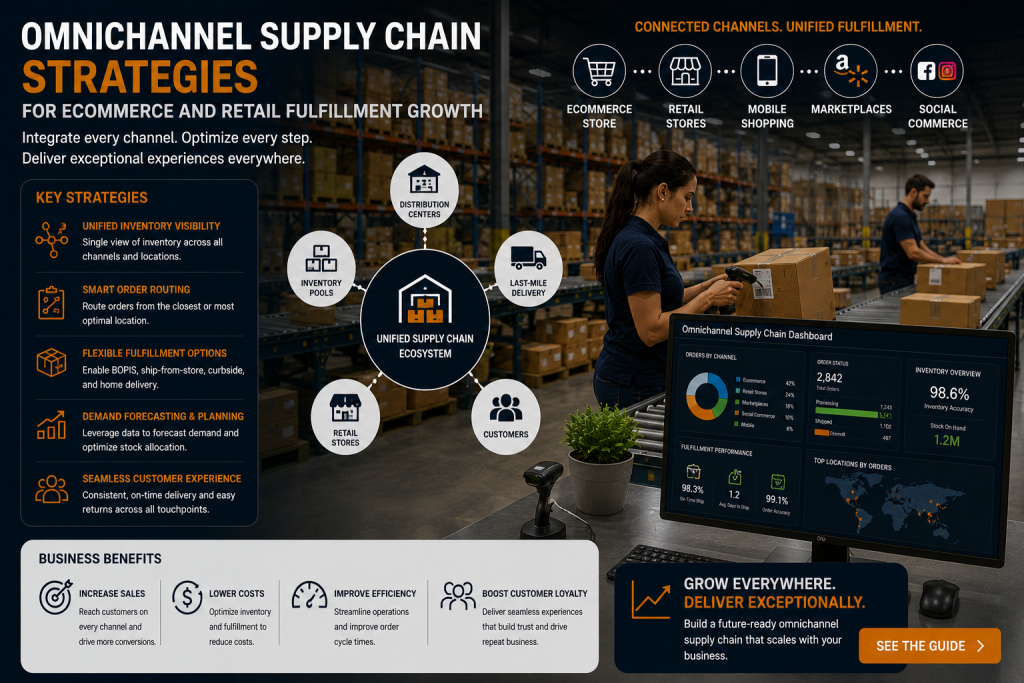
An omnichannel supply chain must support inventory coordination, order routing, fulfillment workflows, and shipping visibility across multiple sales channels simultaneously.
Operational success depends on maintaining accurate inventory data and consistent fulfillment processes regardless of where the customer places an order.
Strong omnichannel operations typically include:
- Centralized inventory visibility
- Standardized fulfillment workflows
- Channel-specific routing rules
- Consistent packaging procedures
- Integrated reporting systems
- Scalable warehouse processes
Brands handling subscription kits or retail-ready packaging often benefit from organized kitting and assembly solutions that support multiple fulfillment environments.
Common omnichannel fulfillment problems
Operational problems usually appear when ecommerce brands expand into additional channels without redesigning warehouse workflows.
Common omnichannel fulfillment issues include:
- Inventory synchronization failures
- Oversold SKUs
- Delayed wholesale shipments
- Poor order prioritization
- Packaging inconsistencies
- Disconnected reporting systems
These operational gaps often create customer frustration while increasing labor pressure inside the warehouse.
Structured warehousing and storage solutions help support more organized inventory coordination and scalable fulfillment operations.
Talk to an Expert
Inventory visibility becomes critical
Inventory visibility becomes one of the most important operational priorities inside omnichannel environments.
Without accurate inventory synchronization, brands risk overselling products, delaying shipments, or creating channel allocation conflicts.
Strong reporting systems help operations teams monitor:
- Inventory movement
- Channel allocation levels
- Order status visibility
- Backorder exposure
- Shipping performance
- Warehouse productivity
Integrated real time information systems help ecommerce brands make faster operational decisions while improving customer communication.
Why centralized fulfillment supports omnichannel growth
Centralized fulfillment operations help ecommerce brands simplify inventory coordination and reduce operational fragmentation across multiple channels.
Operating through a centrally located warehouse often improves shipping efficiency while supporting more consistent inventory management.
Centralized fulfillment environments can improve:
- Inventory accuracy
- Order routing consistency
- Warehouse productivity
- Shipping coordination
- Carrier management
- Operational scalability
Many ecommerce brands benefit from operating through a strategically positioned Cincinnati, Ohio fulfillment center that supports national parcel distribution and retail shipping coordination.
How 3PLs help manage omnichannel operations
Experienced 3PL providers help ecommerce brands manage inventory coordination and fulfillment workflows across multiple sales channels.
Operational support may include:
- Inventory synchronization
- Order routing coordination
- Wholesale fulfillment workflows
- Retail compliance support
- Shipping optimization
- Operational reporting visibility
As omnichannel complexity increases, operational consistency becomes critical for maintaining customer trust and avoiding fulfillment disruption.
Structured discounted shipping rates also help ecommerce brands manage transportation costs across multiple fulfillment channels.
Talk to an Expert
Omnichannel Supply Chain FAQs
What is an omnichannel supply chain?
An omnichannel supply chain supports inventory management, order fulfillment, and shipping coordination across multiple sales channels simultaneously.
Why do omnichannel operations become difficult to manage?
Inventory synchronization, order routing, and warehouse coordination become more complex as ecommerce brands expand into additional sales channels.
How can ecommerce brands improve omnichannel fulfillment?
Brands often improve operations through centralized inventory visibility, standardized workflows, and stronger warehouse coordination.
Why is inventory visibility important in omnichannel fulfillment?
Accurate inventory visibility helps reduce overselling, backorders, shipping delays, and channel allocation conflicts.
Can a 3PL support omnichannel fulfillment operations?
Yes. Many 3PL providers support inventory synchronization, order routing, retail fulfillment, and ecommerce shipping coordination.
Why does centralized fulfillment improve omnichannel operations?
Centralized fulfillment improves inventory accuracy, operational visibility, warehouse efficiency, and shipping consistency across multiple channels.