
Reviewed by: Chief Operations Officer, Product Fulfillment Solutions
Last updated: June 03, 2026
Executive TLDR
Demand planning is one of the most important disciplines in ecommerce operations. Brands that accurately anticipate future customer demand can maintain healthier inventory levels, improve fulfillment performance, reduce stockouts, and protect cash flow.
Unfortunately, many growing ecommerce companies rely on historical sales data alone or make purchasing decisions based on instinct rather than structured forecasting. The result is often excess inventory, inventory shortages, rushed replenishment orders, and fulfillment disruptions.
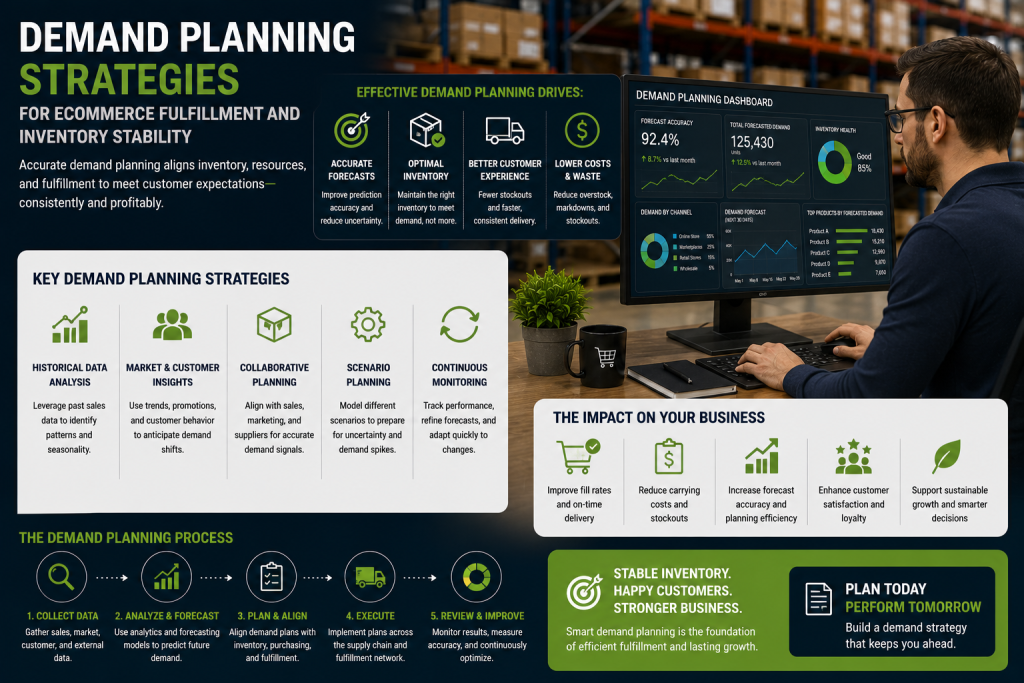
Effective demand planning combines sales history, seasonality, marketing initiatives, customer behavior, inventory trends, and operational realities to create a more reliable forecast.
For brands selling supplements, cosmetics, wellness products, snacks, subscription boxes, and other frequently reordered products, stronger demand planning often translates directly into better customer experiences and healthier margins.
- Reduce inventory shortages
- Improve forecasting accuracy
- Support fulfillment consistency
- Optimize inventory investment
- Strengthen operational planning
If you already know you need a steadier fulfillment program, you can start the conversation here,
Contact Product Fulfillment Solutions.
Table of contents
- When demand planning becomes critical
- Story: How PureBalance Nutrition improved forecasting
- What demand planning actually means
- Common demand planning mistakes
- How demand planning supports fulfillment performance
- Building a practical demand planning process
- Demand Planning FAQs
When demand planning becomes critical
Early-stage ecommerce brands often manage inventory reactively. Products sell, inventory declines, and purchase orders are placed when stock levels appear low.
That approach may work when product catalogs are small and sales volume remains relatively stable. However, growth introduces complexity.
As brands add new products, launch marketing campaigns, expand sales channels, and increase order volume, inventory decisions become more difficult and more expensive.
Without structured demand planning, businesses frequently encounter:
- Unexpected stockouts
- Excess inventory carrying costs
- Rush replenishment orders
- Warehouse congestion
- Cash flow challenges
- Customer dissatisfaction
Demand planning becomes critical when operational decisions can no longer rely solely on intuition.
Many growing brands partner with providers offering ecommerce fulfillment services to gain visibility into inventory trends while supporting more predictable fulfillment operations.
Story: How PureBalance Nutrition improved forecasting
Before
PureBalance Nutrition sold hydration supplements, protein products, and wellness bundles through Shopify and subscription programs.
The company experienced strong year-over-year growth and regularly launched promotional campaigns that generated substantial order spikes.
Inventory purchasing decisions were primarily based on recent sales trends and management estimates.
Pain points
As growth accelerated, inventory challenges became more frequent.
Popular products often sold out shortly after major promotions. At the same time, slower-moving products accumulated in storage and consumed valuable warehouse space.
The company frequently paid premium freight charges to replenish inventory quickly enough to meet customer demand.
Customer service teams also experienced increased ticket volume due to backorders and delayed shipments.
The shift
Leadership implemented a more structured demand planning process that incorporated sales history, seasonality, promotional calendars, and inventory performance data.
Forecast reviews became part of regular operational planning.
The company also improved warehouse coordination through professional warehousing and storage solutions designed to support inventory visibility and fulfillment efficiency.
Within months, stockouts declined, inventory turnover improved, and purchasing decisions became more predictable.
What demand planning actually means
Demand planning is the process of forecasting future customer demand and aligning inventory, purchasing, warehousing, and fulfillment operations to support that demand.
The objective is simple: maintain sufficient inventory to satisfy customer orders without tying up excessive capital in surplus inventory.
Effective demand planning typically incorporates:
- Historical sales data
- Seasonal demand trends
- Marketing campaigns
- Promotional activity
- Customer purchasing behavior
- Supplier lead times
- Inventory turnover data
Strong demand planning helps organizations make proactive decisions rather than constantly reacting to operational surprises.
It also creates stronger alignment between inventory management and fulfillment operations.
Common demand planning mistakes
Many inventory challenges can be traced back to weaknesses in forecasting processes.
Common mistakes include:
- Relying solely on historical sales data
- Ignoring seasonality
- Overestimating promotional performance
- Failing to account for supplier lead times
- Using outdated inventory reports
- Overreacting to short-term sales fluctuations
- Insufficient communication between departments
These mistakes often create costly inventory imbalances that affect fulfillment performance and customer experience.
Access to real time information allows teams to identify changing demand patterns earlier and adjust forecasts more effectively.
Talk to an Expert
How demand planning supports fulfillment performance
Demand planning directly impacts warehouse operations and fulfillment outcomes.
Accurate forecasts help fulfillment teams prepare for future order volume, allocate labor appropriately, and maintain inventory availability.
Benefits of strong demand planning include:
- Improved order fulfillment rates
- Reduced inventory shortages
- Lower emergency freight expenses
- Better labor planning
- More accurate purchasing decisions
- Higher customer satisfaction
Demand planning also supports healthier relationships with suppliers by creating more predictable purchasing schedules and replenishment cycles.
“`