
Reviewed by: Chief Operations Officer, Product Fulfillment Solutions
Last updated: March 31, 2026
Executive TLDR
A delivery exception occurs when a shipment cannot move forward as planned during transit. While many ecommerce brands treat exceptions as unavoidable carrier problems, most recurring delivery disruptions actually originate upstream in fulfillment operations, data accuracy, or carrier strategy.
Brands that proactively manage delivery exceptions reduce customer complaints, lower support costs, and protect repeat purchase rates. The key is visibility, structured workflows, and fulfillment systems designed to prevent issues before packages leave the warehouse.
If delivery issues are impacting customer satisfaction, you can speak directly with a fulfillment specialist here,
Contact Product Fulfillment Solutions.
Table of contents
- What is a delivery exception?
- Story: How Veloura Skin reduced delivery disruptions
- Common types of delivery exceptions
- Why delivery exceptions happen
- How delivery exceptions impact ecommerce brands
- How to prevent delivery exceptions
- How a 3PL reduces delivery exceptions
- Delivery exception FAQs
What is a delivery exception?
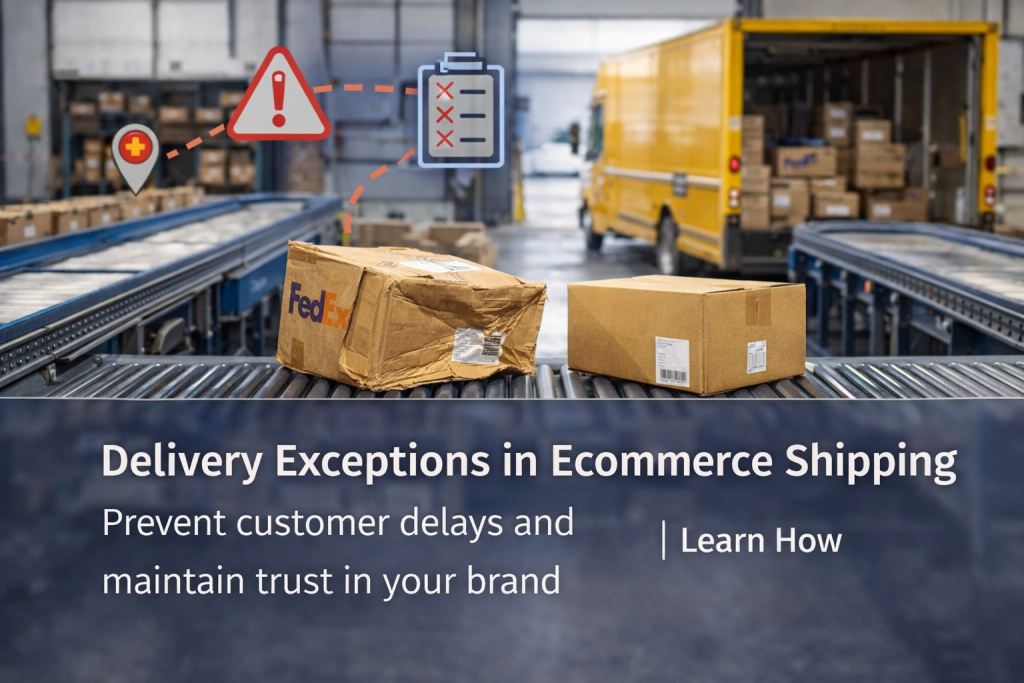
A delivery exception is a shipping status indicating that a package encountered an unexpected event preventing it from being delivered on schedule. The shipment is not necessarily lost, but it requires resolution before delivery can continue.
Exceptions can occur for operational, environmental, or administrative reasons. While carriers ultimately manage transportation, fulfillment accuracy and shipping strategy strongly influence how often exceptions occur.
Brands operating through structured ecommerce fulfillment services typically experience fewer disruptions because shipments begin their journey with validated data and optimized carrier selection.
Story: How Veloura Skin reduced delivery disruptions
Before
Veloura Skin, a growing skincare brand, began receiving increasing customer complaints about delayed deliveries. Tracking pages frequently showed “delivery exception” updates, overwhelming the customer support team.
What was happening
- Incorrect address formatting caused carrier routing failures
- Packages missed carrier pickup cutoffs
- Shipping methods were chosen manually without performance data
- Peak season volume overwhelmed internal fulfillment processes
The brand initially blamed carriers, but analysis revealed most issues originated before packages even left the warehouse.
The change
After transitioning to structured workflows supported by real-time validation and multi-carrier routing logic, delivery exception rates dropped significantly. Centralized fulfillment operations ensured shipments departed accurately and on time.
Using real time information, the team could proactively identify delays instead of reacting after customers complained.
Common types of delivery exceptions
Understanding exception categories helps brands identify root causes quickly.
Address-related exceptions
- Incomplete addresses
- Invalid postal codes
- Recipient unavailable
- Access restrictions or gated locations
Operational delays
- Missed carrier pickups
- Sorting facility congestion
- Incorrect labeling or barcode issues
Environmental factors
- Weather disruptions
- Natural disasters
- Transportation network interruptions
Customs or compliance holds
- Missing documentation
- Incorrect declared values
- Regulatory inspections
While environmental causes cannot be controlled, many operational exceptions are preventable with proper fulfillment design.
Why delivery exceptions happen
Most ecommerce brands assume exceptions occur randomly. In reality, recurring issues typically stem from predictable operational gaps.
Poor data validation
Shipping labels created from unchecked order data introduce routing errors immediately.
Manual carrier selection
Choosing carriers without performance analytics leads to inconsistent delivery outcomes. Access to optimized routing and discounted shipping rates helps align cost with reliability.
Late fulfillment processing
Orders packed too close to carrier cutoff times increase the likelihood of missed scans and delayed transit starts.
Warehouse workflow inefficiencies
Disorganized picking and packing processes introduce labeling mistakes and shipment handling delays.
How delivery exceptions impact ecommerce brands
The operational cost of delivery exceptions extends far beyond shipping delays.
- Increased customer support tickets
- Refunds and reshipments
- Lower customer trust and retention
- Negative reviews affecting acquisition
- Higher operational overhead
Customers rarely differentiate between carrier errors and brand responsibility. From their perspective, the ecommerce company owns the delivery experience.
How to prevent delivery exceptions
1. Validate addresses automatically
Address verification tools reduce routing failures before labels are generated.
2. Ship earlier in the day
Structured workflows ensure orders meet pickup deadlines consistently.
3. Use multi-carrier routing
Select carriers based on destination performance rather than habit.
4. Improve warehouse organization
Efficient warehousing and storage solutions reduce handling errors that trigger shipment delays.
5. Maintain inventory accuracy
Accurate inventory prevents last-minute substitutions or fulfillment holds.
Talk to an Expert
How a 3PL reduces delivery exceptions
A professional fulfillment partner reduces delivery disruptions by controlling the variables brands can influence before packages enter carrier networks.
Operating from a centrally positioned Cincinnati, Ohio fulfillment center enables consistent pickup schedules, optimized transit zones, and improved carrier performance monitoring.
Key advantages include:
- Automated order validation workflows
- Real-time shipment tracking visibility
- Carrier performance analytics
- Standardized packing and labeling procedures
- Scalable operations during peak demand
Rather than reacting to exceptions, brands shift toward prevention-driven logistics.
Delivery exception FAQs
Does a delivery exception mean a package is lost?
No. A delivery exception indicates a delay or issue preventing scheduled delivery. Most shipments resume movement once the issue is resolved.
Who is responsible for delivery exceptions?
Carriers manage transportation, but fulfillment accuracy, address validation, and shipping strategy significantly influence how often exceptions occur.
How long does a delivery exception delay shipments?
Delays vary depending on the cause. Some resolve within a day, while others involving weather or customs may take longer.
Can ecommerce brands reduce delivery exceptions?
Yes. Structured fulfillment workflows, validated shipping data, and optimized carrier selection reduce preventable exceptions substantially.
Why do delivery exceptions increase during peak seasons?
Higher shipment volumes strain carrier networks and expose inefficiencies in warehouse operations. Scalable fulfillment systems help maintain consistency during demand spikes.
Should brands contact customers when exceptions occur?
Proactive communication improves customer trust. Brands that notify customers early often reduce support inquiries and negative feedback.