Reviewed by: Director of Operations, Product Fulfillment Solutions
Last updated: April 7, 2026
Executive TLDR
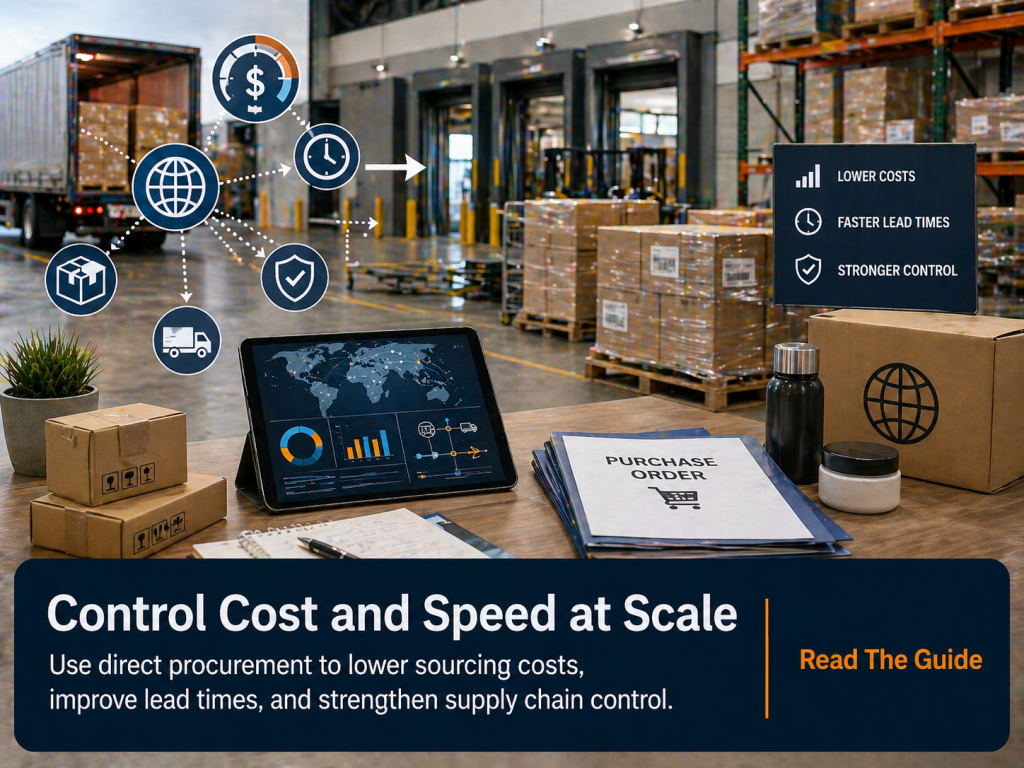
Direct procurement is how ecommerce brands buy inventory straight from manufacturers or approved suppliers without unnecessary middle layers. Done right, it lowers cost and improves control. Done poorly, it creates stock delays, cash flow pressure, and warehouse disruption.
This matters most when order volume grows and brands start feeling pressure from supplier variability, lead times, and inconsistent inbound quality. Procurement stops being just buying. It becomes a system that affects fulfillment speed, customer experience, and profitability.
In this guide, you will learn how direct procurement actually works in modern ecommerce operations, where it breaks down, and how stronger fulfillment coordination helps stabilize it through better receiving, forecasting, and inventory flow.
If you already know you need a steadier fulfillment program, you can start the conversation here,
Contact Product Fulfillment Solutions.
Table of contents
- When direct procurement starts to matter
- Story: how a growing brand scaled sourcing
- Supplier control and lead time realities
- Inventory flow and warehouse impact
- Cost tradeoffs and hidden risks
- Aligning procurement with fulfillment ops
- Building a resilient inbound system
- Direct procurement FAQs
When direct procurement starts to matter in ecommerce growth
Direct procurement becomes important when brands move from small batch ordering to repeatable replenishment cycles. At low volume, buying inventory feels simple. At scale, every delay or mismatch from suppliers hits cash flow and fulfillment timing.
The pressure shows up in predictable ways. Stockouts happen even when demand is stable. Inventory arrives in uneven waves. Receiving docks get overloaded during replenishment cycles. Procurement decisions start affecting shipping promises.
This is where brands realize procurement is not isolated. It is tightly connected to ecommerce fulfillment services and how inventory flows through the warehouse. Without alignment, small delays turn into customer experience issues.
Story: how SuppleCore scaled direct sourcing under pressure
Before
SuppleCore, a mid sized supplement brand, started with simple domestic suppliers and small purchase orders. Procurement was handled manually, often reacting to stock levels instead of planning ahead.
Pain points
As sales grew, supplier lead times became inconsistent. One shipment would arrive early, another would lag by weeks. The warehouse struggled to keep receiving organized, and outbound orders started getting delayed.
The shift
SuppleCore moved to structured direct procurement cycles tied to forecast data and inbound scheduling. Instead of reactive ordering, they aligned procurement with warehouse capacity and warehousing and storage solutions to smooth inbound flow.
Talk to an Expert
Supplier control and lead time realities
Direct procurement sounds simple, but supplier behavior is rarely predictable. Even strong suppliers shift timelines based on capacity, raw material availability, or production queues.
The main challenge is not just ordering, it is timing. If procurement teams do not account for variability, inventory arrives in spikes instead of steady flow. That creates downstream pressure on receiving and storage.
What strong teams do differently
- Build buffer time into every replenishment cycle
- Segment suppliers by reliability tier
- Match purchase timing to warehouse receiving capacity
- Track lead time variability, not just averages
Inventory flow and warehouse receiving impact
Procurement decisions directly shape warehouse behavior. When inbound shipments are poorly timed, receiving teams get overwhelmed and outbound orders slow down.
This is where coordination with a centralized fulfillment operation becomes critical. A structured inbound process inside a central hub like a Cincinnati, Ohio fulfillment center helps smooth out spikes and maintain order velocity.
Key receiving breakdown points
- Unscheduled inbound deliveries
- Mislabeled or incomplete shipments
- Batch arrivals exceeding dock capacity
- Lack of SKU-level pre alerts
Cost tradeoffs and hidden procurement risks
Direct procurement is often adopted to reduce unit cost. But the real savings can disappear if hidden costs are ignored.
These include rush freight, emergency replenishment orders, storage congestion, and labor inefficiencies during receiving spikes. Lower unit cost does not always mean lower total landed cost.
Common hidden cost drivers
- Expedited shipping due to poor forecasting
- Inventory holding inefficiencies
- Warehouse labor overtime during peak receiving
- Order delays leading to customer churn
Aligning procurement with fulfillment operations
The strongest supply chains treat procurement and fulfillment as one system. Orders are not just placed based on demand. They are synchronized with warehouse capacity and fulfillment flow.
This is where services like pick and pack services and real time inventory visibility reduce friction between inbound and outbound operations.
Practical alignment steps
- Share sales forecasts with procurement and fulfillment teams
- Set inbound receiving calendars
- Align purchase cycles with outbound peak periods
- Monitor inventory velocity daily
Building a resilient inbound procurement system
Resilience in procurement is not about perfect prediction. It is about building systems that absorb variability without breaking fulfillment performance.
Brands that scale successfully standardize purchase cycles, diversify suppliers, and use fulfillment partners to stabilize inbound flow. Over time, this reduces volatility and improves customer reliability.
Core resilience practices
- Multi supplier sourcing for key SKUs
- Rolling forecast updates every 2 to 4 weeks
- Inbound appointment scheduling discipline
- Buffer stock strategy for high velocity products
Direct procurement FAQs
What is direct procurement in ecommerce operations?
It is the process of sourcing products directly from manufacturers or approved suppliers without intermediaries, allowing better cost control and supply chain visibility.
Why does direct procurement create fulfillment challenges?
It can create uneven inventory arrivals, leading to warehouse congestion, receiving delays, and fulfillment bottlenecks if not properly scheduled and coordinated.
How does forecasting affect procurement decisions?
Forecasting determines when and how much inventory is ordered. Poor forecasting leads to stockouts or excess inventory, both of which disrupt operations.
What role does a 3PL play in procurement planning?
A 3PL helps align inbound inventory flow with warehouse capacity, ensuring procurement timing supports smooth receiving and outbound fulfillment.
How can brands reduce procurement risk?
They can diversify suppliers, improve forecast accuracy, and coordinate procurement cycles with fulfillment operations to reduce volatility.
What is the biggest mistake in direct procurement?
Focusing only on unit cost instead of total landed cost, including shipping delays, storage inefficiencies, and fulfillment disruptions.