
Reviewed by: Chief Operations Officer, Product Fulfillment Solutions
Last updated: June 01, 2026
Executive TLDR
Most ecommerce brands focus heavily on marketing, customer acquisition, and product development. Yet many growth challenges originate inside the supply chain. Inventory shortages, fulfillment delays, inaccurate forecasts, rising shipping expenses, and warehouse bottlenecks can quickly reduce profitability and damage customer trust.
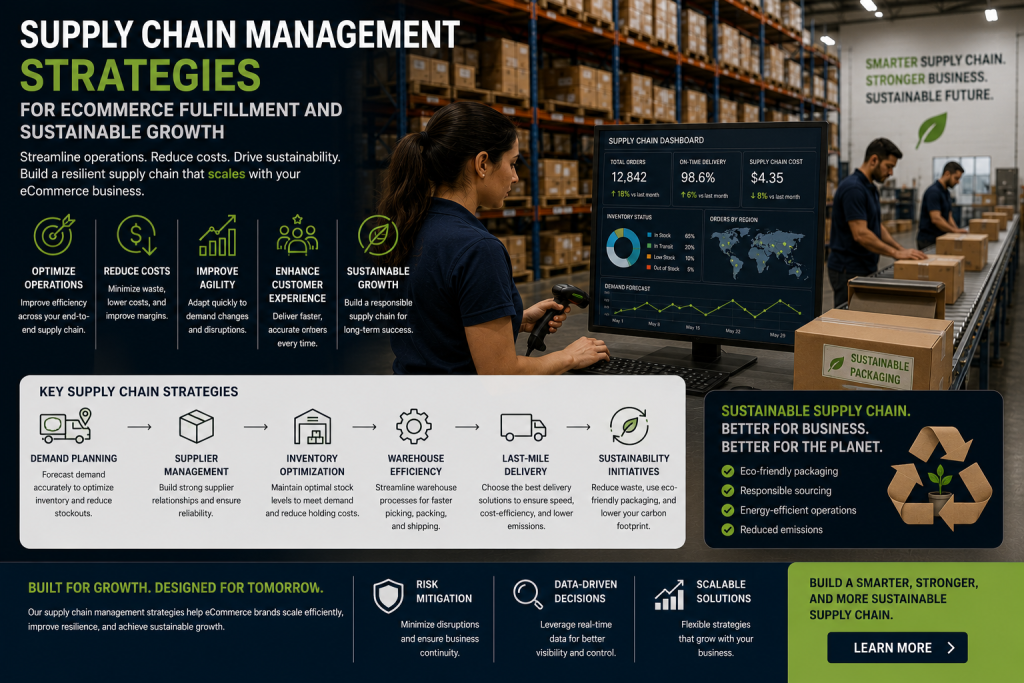
Strong supply chain management is not simply about moving products from one place to another. It involves coordinating inventory planning, supplier relationships, warehousing, order fulfillment, transportation, reporting, and customer expectations into a single operating system.
For brands selling supplements, cosmetics, wellness products, snack foods, subscription boxes, and other frequently reordered products, operational consistency often becomes a competitive advantage. Customers remember reliable delivery experiences just as much as they remember great products.
In this guide, you’ll learn how ecommerce supply chains work, common mistakes growing brands make, practical improvements you can implement this quarter, and how the right fulfillment partner can simplify complex operations.
- Reduce inventory shortages and overstocks
- Improve warehouse efficiency and fulfillment speed
- Create more predictable shipping performance
- Build stronger operational visibility
- Support long-term ecommerce growth without operational chaos
If you already know you need a steadier fulfillment program, you can start the conversation here,
Contact Product Fulfillment Solutions.
Table of contents
- When supply chain management becomes a growth driver
- Story: How VitalEdge Nutrition transformed operations
- Understanding the core components of supply chain management
- Warning signs your supply chain needs attention
- How better inventory management improves performance
- Building a scalable fulfillment strategy
- How centralized operations support national growth
- How a 3PL strengthens supply chain performance
- Supply Chain Management FAQs
When supply chain management becomes a growth driver
Many ecommerce brands initially view supply chain management as a back-office function. Products arrive, orders ship, and customers receive their purchases. As long as everything appears to work, operational systems rarely receive much attention.
That changes quickly once order volume begins increasing.
A growing brand may suddenly find itself managing larger purchase orders, multiple suppliers, seasonal demand fluctuations, marketplace sales channels, retail partnerships, subscription programs, and increasingly complex customer expectations.
Without strong operational processes, growth can actually create new problems instead of new opportunities.
Common symptoms include:
- Frequent stockouts on top-selling products
- Excess inventory tied up in slow-moving SKUs
- Rising fulfillment costs
- Delayed shipments during promotions
- Poor inventory visibility
- Higher customer support volume
- Inconsistent delivery experiences
Supply chain management becomes a growth driver when every operational function works together to support customer demand efficiently and predictably.
For many brands, partnering with experienced ecommerce fulfillment services providers creates the operational stability necessary for sustainable growth.
Story: How VitalEdge Nutrition transformed operations
Before
VitalEdge Nutrition sold sports supplements and wellness products through Shopify, Amazon, and several subscription programs.
During its early growth stage, inventory was managed through spreadsheets while fulfillment was handled using a small internal warehouse team.
Initially, operations appeared manageable.
Pain points
As order volume increased, inventory accuracy declined. Popular products routinely sold out while slower-moving products occupied valuable storage space.
The warehouse team struggled to keep pace during promotions. Picking errors increased. Customer service requests grew. Shipping expenses climbed faster than revenue.
Leadership spent more time resolving operational emergencies than planning future growth initiatives.
The business was growing, but operational complexity was growing even faster.
The shift
VitalEdge began redesigning its supply chain around visibility, forecasting, and fulfillment efficiency.
Inventory management became more structured. Receiving procedures improved. Warehouse workflows were standardized.
The company also leveraged professional pick and pack services to create greater consistency across fulfillment operations.
Within months, order accuracy improved, inventory visibility increased, and leadership regained confidence in the company’s ability to scale.
Understanding the core components of supply chain management
Effective supply chain management involves far more than transportation or warehousing.
It is the coordination of every process required to move products from suppliers to customers efficiently and profitably.
The primary components include:
- Demand forecasting
- Supplier management
- Inventory planning
- Warehousing operations
- Order fulfillment
- Transportation management
- Reporting and analytics
- Customer delivery performance
Weakness in any one area often creates problems throughout the entire supply chain.
For example, inaccurate forecasting may create inventory shortages. Inventory shortages can delay fulfillment. Delayed fulfillment can increase customer service volume and reduce customer retention.
Strong supply chain management focuses on eliminating root causes rather than repeatedly addressing symptoms.
Warning signs your supply chain needs attention
Many operational problems develop gradually before becoming serious enough to impact customers.
Leaders should monitor key indicators that suggest supply chain processes require improvement.
Common warning signs include:
- Inventory accuracy below acceptable levels
- Frequent expedited shipping expenses
- Rising order processing times
- Supplier performance inconsistency
- Increasing stockout frequency
- Warehouse congestion during peak periods
- Growing customer complaints regarding delivery
These issues rarely resolve themselves. Left unaddressed, they often become more expensive and more disruptive over time.
Organized warehousing and storage solutions can help create the operational foundation necessary for long-term improvement.
Talk to an Expert