
Reviewed by: Director of Operations, Product Fulfillment Solutions
Last updated: May 12, 2026
Executive TLDR
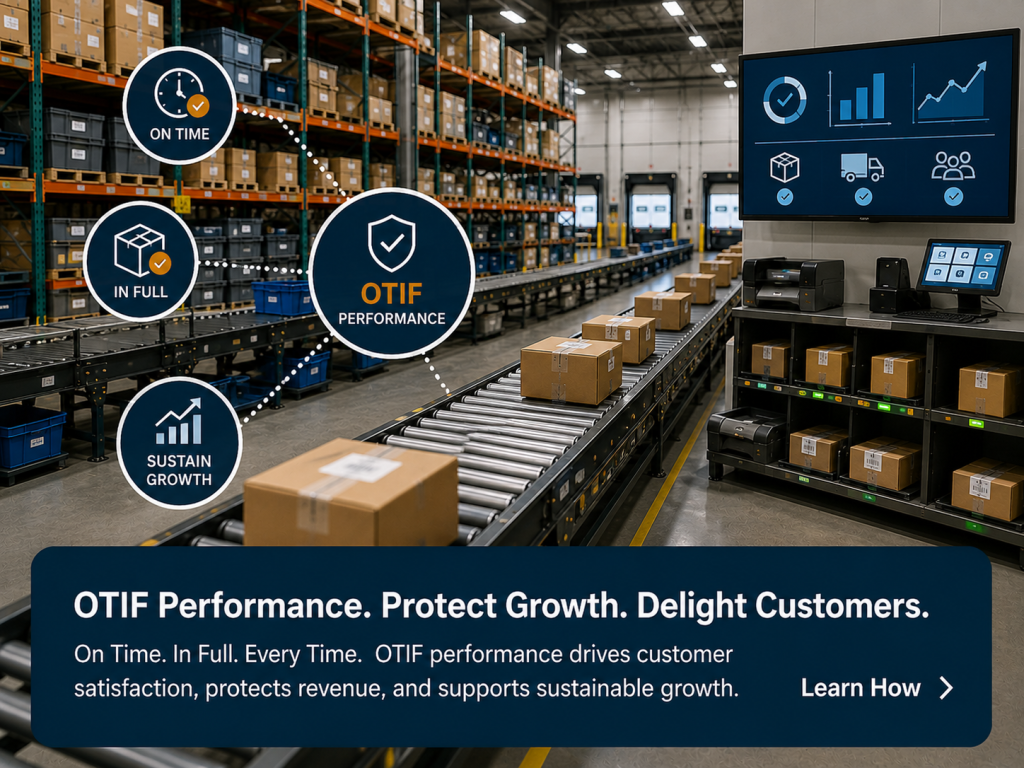
OTIF, On Time In Full, measures whether orders are delivered exactly when promised and with all items included. It is one of the most important performance indicators in ecommerce fulfillment because it directly reflects customer experience and operational reliability.
When OTIF performance drops, the impact shows up fast. Chargebacks increase, customer complaints rise, and retail or marketplace relationships become harder to maintain. Most brands only notice OTIF issues after fulfillment systems are already strained.
This guide explains what OTIF really means in ecommerce operations, why it breaks down, and how fulfillment structure directly influences performance outcomes.
You will also see how structured warehouse operations reduce variability and improve delivery consistency at scale.
If you already know you need a steadier fulfillment program, you can start the conversation here,
Contact Product Fulfillment Solutions.
Table of contents
- When OTIF becomes a business risk
- Story, how a growing brand fixed delivery performance
- What OTIF measures in real operations
- Why OTIF fails in ecommerce fulfillment
- How warehouse structure improves OTIF
- The role of inventory accuracy in OTIF
- How 3PL systems protect OTIF performance
- OTIF FAQs
When OTIF becomes a business risk
OTIF starts as a simple operational metric, but it quickly becomes a business critical performance indicator as order volume increases.
At small scale, occasional delays or partial shipments are manageable. At higher volume, they create compounding issues across customer experience, cost structure, and partner relationships.
- Retail penalties and chargebacks increase
- Customer trust begins to erode
- Support tickets spike after delivery failures
- Forecasting becomes less reliable
- Operational pressure increases across teams
OTIF failures usually signal deeper fulfillment structure problems, not isolated shipping issues.
Story, how a growing brand fixed delivery performance
Before
A DTC wellness brand scaled quickly through subscription growth. Order volume increased faster than their fulfillment system could support, leading to inconsistent delivery performance.
Pain points
As operations strained, OTIF performance dropped. Orders were occasionally shipped late or missing items, especially during peak demand periods.
- Split shipments increased unexpectedly
- Inventory mismatches caused fulfillment delays
- Carrier handoffs were inconsistent
- Customer complaints increased month over month
The shift
The brand moved into a structured fulfillment environment supported by ecommerce fulfillment services designed to improve operational consistency and reduce variability.
Within a few cycles, inventory accuracy improved, order processing stabilized, and OTIF performance became predictable again.
What OTIF measures in real operations
OTIF is not just about shipping speed. It measures the reliability of the entire fulfillment process from inventory accuracy to carrier execution.
- Orders shipped on or before promised date
- Orders delivered in full without missing items
- Consistency across fulfillment cycles
- Alignment between inventory and demand
High OTIF performance requires coordination across warehouse operations, inventory systems, and shipping processes.
Why OTIF fails in ecommerce fulfillment
Most OTIF failures come from internal operational misalignment rather than external carrier issues.
Inventory inaccuracy
If inventory records are not reliable, fulfillment errors increase immediately.
Poor warehouse flow
Disorganized workflows slow down order processing and increase delay risk.
Manual processes
High reliance on manual tracking introduces inconsistency into fulfillment timelines.
Lack of visibility
Without real time operational insight, teams cannot proactively correct issues before they affect delivery performance.
How warehouse structure improves OTIF
Warehouse design directly impacts OTIF by influencing speed, accuracy, and consistency.
Structured environments like a Cincinnati, Ohio fulfillment center are built to reduce variability in fulfillment execution.
- Standardized picking workflows reduce errors
- Organized inventory placement improves accuracy
- Clear operational lanes reduce congestion
- Predictable processes improve shipping consistency
The role of inventory accuracy in OTIF
Inventory accuracy is one of the strongest drivers of OTIF performance. Even small discrepancies can cause downstream delivery failures.
When inventory is reliable, fulfillment teams can commit to accurate shipping timelines and maintain consistent order completeness.
- Reduces stockouts during fulfillment
- Prevents partial shipments
- Improves promise-date accuracy
- Strengthens customer trust
Strong systems such as real time information help ensure inventory data stays aligned with operational reality.
Talk to an Expert
How 3PL systems protect OTIF performance
At scale, OTIF is best protected through structured fulfillment systems that remove operational variability.
3PL environments standardize workflows, align inventory systems, and reduce fulfillment inconsistencies across all order volumes.
- Predictable order processing timelines
- Reduced fulfillment errors during peaks
- Integrated inventory and shipping systems
- Consistent carrier coordination
OTIF FAQs
What does OTIF mean in ecommerce fulfillment?
OTIF stands for On Time In Full and measures whether orders are delivered on schedule and include all correct items.
Why is OTIF important for ecommerce brands?
OTIF impacts customer satisfaction, retail compliance, and operational reliability. Poor performance can lead to chargebacks and lost trust.
What causes OTIF failures?
Common causes include inventory inaccuracy, warehouse inefficiency, manual processes, and lack of operational visibility.
How can OTIF be improved?
Improving OTIF requires better inventory accuracy, structured warehouse workflows, and integrated fulfillment systems that reduce variability.
Does warehouse design affect OTIF?
Yes, warehouse layout impacts speed, accuracy, and consistency, all of which directly influence OTIF performance.
Can a 3PL improve OTIF rates?
Yes, 3PL providers use structured systems and standardized workflows to reduce errors and improve fulfillment consistency.