
Reviewed by: Director of Warehouse Operations, Product Fulfillment Solutions
Last updated: May 11, 2026
Executive TLDR
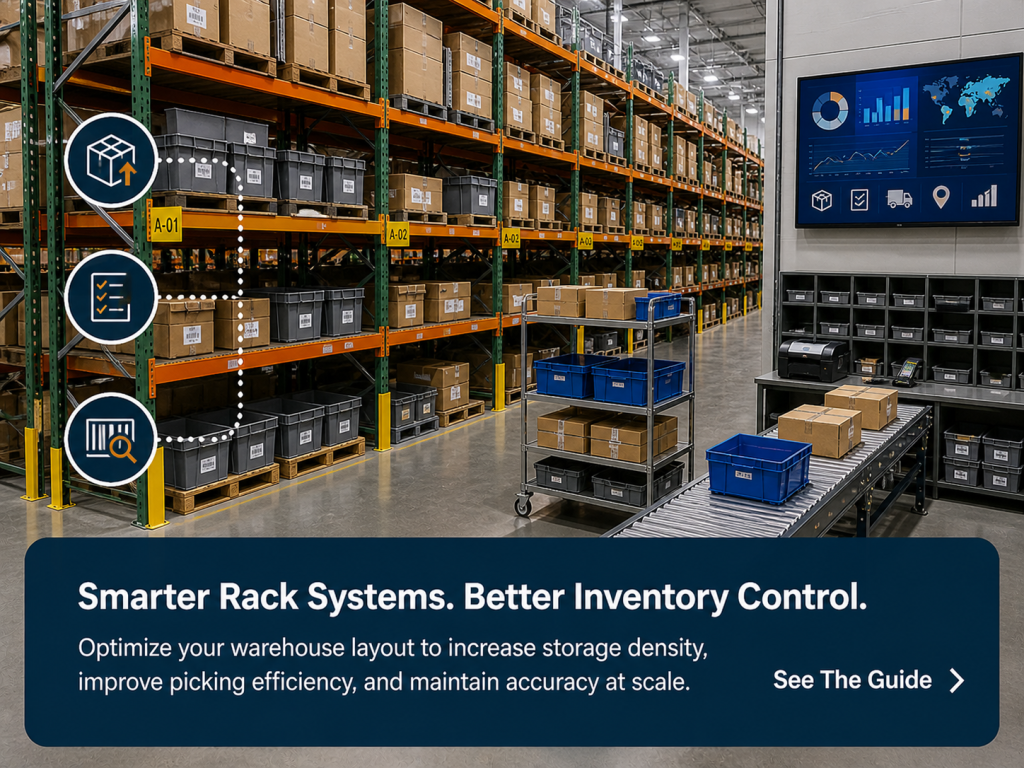
Warehouse rack systems are not just storage structures. They directly control how fast your team picks orders, how accurately inventory is managed, and how efficiently your warehouse scales as order volume grows.
Most ecommerce brands only notice rack inefficiencies when fulfillment starts slowing down, errors increase, or labor costs rise without a clear reason. At that point, the warehouse layout has already become a bottleneck.
This guide breaks down how rack systems impact fulfillment performance, where brands typically go wrong, and how structured warehouse design improves speed, accuracy, and scalability.
You will also see how centralized fulfillment environments eliminate layout chaos and support consistent operational flow.
If you already know you need a steadier fulfillment program, you can start the conversation here,
Contact Product Fulfillment Solutions.
Table of contents
- When warehouse rack systems become a bottleneck
- Story, how a scaling brand fixed warehouse layout chaos
- What warehouse rack systems actually do
- Common layout mistakes that slow fulfillment
- How rack design impacts pick and pack speed
- Slotting and inventory flow optimization
- How 3PL warehouses structure rack efficiency
- Warehouse rack FAQs
When warehouse rack systems become a bottleneck
Warehouse rack systems usually do not feel important at first. Early-stage brands focus on inventory availability and order fulfillment, not physical layout optimization.
But as order volume increases, poor rack organization starts to show up in daily operations. Pickers spend more time walking. Inventory becomes harder to locate. Replenishment slows down. Errors increase.
- Longer pick paths between SKUs
- Inconsistent inventory placement
- Slower receiving and putaway
- Increased mispicks and rework
- Warehouse congestion during peak hours
At this stage, the rack system is no longer just storage. It is actively shaping fulfillment speed and labor efficiency.
Story, how a scaling brand fixed warehouse layout chaos
Before
A mid-market supplements brand started in a small warehouse with flexible shelving and informal storage rules. It worked while SKU counts were low and order volume was predictable.
Pain points
As growth accelerated, the lack of structured rack design created daily friction. Products were stored wherever space existed, and fast-moving SKUs were not prioritized in layout decisions.
- Pickers crossed the warehouse repeatedly for single orders
- Inventory placement changed weekly without documentation
- New hires struggled to learn product locations
- Peak season slowed fulfillment dramatically
The shift
The brand transitioned into a structured fulfillment environment supported by warehousing and storage solutions designed around SKU velocity, order patterns, and operational flow.
Within one cycle, picking efficiency improved, inventory became more predictable, and warehouse congestion decreased significantly.
What warehouse rack systems actually do
Warehouse racks define how physical inventory interacts with operational workflows. They influence movement, speed, safety, and scalability.
- Organize inventory based on velocity and demand
- Support faster pick and replenishment cycles
- Improve visibility and inventory control
- Enable scalable warehouse expansion
- Reduce unnecessary labor movement
For ecommerce brands, rack systems must support high-frequency small order fulfillment, not just bulk storage efficiency.
Common layout mistakes that slow fulfillment
Many warehouses unintentionally create inefficiency through layout decisions made early in their growth stage.
Random inventory placement
Without structured slotting, inventory placement becomes inconsistent, slowing down fulfillment over time.
Ignoring SKU velocity
Fast-moving products must be positioned closer to pick zones to reduce travel time and labor waste.
Mixing replenishment and picking flow
When inbound and outbound operations overlap without structure, congestion becomes unavoidable.
Over-optimizing storage density
Maximizing space without considering workflow efficiency often slows fulfillment during peak volume periods.
How rack design impacts pick and pack speed
Rack design directly affects fulfillment throughput. Even small layout improvements can significantly reduce order cycle time.
Structured environments that support pick and pack services reduce unnecessary movement and simplify training for warehouse teams.
- Shorter travel distance per order
- Faster SKU identification
- Reduced picking errors
- More consistent packing workflows
- Improved labor utilization
Over time, these improvements compound into lower cost per order and better delivery performance.
Talk to an Expert
Slotting and inventory flow optimization
Slotting determines where products live inside the warehouse based on demand patterns, order frequency, and replenishment behavior.
When done correctly, it reduces wasted movement and improves fulfillment predictability.
- High velocity SKUs placed near pick zones
- Seasonal items adjusted dynamically
- Frequently paired items stored closer together
- Bulk inventory separated from active pick zones
When paired with real time information, slotting becomes a continuous optimization process instead of a static setup.
How 3PL warehouses structure rack efficiency
At scale, warehouse rack design must support consistent throughput, even during demand spikes.
A structured Cincinnati, Ohio fulfillment center organizes rack systems around operational flow, not just storage capacity.
- Layout designed for fulfillment speed
- Standardized inventory placement rules
- Optimized pick paths for efficiency
- Separation of inbound and outbound flow
This structure allows ecommerce brands to scale without rebuilding warehouse processes every time demand increases.
Talk to an Expert
Warehouse rack FAQs
What is a warehouse rack system in ecommerce fulfillment?
A warehouse rack system is a structured storage setup that organizes inventory in a way that supports efficient picking, replenishment, and order fulfillment.
Why does warehouse rack design matter for ecommerce brands?
Rack design affects how quickly orders are picked, how accurately inventory is managed, and how efficiently warehouse teams operate during both normal and peak demand.
What is slotting in warehouse operations?
Slotting is the process of assigning storage locations based on product velocity, demand patterns, and operational flow to improve efficiency and reduce travel time.
How does rack layout impact fulfillment speed?
Better rack layouts reduce travel distance, improve inventory access, and streamline picking workflows, resulting in faster order processing and lower labor costs.
When should a warehouse redesign its rack system?
A warehouse should consider redesigning its rack system when order volume increases, SKU complexity grows, or fulfillment delays and errors become more frequent.
Can a 3PL improve warehouse rack efficiency?
Yes, 3PL providers design rack systems around fulfillment flow, SKU behavior, and scalability, helping brands improve speed and reduce operational inefficiencies.