
Reviewed by: Chief Operations Officer, Product Fulfillment Solutions
Last updated: April 24, 2026
Executive TLDR
Many ecommerce brands optimize for efficiency until one disruption exposes how fragile the system really is. A late supplier, carrier slowdown, packaging shortage, or warehouse bottleneck can quickly create stockouts, delayed orders, and unhappy customers.
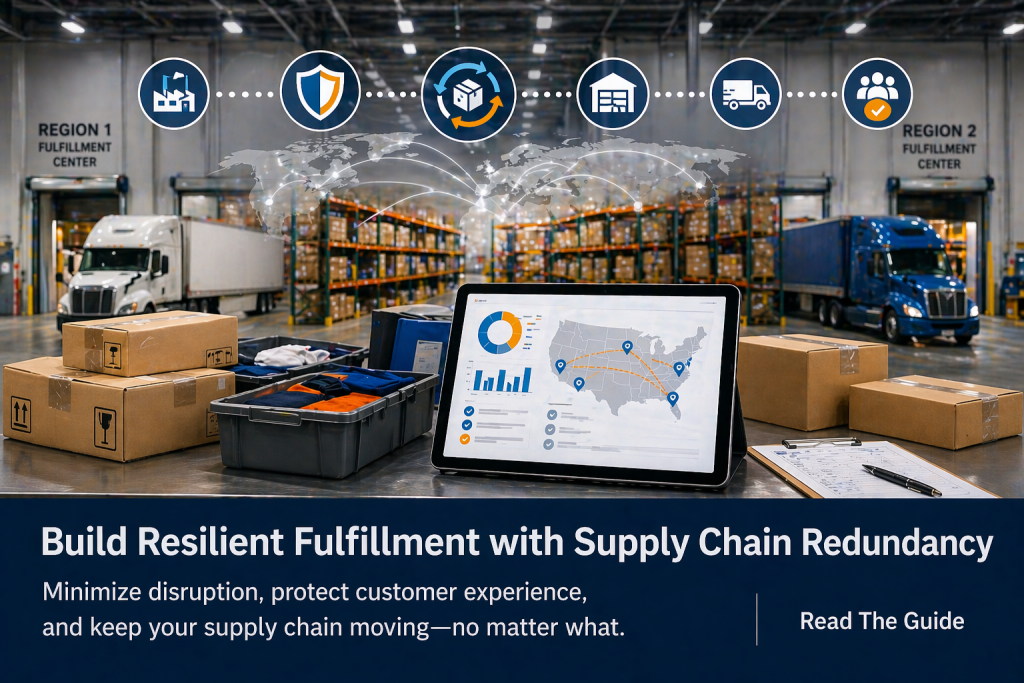
Supply chain redundancy means building backup capacity into the right parts of your operation. It does not mean wasteful duplication everywhere. It means knowing where failure would hurt most and creating practical alternatives before you need them.
This guide explains how growing brands should think about redundancy in inventory, fulfillment, vendors, packaging, and shipping. You will also see how Product Fulfillment Solutions helps brands create steadier operations through responsive 3PL support and a central US hub.
If you already know you need a steadier fulfillment program, you can start the conversation here,
Contact Product Fulfillment Solutions.
Table of contents
- When supply chain redundancy starts to matter
- Story, how Lunara stayed in stock during disruption
- Where ecommerce brands need backups most
- How to balance cost and resilience
- Why a strong 3PL reduces operational risk
- Quarterly redundancy audit for operators
- Supply Chain Redundancy FAQs
When supply chain redundancy starts to matter
Redundancy becomes important when one weak link can stop revenue. If your top supplier misses production by two weeks, can you still fulfill orders? If one carrier struggles during peak season, do you have alternatives? If inbound receipts pile up, can orders still move?
Small brands often assume backups are only for enterprise companies. In reality, smaller brands can be hit harder because they have less buffer inventory, fewer people, and tighter cash flow.
The goal is not complexity. The goal is continuity. Smart redundancy protects customer experience while giving leadership time to solve problems calmly.
Story, how Lunara stayed in stock during disruption
Before
Lunara, a fictional beauty and wellness brand, relied on one supplier for jars, one packaging vendor, and one storage location. Orders were growing, but the operation was lean to the point of fragility.
Pain points
A packaging delay hit right before a promotion. Finished goods were ready, but jars were late. At the same time, outbound volume surged and the team had limited fallback options. Marketing had demand, operations had constraints.
The shift
After working with PFS, Lunara qualified secondary packaging options, adjusted reorder triggers, improved reporting, and moved fulfillment into a more scalable process. The next disruption still caused stress, but not shutdown.
Where ecommerce brands need backups most
Most brands do not need duplicates everywhere. Start with the highest-impact areas.
- Critical suppliers for bestselling SKUs
- Primary packaging and inserts
- Carrier mix for parcel shipments
- Inventory safety stock for core products
- Order fulfillment capacity during peaks
- System visibility and reporting access
- Receiving processes for inbound surges
Reliable warehousing and storage solutions help create breathing room when upstream problems occur.
How to balance cost and resilience
Many operators worry redundancy automatically means higher costs. Sometimes it does. But compare that cost with lost sales, refunds, emergency freight, overtime, and damaged reputation.
Use tiered planning
Give A items stronger protection than slow-moving products. Your top 20 percent of SKUs often drive most revenue.
Use flexible agreements
Secondary vendors do not always need full volume. Sometimes they only need qualification and periodic orders.
Use better data
real time information helps teams see aging stock, order spikes, and replenishment risk early enough to act.
Talk to an Expert
Why a strong 3PL reduces operational risk
One of the fastest ways to improve redundancy is partnering with a fulfillment operator built for scale. Instead of rebuilding warehouse capability internally, brands can use experienced processes and stronger daily execution.
PFS supports brands with ecommerce fulfillment services, dependable pick and pack services, and access to a central Cincinnati, Ohio fulfillment center.
That can reduce single-point failure risk tied to cramped storage, manual workflows, and overloaded internal teams.
Quarterly redundancy audit for operators
- List top revenue SKUs and supplier concentration risk
- Review packaging lead times and alternates
- Check carrier performance and backup options
- Stress test reorder points on best sellers
- Review peak volume capacity assumptions
- Confirm inventory visibility and reporting cadence
- Update disruption contacts and escalation paths
Resilience is built before the next problem, not during it.
Talk to an Expert
Supply Chain Redundancy FAQs
What is supply chain redundancy in simple terms?
It means having backup options for critical parts of your operation so one disruption does not stop sales or fulfillment.
Is redundancy only for large companies?
No. Smaller ecommerce brands often benefit more because they have less margin for error and fewer internal resources.
Does redundancy always increase cost?
Not always. Smart redundancy focuses on high-risk areas and can prevent larger losses from stockouts, delays, and emergency fixes.
Where should ecommerce brands start first?
Start with bestselling SKUs, core suppliers, packaging, carrier options, and fulfillment capacity during promotions or peak seasons.
How can a 3PL improve redundancy?
A capable 3PL adds process stability, scalable labor, better reporting, and stronger execution than many brands can build alone.
Why is central US fulfillment useful?
A central location can improve reach, simplify inventory placement, and support more balanced shipping performance nationwide.