
Reviewed by: Chief Operations Officer, Product Fulfillment Solutions
Last updated: April 27, 2026
Executive TLDR
Warehouse management software can improve inventory control, picking accuracy, and labor efficiency. But many growing ecommerce brands discover that software alone does not solve fulfillment bottlenecks. If receiving is slow, labor is stretched, or processes are inconsistent, new tools may expose problems rather than fix them.
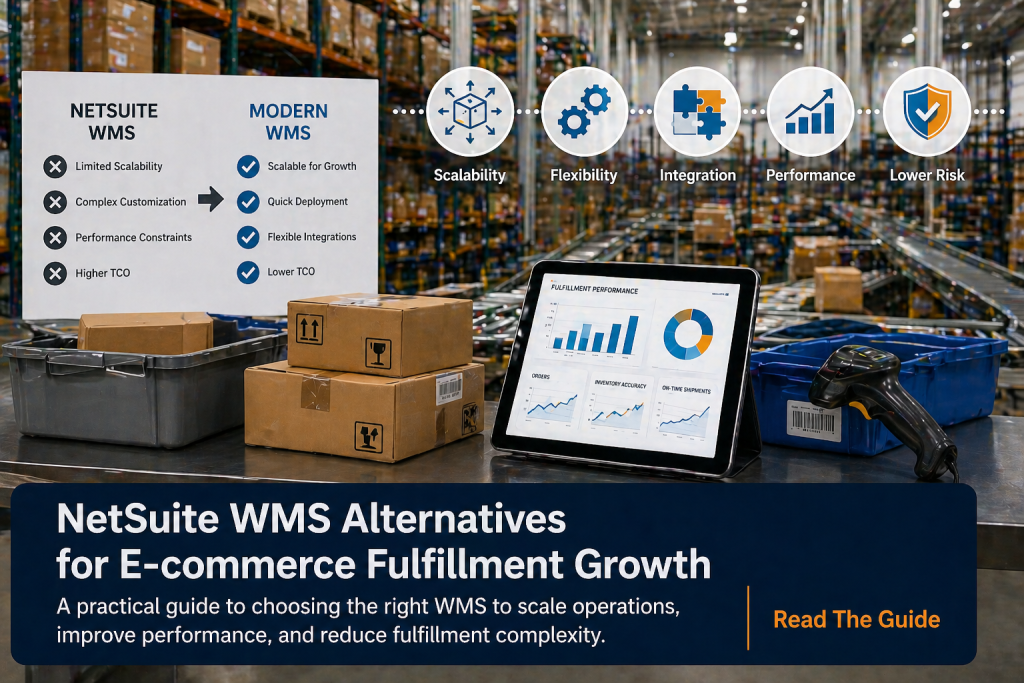
Brands evaluating NetSuite WMS or similar systems should compare the full cost of ownership against a stronger outsourced fulfillment model. Sometimes the best next move is not adding more software internally. It is moving fulfillment to a partner already running disciplined warehouse operations.
This guide explains when WMS investments make sense, when they create drag, and how PFS helps brands gain control through scalable execution, reporting, and dependable order flow.
If you already know you need a steadier fulfillment program, you can start the conversation here,
Contact Product Fulfillment Solutions.
Table of contents
- When WMS decisions start to matter
- Story, how NovaBloom gained control
- What a WMS should actually fix
- Hidden costs of building in house
- Why outsourced fulfillment can win
- Quarterly operations scorecard
- NetSuite WMS FAQs
When WMS decisions start to matter
WMS decisions become urgent when order volume rises faster than warehouse discipline. Teams begin missing pick windows, inventory counts drift, and customer service spends too much time fixing preventable errors.
Many brands assume software is the direct answer. Sometimes it is. But if storage is cramped, labor planning is weak, or inbound receiving lacks standards, software may add cost before it adds results.
The right question is simple: do you need a new system, or do you need a better operating model?
Story, how NovaBloom gained control
Before
NovaBloom, a fictional health and wellness brand, fulfilled orders from a small internal warehouse. The team used spreadsheets, manual counts, and rush fixes during promotions.
Pain points
Inventory discrepancies grew each month. Picking errors rose during launches. Leadership considered a major WMS rollout, but implementation time and staffing needs created concern.
The shift
Instead of forcing a large internal rebuild, NovaBloom partnered with PFS. With stronger processes, cleaner receiving, better slotting, and faster reporting, the brand gained control without managing a complex warehouse tech project.
What a WMS should actually fix
A warehouse management system should improve execution in measurable ways.
- More accurate inventory counts
- Faster receiving and putaway
- Better pick path efficiency
- Reduced shipping mistakes
- Labor visibility by task
- Cleaner replenishment workflows
- Real time operational reporting
If these outcomes are not likely, the project may be premature. Many brands can gain similar benefits through proven ecommerce fulfillment services and stronger daily execution.
Hidden costs of building in house
Software pricing is only one line item. Internal deployments often include scanners, labels, training time, process redesign, integration work, supervision overhead, and months of disruption.
Leadership should also price the opportunity cost of delayed growth. While teams manage implementation, customer experience can slip.
Brands shipping small parcel orders often prefer predictable variable costs over fixed warehouse overhead.
Talk to an Expert
Why outsourced fulfillment can win
For many ecommerce brands, a capable 3PL delivers the outcomes of better warehouse management without requiring the brand to run the warehouse itself.
PFS supports clients with disciplined pick and pack services, scalable warehousing and storage solutions, and actionable real time information.
Operating from a central Cincinnati, Ohio fulfillment center, brands can simplify national reach while focusing internal resources on product and growth.
Quarterly operations scorecard
- Inventory accuracy above target
- Orders shipped on promised SLA
- Error rate trending down
- Receiving backlog under control
- Peak readiness documented
- Reporting available daily
- Cost per order stable or improving
If several metrics are failing, fix operations quickly. Waiting usually costs more than acting.
Talk to an Expert
NetSuite WMS FAQs
Is NetSuite WMS right for every ecommerce brand?
No. Some brands benefit from it, but others get faster returns by outsourcing fulfillment to an experienced 3PL.
What problems should a WMS solve first?
Inventory accuracy, pick efficiency, receiving speed, labor visibility, and shipping error reduction should come first.
When should a brand avoid a major WMS rollout?
If staffing is thin, processes are unstable, or growth is moving quickly, implementation strain can outweigh benefits.
Can a 3PL replace the need for internal WMS management?
Often yes. Many brands use a 3PL to access mature warehouse systems and proven workflows without owning the complexity.
How do I compare software versus outsourcing?
Compare total cost, speed to value, service levels, management time, and customer experience impact.
Why does location matter in fulfillment?
A central US location can support balanced transit coverage and more efficient parcel distribution.